
Unbiased headlines. Facts, not spin.
Unbiased Headlines is an independently owned news organization. We bring you the facts, not opinions, written fresh from 110+ named sources. Sources linked so you can verify it yourself.
 tech
Notable (6/10)
Event date: November 27, 2026 ·
Dutch Groups Ask Amsterdam Court to Halt Meta Smart Glasses Sales as Bans Spread Across Europe
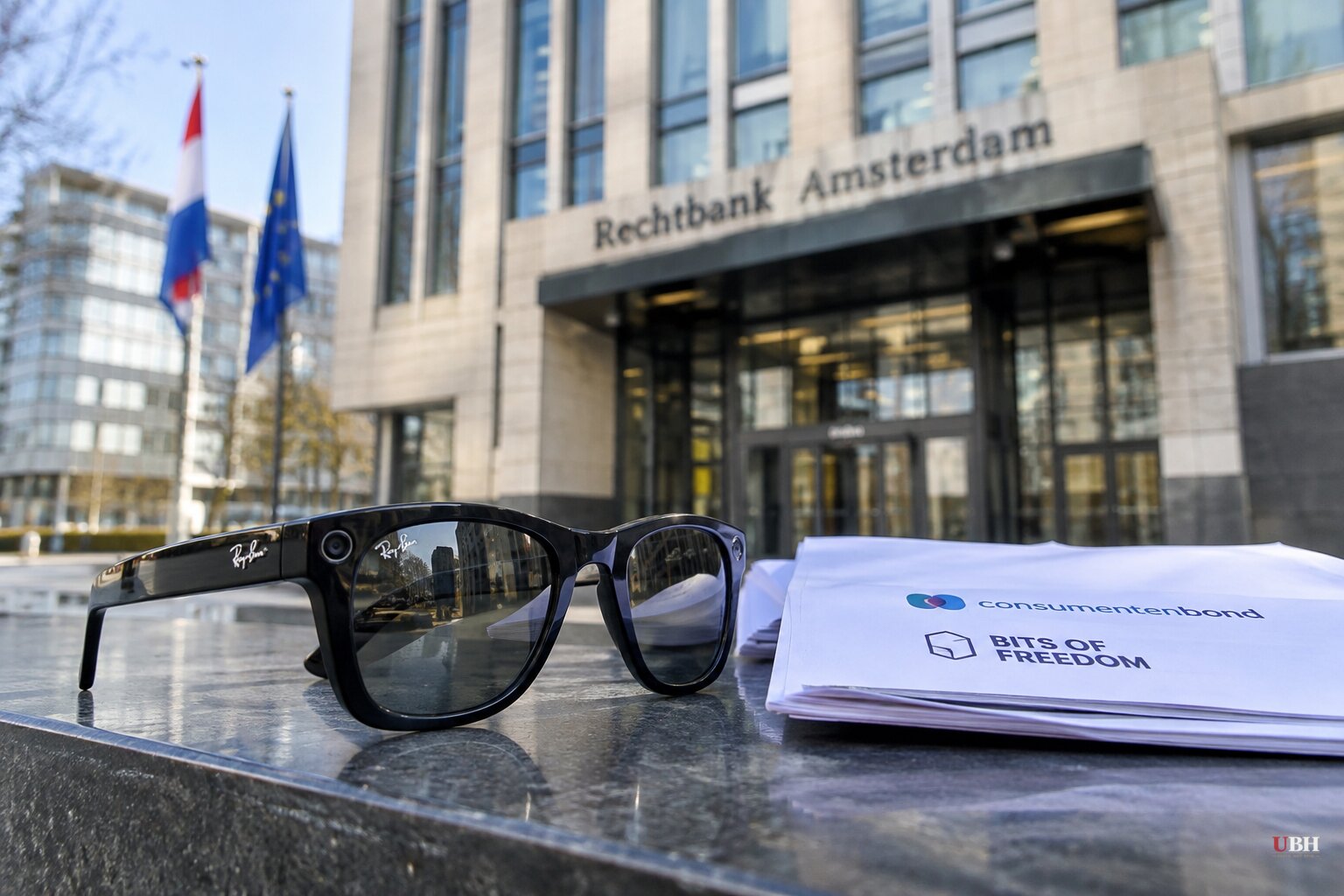
A Dutch court has until December 24 to decide whether Meta can keep selling its camera-equipped glasses in the Netherlands.
On Thursday, Nov. 26, the Netherlands' main consumer association, Consumentenbond, and Offlimits, a group that campaigns against online sex abuse, asked the Amsterdam District Court for a summary ruling. They argue the glasses, made by Meta and Ray-Ban owner EssilorLuxottica, violate European privacy law by letting wearers film people who don't know it.
What the plaintiffs want
The groups are asking the court to order Meta to prevent the glasses from being used to record people without their knowledge. They also want Meta to stop using recordings to train AI models and to halt sales until it complies.
They asked for penalties of €100,000 ($109,600) per day per defendant for non-compliance, capped at €100 million.
Offlimits lawyer Karlijn Han told the court the glasses are used for what she called "creep shots." In her opening remarks she said covert recordings are being made during exams, in changing rooms, at swimming pools, in hotel rooms and hospitals, and in playgrounds and on beaches. "Each invasion of privacy is worse than the last," she said.
Meta's answer
Meta lawyer Bastiaan Kemp asked the court to reject the suit. He said the measures demanded would harm legitimate users, damage Meta's competitive position and amount to a product recall that would not address similar devices from other makers.
"Providers of products cannot be held responsible for every instance of deliberate misuse," Kemp told the court. He said a recording light on the frame makes it obvious when the glasses are filming.
Kemp also denied the Consumentenbond lawyer's allegations that Meta processes the recorded images in Europe or uses them to train AI models in violation of European law.
A lawyer for EssilorLuxottica said the company neither processes nor has access to footage. A sales ban, the lawyer argued, would be disproportionate and ineffective because comparable products are sold by other manufacturers.
In a separate statement, a Meta spokesperson said people use the glasses for music, live translation and hands-free calls, and that they help some wearers stay independent. "Naturally some places shouldn't be filmed at all and that's reasonable but existing rules should be applied consistently," the spokesperson said.
The scale of the product
Meta and EssilorLuxottica sold more than 7 million smart glasses in 2025, around 80% of the global market. That market share is why one Dutch ruling draws attention. It would apply only in the Netherlands, but it could become a reference point elsewhere.
A patchwork of restrictions
The Dutch case is one piece of a broader pattern, and most of it is happening outside any single national law.
- Netherlands: The country's privacy watchdog had already advised consumers not to buy smart glasses after studying six types on the Dutch market. It called them unsafe for both users and bystanders. A group of 15 museums, theaters and other cultural organizations in Wageningen also jointly announced restrictions this month.
- France: Paris prosecutors said on Sept. 18 they had opened a criminal probe after sexual harassment complaints tied to a social media trend of filming women on the street with smart glasses and posting the videos online.
- Germany: A German digital rights group filed a criminal complaint on Aug. 12 against Meta and other companies selling AI-powered glasses in the country. It argues the devices violate privacy laws and enable covert recording.
- Norway: The government said it plans to propose a temporary ban on AI glasses in places where the public regularly gathers, including parks, beaches, museums, shopping centers and public events. Oslo banned smart glasses in schools in August.
- Australia: Public Service Minister Katy Gallagher asked the Public Service Commission in September whether camera glasses should be barred from government workplaces, and what exemptions would be needed.
- United Kingdom: Courts in England and Wales have prohibited the glasses, as have courts in New York state. The UK Cinema Association said in August that cinema operators are introducing policies to prohibit or restrict them.
- South Korea: Authorities tightened checks on the Nov. 19 university entrance exam, with students' glasses inspected, after a student used a hidden miniature camera and AI to cheat on the national tax accountants' test.
- European Union: The European Data Protection Board has commissioned a report on the glasses' "social acceptability." The European Commission has not proposed legislation targeting them, though MEP Veronika Cifrová Ostrihoňová has urged it to consider action.
One analysis of the legal response says the UK government initially argued in September that voyeurism law, data protection rules and the Online Safety Act were enough, then moved in November toward exploring targeted restrictions after pressure from MPs and campaigners. That account rests on a single source, and ministers have not been quoted in the material here.
Where the argument sits
The opposing positions are plain. Campaigners such as Liz Hunter, who started the Stop Smart Glasses campaign in the UK, argue governments have not thought through a world where everyone is filming everyone. "What will the world look like when we're all spying on each other," she asked, "when we're all filming content all the time and that content is sensitive and people have not given their permission?"
Meta and its partner argue that existing law already covers misuse, and that the product has legitimate uses, including for people who need it to stay independent. Both sides agree that some places, such as courtrooms and changing rooms, are off limits for filming.
The contested facts are narrower. The plaintiffs allege Meta uses recordings to train AI in violation of European law. Meta denies it. The Amsterdam judge must now decide whether a small flashing light is enough warning to bystanders.
The court's decision is due by Dec. 24. If it orders a sales halt, Meta and EssilorLuxottica face penalties of up to €100 million. If it rejects the suit, the groups' complaint moves back to regulators and lawmakers who are still drafting their own rules.
Sources used for this briefing
6 links from 6 independent newsrooms (syndicated copies of the same report count once)
These are the sources it draws on, linked so you can verify.


