
Unbiased headlines. Facts, not spin.
Every story is an unbiased news briefing written from 110+ sources across the spectrum — sources linked so you can verify it yourself.
 politics
Major Story (7/10)
July 7, 2026 at 07:44 AM
politics
Major Story (7/10)
July 7, 2026 at 07:44 AM
DOJ Sues Virginia Over Assault Weapon Ban, Files Separate Challenge to California Handgun Restrictions
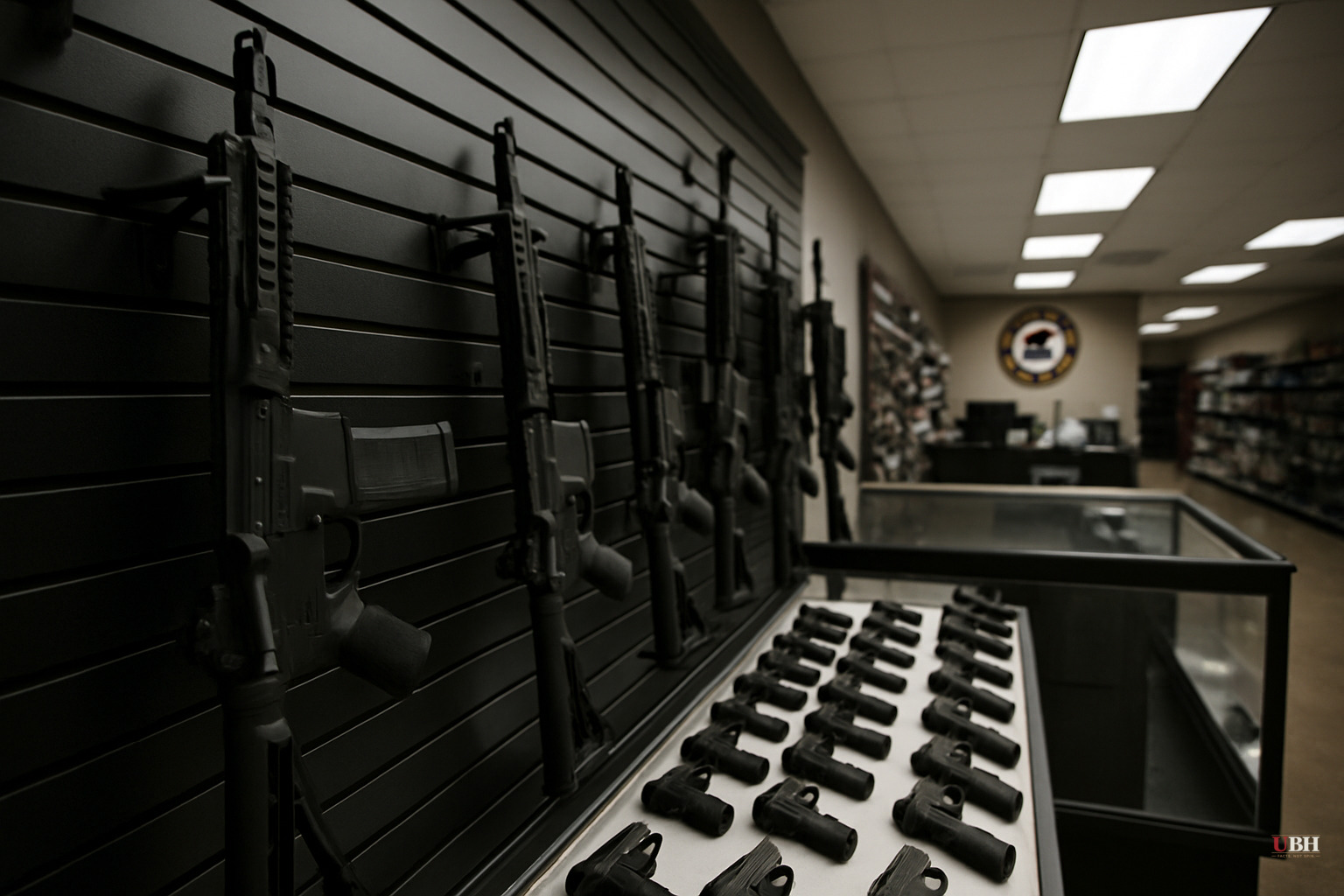
Since Virginia Governor Abigail Spanberger signed the state's 'assault firearm' ban on April 13, legal challenges have stacked up from multiple directions. The most recent addition came last week, when the Justice Department filed suit in the Eastern District of Virginia arguing the law violates the Second Amendment.
A separate DOJ lawsuit filed the same week targets California restrictions that make it illegal to sell handguns commonly available in other states, including Glock pistols.
What Virginia's Law Actually Does
Virginia's law makes it a crime to manufacture, import, sell, purchase, or transfer what it labels 'assault firearms.' The definition covers semiautomatic center-fire rifles that accept detachable magazines and have any one of five listed features: a folding or adjustable stock, a thumbhole stock or pistol grip, a second handgrip, a grenade launcher, or a threaded barrel capable of accepting a suppressor or flash suppressor.
That definition reaches AR-15-style rifles, among the most widely owned firearms in the country. According to the National Shooting Sports Foundation, Americans own more than 32 million modern sporting rifles. Survey data cited by Reason puts individual ownership of AR-15-style rifles somewhere between 16 million and 25 million Americans, who report using them for self-defense, hunting, and target shooting.
The Legal Standard
The constitutional test at issue comes from two Supreme Court rulings. The 2008 decision in District of Columbia v. Heller established that the Second Amendment protects 'bearable arms' in 'common use' for 'lawful purposes like self-defense.' The 2022 ruling in New York State Rifle & Pistol Association v. Bruen put the burden squarely on government to show any restriction is 'consistent with this Nation's historical tradition of firearm regulation.'
Assistant Attorney General Harmeet Dhillon, writing in the DOJ's complaint, argues Virginia cannot clear that bar. 'Americans own and use for lawful purposes tens of millions of AR-15-style rifles,' she wrote, and 'there is no historical tradition of banning arms in common use.'
The DOJ is not alone in that argument. The Firearms Policy Coalition and two other Second Amendment organizations filed their own challenge to Virginia's law on May 14, making the same core claim.
Where This Fits in the Broader Litigation Landscape
The Virginia and California lawsuits are part of a coordinated legal push that also includes earlier DOJ challenges to 'assault weapon' bans enacted by Denver and the District of Columbia, according to Reason's reporting.
More consequentially, the Supreme Court has already agreed to hear two cases next term involving rifle restrictions imposed by Connecticut and Cook County, Illinois. Whatever the Court decides in those cases will set the binding precedent for all similar bans, including Virginia's.
The Strongest Case for Virginia's Law
Defenders of laws like Virginia's argue the Heller and Bruen framework doesn't require the government to permit every weapon that happens to have wide commercial circulation. Their reading of Heller holds that the 'common use' protection applies to arms traditionally associated with home defense and personal carry, not military-configured rifles designed to maximize lethality. Under this view, state legislatures have genuine authority to define what features make a weapon too dangerous for civilian use, and the democratic process in Virginia produced exactly that judgment. Several federal courts have accepted versions of this argument in upholding similar bans prior to Bruen.
The DOJ and the Second Amendment litigants counter that those pre-Bruen rulings applied a different and now-rejected balancing test. Under Bruen's text-and-history framework, the relevant question is NOT whether regulators think a weapon is dangerous, but whether a comparable restriction existed in American history. The challengers say no such tradition exists for banning firearms this widely owned.
California's Handgun Case
The California lawsuit is a distinct but related fight. California's 'handgun roster' system effectively bars the sale of handguns that do not meet state-specific design requirements, which excludes many models sold freely in the other 49 states, including standard Glock pistols. The DOJ's challenge there uses the same Heller/Bruen framework: if a handgun is in common use across the country, California cannot simply ban its sale within the state.
The pivotal unresolved question is how the Supreme Court will define the outer boundary of 'common use' when it takes up the Connecticut and Cook County cases next term. That ruling will determine the DOJ's theory in Virginia and California and potentially settle the legality of every state-level 'assault weapon' ban in the country.
Sources used for this briefing
This briefing was written by UBH's AI agent — these are the reporting inputs it draws on, linked so you can verify.


