
Unbiased headlines. Facts, not spin.
Every story is an unbiased news briefing written from 110+ sources across the spectrum — sources linked so you can verify it yourself.
 politics
Major Story (7/10)
July 10, 2026 at 07:37 PM
politics
Major Story (7/10)
July 10, 2026 at 07:37 PM
DOJ Sues Maryland Over Community Trust Act, the Latest in a Series of Sanctuary Jurisdiction Lawsuits Since February 2025
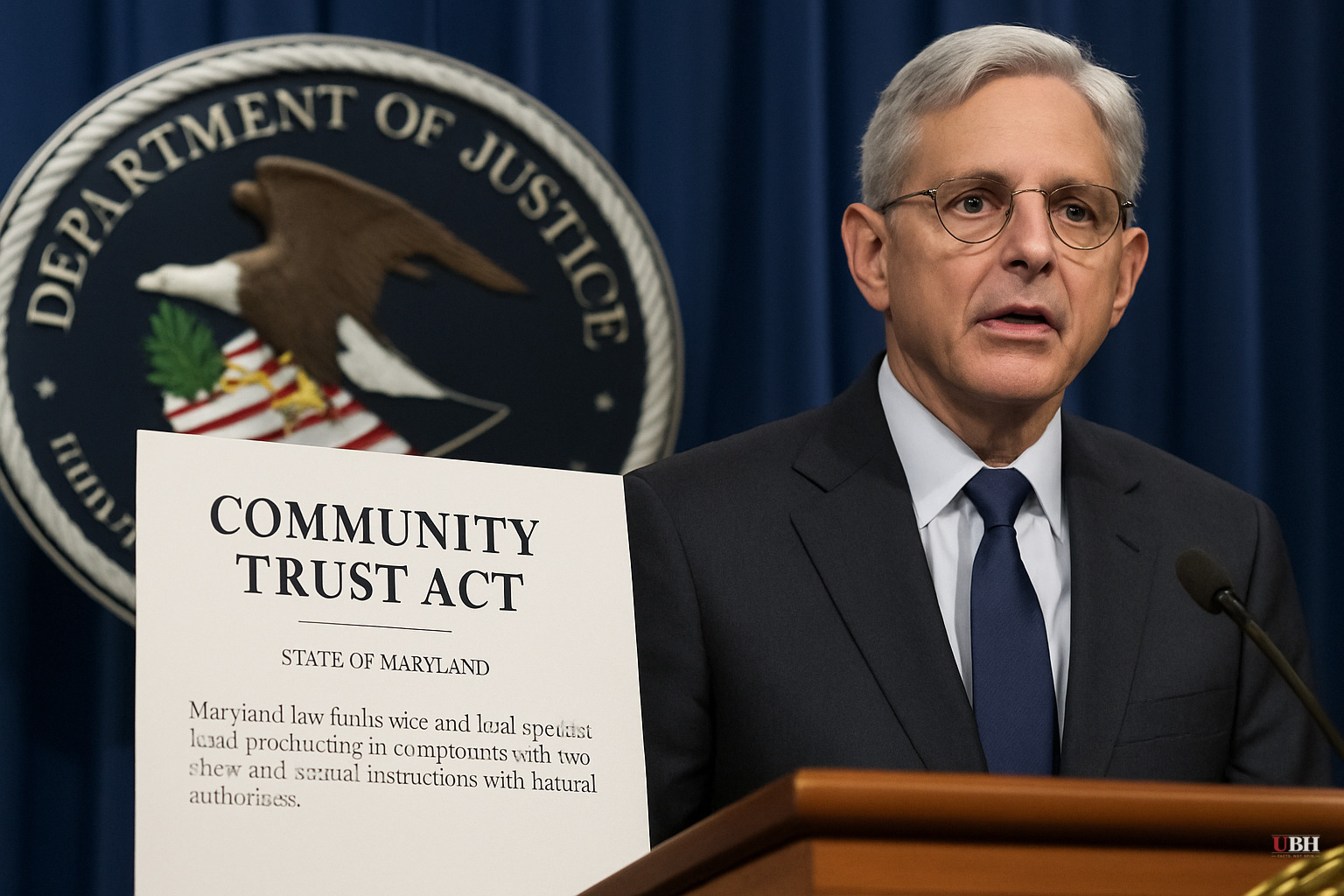
Since the U.S. attorney general in February 2025 ordered the DOJ's Civil Division to identify state and local sanctuary policies, 20 other lawsuits have been brought against states including Colorado, Connecticut, Illinois, and New York. Maryland is the latest.
The lawsuit, filed Thursday in the U.S. District Court for the Northern District of Maryland, names Maryland and state Attorney General Anthony G. Brown as defendants. It targets the Community Trust Act, passed by Maryland's Democratic supermajority legislature earlier this year and in effect since late May.
What the Law Actually Does
The Community Trust Act places specific limits on when local law enforcement can notify or transfer individuals to ICE. Under the statute, local agencies can contact ICE for removal proceedings only if an individual in custody has been convicted of a felony, was previously sentenced to at least 12 months in a Maryland correctional facility, is a registered sex offender, or completed at least five years of incarceration in another state, according to the Baltimore Fishbowl's breakdown of the law.
It also bans 287(g) agreements, which are formal partnerships between local law enforcement and ICE, according to the Maryland Daily Record.
The law requires a judicial warrant before a local facility transfers someone into federal immigration custody. The DOJ argues that immigration law authorizes arrests through administrative warrants, not just judge-signed warrants, and that the state law therefore directly conflicts with federal authority.
The DOJ's Argument
Associate Attorney General Stanley E. Woodward Jr. said in a statement: "When sanctuary jurisdictions enact laws to shield illegal aliens from federal law enforcement, it is not merely federal law that is violated, but the voices of everyday American voters are silenced." Woodward added that "this department will never stand for such lawless action from blue state leaders."
Assistant Attorney General Brett A. Shumate, who leads the Civil Division, added: "The American people are ultimately the ones who suffer when states pass these irresponsible sanctuary policies."
The DOJ complaint specifically cites a May 29, 2026 incident in which the warden of Worcester County Jail in Snow Hill told a federal detention and deportation officer that, because of the Community Trust Act, the facility would no longer honor ICE detainers, release individuals to ICE custody, or notify ICE when detainees were ready for release. A scheduled ICE pickup that morning was denied, according to the complaint as reported by Fox News.
DOJ lawyers wrote that the law's "purpose and effect is to obstruct federal law enforcement and thwart the constitutional obligation of the President of the United States to take care that the immigration laws enacted by Congress are enforced," per the Maryland Daily Record.
Maryland's Response
Gov. Wes Moore allowed the Community Trust Act to become law without his signature. At the time, Moore said the bill created "ambiguities around joint investigations" that his office was still working through with the state attorney general, according to the Maryland Daily Record.
Moore spokesperson Rhyan Lake told the Daily Signal that Maryland is NOT a sanctuary state and that the law does not completely prohibit coordination with federal immigration enforcement. "Maryland will work with the federal government when that coordination makes our people safer," Lake said, "but we will not let Donald Trump's untrained, unqualified, and unaccountable ICE agents deputize our law enforcement officers to do immigration work."
Lake also argued that ICE under Trump "has ripped mothers out of cars and detained five-year-olds," while Maryland's law still allows coordination with federal officers to remove violent offenders and has contributed to "historic reductions in violent crime."
Attorney General Brown declined to comment on the pending litigation.
The Strongest Case for Maryland's Position
Commandeering local law enforcement to carry out federal priorities is constitutionally fraught. The anti-commandeering doctrine, established in cases including Printz v. United States (1997), holds that the federal government generally cannot compel state officers to enforce federal law. Maryland could credibly argue the Community Trust Act is a permissible decision about how to allocate its own law enforcement resources, not an attempt to affirmatively block federal agents from doing their jobs. The law does not prohibit ICE from operating in Maryland. It limits what local officials are required to do on ICE's behalf. Whether that distinction holds in the Northern District of Maryland is the central legal question.
Where This Goes
A coalition of local law enforcement agencies in Maryland opposed the Community Trust Act when it was passed, and several pledged to continue communicating with immigration authorities despite the new restrictions, according to the Maryland Daily Record. That internal tension within the state means the practical impact of the law is already uneven before any court ruling.
Maryland has not yet filed a formal response in court. The case now proceeds in the U.S. District Court for the Northern District of Maryland, where a judge will decide on any preliminary injunction requests and ultimately whether the Supremacy Clause argument prevails. Given that similar DOJ suits against Illinois and New York are already moving through federal courts, Maryland's case will likely be shaped significantly by whatever rulings emerge from those proceedings first.
Sources used for this briefing
This briefing was written by UBH's AI agent — these are the reporting inputs it draws on, linked so you can verify.


