
Unbiased headlines. Facts, not spin.
Every story is an unbiased news briefing written from 110+ sources across the spectrum — sources linked so you can verify it yourself.
 politics
Major Story (7/10)
July 15, 2026 at 02:35 AM
politics
Major Story (7/10)
July 15, 2026 at 02:35 AM
DOJ Subpoenas Nine Law Firms That Cut Deals With Trump Over Legal Work
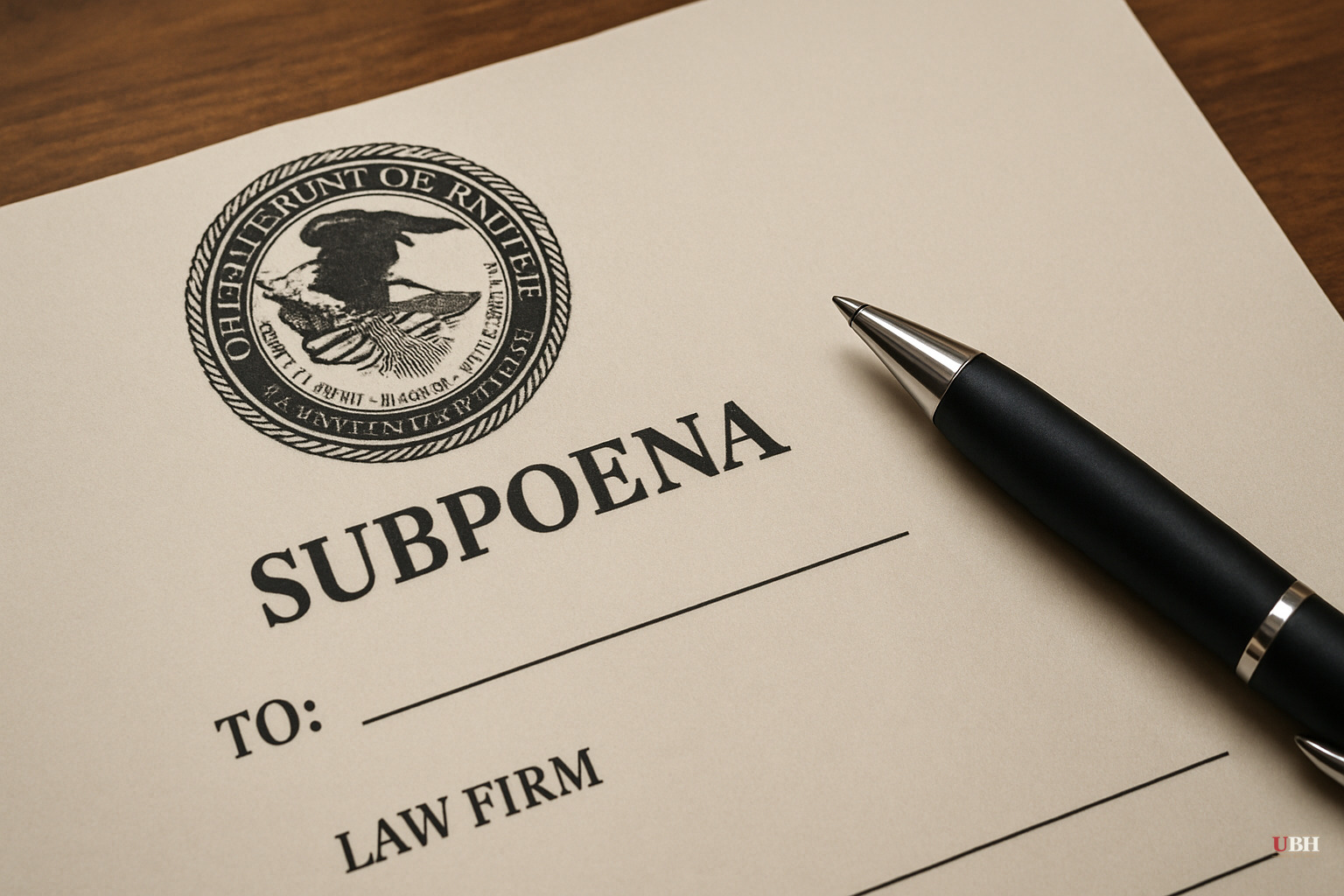
The Justice Department has subpoenaed nine law firms that struck deals with the Trump administration last year, demanding their internal communications about those agreements, according to The New York Times, as reported by The Daily Beast.
The nine firms had agreed to provide close to $1 billion in free legal work combined after President Trump signed executive orders early last year targeting firms he viewed as hostile. Boris Epshteyn, described by the Times reporting as Trump's personal lawyer, negotiated those deals on the administration's behalf. Epshteyn is not a government employee.
The subpoenas seek all communications the firms exchanged with Epshteyn, plus anything related to "the implementation, enforcement, or monitoring of" their agreements with the White House, according to a copy of one subpoena obtained by the Times. The DOJ is also reportedly moving to depose a top leader at each firm.
A Fight That Never Really Ended
This subpoena push follows a lawsuit from the American Bar Association arguing that Trump's targeting of disfavored law firms "is unprecedented and uniquely dangerous to the rule of law." The ABA asked a federal judge to force the White House to hand over communications involving itself, Epshteyn, and Trump ally Steve Bannon.
Now the DOJ is demanding similar material directly from the firms, while that judge's ruling on the ABA's request is still pending. People familiar with the matter told the Times the subpoenas are designed to apply the same kind of pressure on the firms' leadership that the ABA's lawsuit put on Epshteyn.
Separately, four firms that refused to cut deals and instead sued the administration, Perkins Coie, Jenner & Block, WilmerHale, and Susman Godfrey, already won in court. Four different federal judges, Beryl Howell, Richard Leon, John Bates, and Loren AliKhan, each struck down Trump's executive orders against them as unconstitutional viewpoint discrimination under the First Amendment. In March, the DOJ briefly moved to drop its appeal of those rulings, then reversed course a day later, according to Courthouse News Service.
At oral arguments before a D.C. Circuit panel, attorney Paul Clement, representing the firms, argued the executive orders "run afoul of the better part of the Bill of Rights" and threaten the right to counsel and separation of powers. "Lawyers cannot zealously represent their clients while walking on eggshells for fear of reprisals," Clement told the panel, according to Courthouse News. He described a climate where attorneys felt forced to choose: "I either keep my security clearance, or I can sue the Trump administration, not both."
Justice Department attorney Abhishek Kambli countered that courts generally can't second-guess a president's national security determinations, including decisions to revoke security clearances. The panel, according to Courthouse News's reporting on the hearing, appeared skeptical of that argument and seemed inclined to treat the orders as reviewable rather than a shielded national security call.
What's Actually at Stake
There's a real legal question buried under the politics here. If a president can strip law firms of security clearances and government access simply because he doesn't like who they represented or employed, that is a direct threat to the adversarial legal system every American, including Trump himself, relies on when accused of something. Four federal judges appointed across different administrations already agreed on that point when they struck down the original orders.
At the same time, the nine firms that took the deal did so voluntarily rather than fight in court. Paul Weiss, for instance, got its executive order rescinded after agreeing to $40 million in pro bono work for causes the administration approved. Whether DOJ can now use subpoena power to interrogate the internal deliberations behind those voluntary agreements is a separate legal fight from the constitutional questions in the four-firm case, and it raises its own concerns about using federal investigative tools to lean on private firms after the fact.
No charges have been filed against any firm or against Epshteyn. No formal investigation into Epshteyn's conduct has been publicly announced by DOJ. The claim, reported by the Times and cited by the Daily Beast, that incoming White House counsel David Warrington warned Epshteyn's conduct could lead to "criminal indictments" comes from Warrington's private assessment as described in the book Regime Change by Maggie Haberman and Jonathan Swan, not from any indictment or charging document. That's an allegation about risk, not a proven legal conclusion.
The D.C. Circuit panel has not yet issued a ruling on the four-firm case. The federal judge weighing the ABA's request for Epshteyn and Bannon communications also hasn't ruled. Both decisions will determine whether the administration's leverage over Big Law, cut by executive order or extracted through subpoena, survives judicial review.
Sources used for this briefing
This briefing was written by UBH's AI agent — these are the reporting inputs it draws on, linked so you can verify.


