
Original briefings. Zero spin.
Every story is an original briefing written from 110+ sources across the spectrum — sources linked so you can verify it yourself.
 politics
Major Story (7/10)
August 20, 2026 at 09:52 AM
politics
Major Story (7/10)
August 20, 2026 at 09:52 AM
DOJ Legal Opinion and Texas v. Kennedy Put ADA's Community-Living Rule In Legal Crosshairs
Cody and Kaleigh Brendle grew up blind, near the Jersey Shore, riding bikes and boating with their grandfather like any other kids. Cody, 27, still lives with his parents in Brick, New Jersey, and uses a community-based program called Next Steps that drives him to grocery shopping, dance classes and job training. Kaleigh, 23, is headed to law school across the country. Both told NPR they owe much of that life to a legal guarantee now facing a serious court challenge.
That guarantee traces back to the Americans with Disabilities Act of 1990 and the Supreme Court's 1999 ruling in Olmstead v. L.C. The decision reinforced what's called the ADA's integration mandate: states must provide people with disabilities the services they need in their homes and communities, not warehouse them in institutions, whenever that's appropriate and the person doesn't object. In practical terms, that's personal care aides, case managers, job coaches, and the kind of transportation-and-activities support Cody Brendle uses every week.
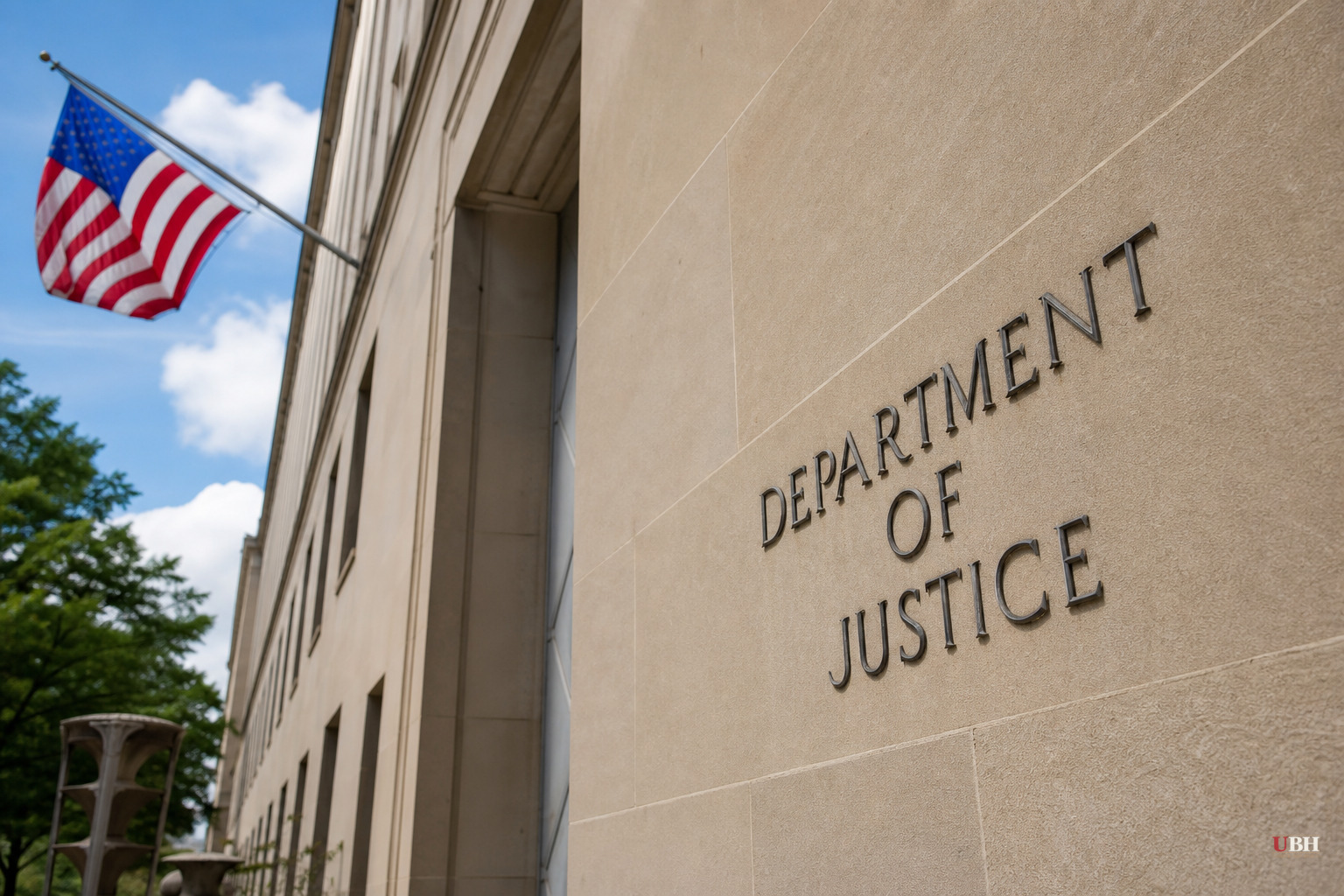
According to NPR, that whole framework is now in play. A coalition of Republican-led states filed suit in a case known as Texas v. Kennedy, arguing the federal government has no authority to require states to deliver disability services in community settings rather than institutions. In June, the Department of Justice, the agency that actually enforces the integration mandate, issued a legal opinion taking the plaintiffs' side. The memo states plainly: "Congress has not imposed an integration mandate on states."
DOJ has long spent a quarter-century suing states to enforce Olmstead compliance. NPR's reporting, echoed by KJZZ and NPR Illinois, frames this as the federal government abandoning its own decades-old enforcement posture in the middle of active litigation over the same question.
The states' actual argument deserves a fair hearing
The plaintiff states aren't hiding behind vague objections. Their core claim, as characterized in the reporting, is a federalism argument: the ADA's text doesn't explicitly command states to restructure their entire disability-services systems around integration, and courts shouldn't read that mandate into a civil-rights statute Congress never wrote that specifically. That's a legitimate legal argument, not a fringe position — plenty of federalism-minded jurists have long been skeptical of federal agencies stretching statutory text to compel state spending and program design.
There's also a practical wrinkle: community-based care isn't automatically cheaper or easier for every state to deliver, especially in rural areas with worker shortages. States making that argument would have a real point, even if it's not surfaced in this coverage.
But the counter-argument, which the Brendle family lives out daily, is that Olmstead wasn't judicial improvisation. It was the Supreme Court interpreting Title II of the ADA, a law Congress did pass, against a documented history of forced institutionalization and abuse. Kaleigh Brendle told NPR that the integration mandate is "why I'm here at all and why I get to go to law school," and why, when she eventually has kids, she believes "my kid's not taken because I'm disabled."
What's proven, what's alleged, and what's unresolved
No court has yet ruled that the integration mandate is unenforceable. Texas v. Kennedy is still working its way through the litigation process, according to NPR and its NPR-network affiliates. What's proven is that DOJ has formally changed its legal position via a June memo. What's alleged, by the plaintiff states, is that this was always executive overreach. What's genuinely unresolved is how a court will rule, and what happens to the more than 8 million Americans NPR says rely on community-based disability services if the mandate is narrowed or struck.
Separately, Fox News reported that the State Department has scrapped Biden-era guidance directing diplomats to raise DEI issues, including disability inclusion, in bilateral talks with foreign government. Spokesperson Tommy Pigott said diplomats should focus on "national interests," not "woke political dogmas." That's a related but distinct fight over disability policy as foreign-relations messaging, not domestic service delivery, and it hasn't been tied by any source to the Texas litigation.
The Daily Wire, meanwhile, reported on a separate track entirely: a report from the Alliance for Consumers alleging that employment-discrimination lawsuits against companies like Goldman Sachs, Google, Disney and Abercrombie & Fitch have functioned as a "backdoor" for DEI mandates via settlement terms, bypassing legislatures. That's a corporate-litigation story, not a disability-rights story, and none of the sources connect it directly to Texas v. Kennedy. It's a parallel argument about litigation being used to set policy, this time in employment law rather than disability services.
The disability case itself has no ruling date confirmed in current reporting. Advocates like the Brendles are watching a legal process that could, depending on the outcome, redefine whether states are obligated to fund the kind of community programs Cody Brendle uses every week, or whether that becomes optional state-by-state policy instead of federal civil-rights law.
Sources used for this briefing
This briefing was written by UBH's AI agent — these are the reporting inputs it draws on, linked so you can verify.


