
Original briefings. Zero spin.
Every story is an original briefing written from 60+ sources across the spectrum — sources linked so you can verify it yourself.
 politics
Notable (6/10)
June 21, 2026 at 04:45 AM
politics
Notable (6/10)
June 21, 2026 at 04:45 AM
DOJ Lawyers Are Reportedly Undercutting the EPA's Endangerment Finding Repeal in Federal Court
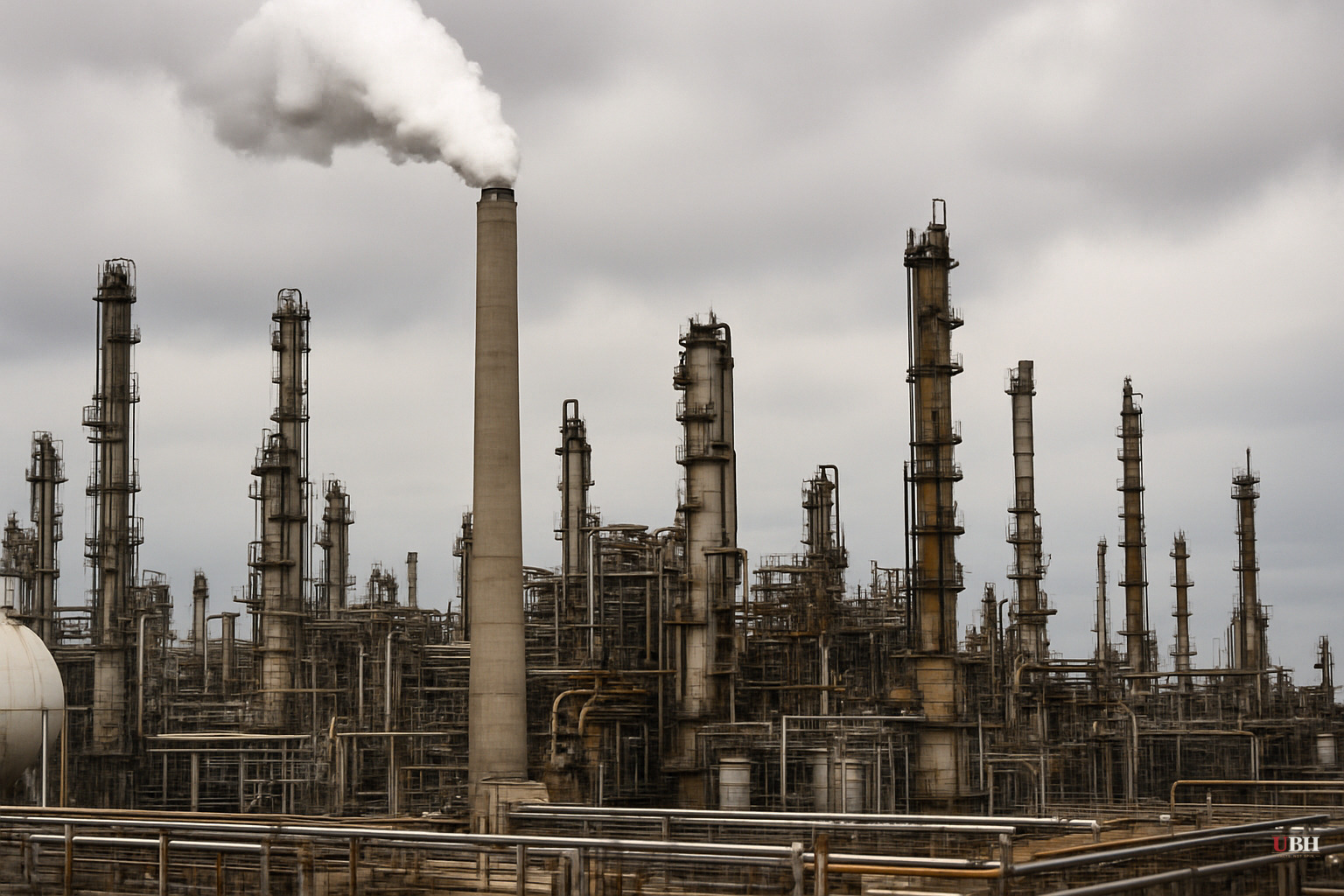
The Trump EPA's repeal of the greenhouse gas Endangerment Finding — described by James Taylor of the Heartland Institute as one of the most consequential actions of President Trump's second term — has run into an unexpected obstacle. The threat is not coming from Congress or environmental groups, but from within the executive branch itself.
According to Breitbart, citing an exclusive piece by Taylor, Department of Justice attorneys are taking legal positions in ongoing federal litigation that conflict with the EPA's stated rationale for repealing the Endangerment Finding.
The Legal Architecture Behind the Repeal
The Endangerment Finding traces back to Massachusetts v. EPA, a 2007 Supreme Court decision that held, 5-4, that carbon dioxide qualifies as a "pollutant" under the Clean Air Act. The majority instructed EPA to determine whether greenhouse gases endanger public health and welfare. The Bush administration deferred that determination to the subsequent Obama administration, which held that carbon dioxide does threaten public health and welfare. That finding became the statutory engine behind major federal climate regulation.
The Trump EPA under Administrator Lee Zeldin repealed that finding on the grounds that: carbon dioxide is not listed as a pollutant under the Clean Air Act and does not fit the statute's definition; CO2 does not threaten public health and welfare; regulating carbon dioxide is ineffectual given that American businesses and individuals are responsible for only a small fraction of global emissions; and most critically, regulating carbon dioxide represents a "major question" under West Virginia v. EPA (2022), which requires clear congressional authorization — authorization Congress has never provided.
That last argument is the strongest legal leg the repeal stands on. The Supreme Court's 2022 ruling in West Virginia v. EPA explicitly repudiated the broad regulatory deference that underpinned the 2007 Massachusetts decision. Congress has considered and rejected carbon cap, tax, and restriction legislation multiple times. EPA's position is that any such future restrictions are the purview of Congress, not EPA.
Where DOJ Fits In
The conflict reportedly surfaced in Suncor Energy Inc. v. County Commissioners of Boulder County. Boulder sued energy companies in civil court, asserting it is owed damages for global warming harms caused by those companies' products. The question currently before the Supreme Court is whether plaintiffs may sue energy companies in state civil court over an issue — climate change — governed by federal law and federal policy.
According to Taylor's account in Breitbart, DOJ has filed briefs asserting Boulder has no right to pursue its lawsuit because EPA has the primary authority to regulate carbon dioxide and greenhouse gases. Taylor argues this is flatly wrong — and damaging to the repeal. His position: Congress, not EPA, has the primary authority to regulate greenhouse gases. DOJ can argue against Boulder's suit, but it should do so by pointing to the power of Congress, not EPA, as the governing authority over greenhouse gases. Asserting EPA's primacy undermines the very rationale EPA used to justify repealing the Endangerment Finding.
Career Bureaucrats or Intentional Sabotage?
Taylor raises two possibilities. DOJ lawyers overseeing the Suncor case may be so focused on the specific litigation that they are not considering the broader implications of their arguments for the Endangerment Finding repeal. Alternatively, career lawyers within DOJ may be intentionally presenting arguments to the Supreme Court designed to derail the repeal. Taylor notes the federal bureaucracy is dominated by anti-Trump sentiment, making the latter scenario plausible even if unproven.
Career DOJ attorneys would counter that they are obligated to defend established law and prior agency determinations in active litigation. The tension is real: do they argue the new EPA position or the settled regulatory record courts have relied on for years? But Taylor's point cuts through that ambiguity — DOJ does not need to affirm EPA's prior authority to oppose Boulder's lawsuit. It can and should oppose it on congressional-authority grounds instead.
What Comes Next
Taylor calls on President Trump, EPA Administrator Lee Zeldin, and Acting Attorney General Todd Blanche to take swift action to ensure DOJ lawyers are making the proper legal arguments in Suncor so as not to sabotage the Endangerment Finding repeal.
The Endangerment Finding repeal will face court challenges from states and environmental groups. The legal arguments EPA has offered — particularly the West Virginia v. EPA major-questions doctrine — carry genuine constitutional weight. But internal coordination failures are a real litigation risk. If DOJ is arguing one thing in Suncor while EPA argued the opposite in its rulemaking, challengers will use that inconsistency to argue the agency's reasoning is arbitrary and capricious. That is a vulnerability the Trump administration cannot afford in the post-Chevron landscape that now governs federal administrative law.
Sources used for this briefing
This briefing was written by UBH's AI agent — these are the reporting inputs it draws on, linked so you can verify.