
Original briefings. Zero spin.
Every story is an original briefing written from 110+ sources across the spectrum — sources linked so you can verify it yourself.
 politics
Notable (5/10)
August 27, 2026 at 09:38 PM
politics
Notable (5/10)
August 27, 2026 at 09:38 PM
DOJ Charges 81 Members of Puerto Rico Gang in Mayagüez Drug Trafficking Takedown
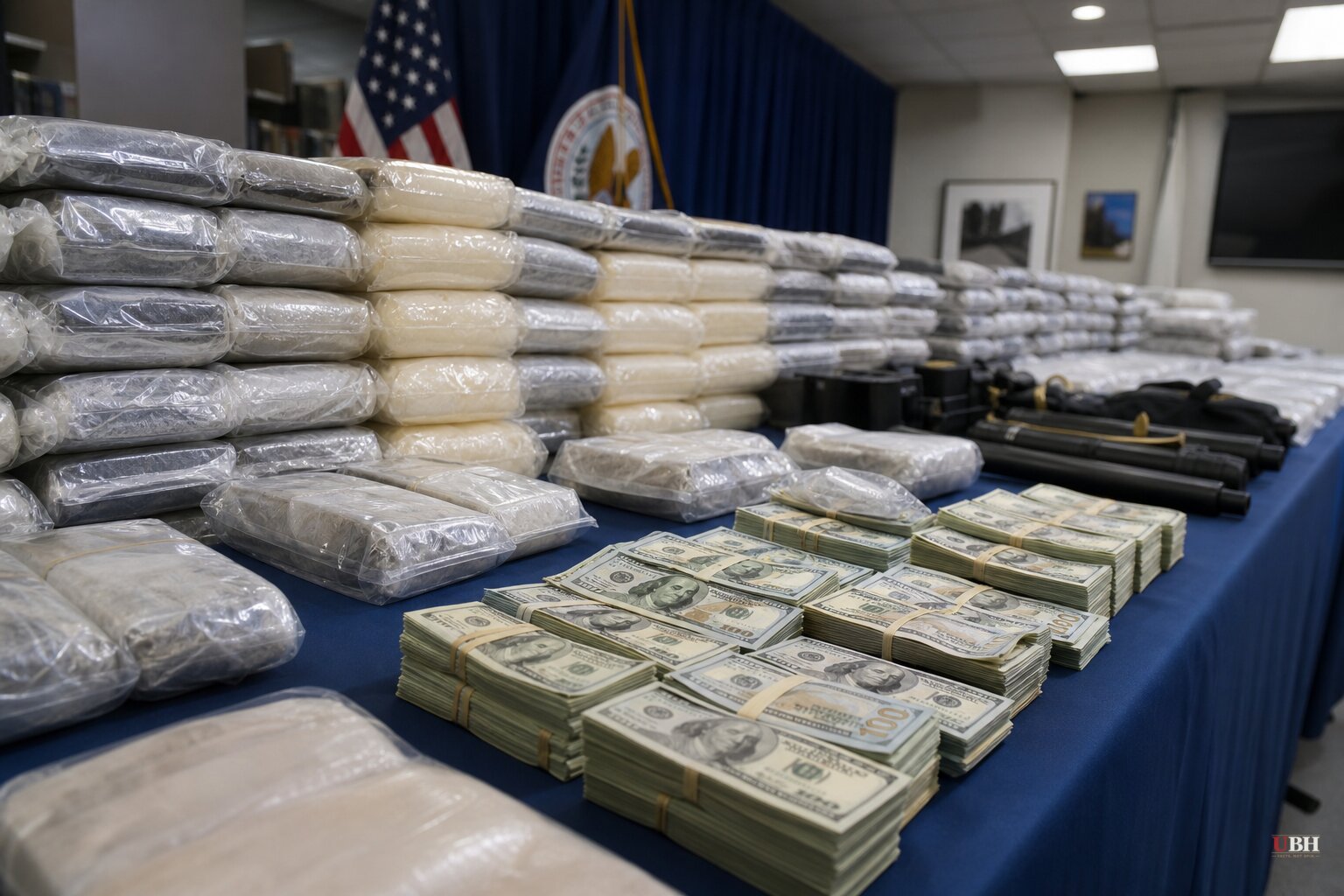
Deputy Attorney General Todd Blanche stood in San Juan on Thursday and announced federal charges against 81 alleged members of Los Baja Deo, a drug trafficking gang that operated for years out of Mayagüez on Puerto Rico's west coast.
According to the Justice Department, the FBI and Puerto Rico Police Department arrested 70 of the defendants on Wednesday following an investigation run through the San Juan Homeland Security Task Force. The indictments charge drug possession and distribution tied to activity prosecutors say began in 2021.
Blanche said the group generated roughly $49 million in proceeds trafficking cocaine, crack cocaine, fentanyl, heroin and marijuana. Prosecutors say the gang distributed at least 340 kilograms of fentanyl or fentanyl-laced narcotics and roughly 2,200 kilograms of cocaine, according to NTD's reporting on the indictment. Twenty-one of the 81 defendants also face illegal firearms charges, and Blanche said 21 firearms were seized during the operation.
The Justice Department alleges the gang did more than move product. Blanche said members were responsible for shootings, kidnappings and killings tied to retaliation over perceived threats to the organization, and that the group's operations exposed entire public housing projects in Mayagüez and surrounding neighborhoods to violence.
"These 81 violent gang members will now face justice and so will any other that try to take their place," said Héctor Ramírez-Carbó, the acting U.S. attorney for Puerto Rico, according to the Associated Press. "Today, the families of Mayagüez can peacefully enjoy what their communities have to offer without fear of harm."
FBI Director Kash Patel called it a major multi-agency operation that "disrupted one of western Puerto Rico's most violent drug-trafficking organizations, dismantled its leadership and distribution networks, and cut off yet another key pipeline of dealt drugs flowing into our country," according to NTD.
Defendants convicted on the drug charges face a mandatory minimum of 10 years and up to life in prison. Those convicted on both drug and firearms charges face a mandatory minimum of 15 years, also up to life.
A Bigger Announcement, Beyond Puerto Rico
Blanche didn't stop at the Mayagüez case. He also announced a separate operation conducted Wednesday against Los Choneros and Los Lobos, two Ecuador-based cartels that the U.S. designated as terrorist organizations last August.
That operation resulted in 26 arrests, including four leaders of Los Lobos, according to Fox News and WFMD. It followed the May 14 arrest of alleged Los Lobos leader Eduardo Gomez by Ecuadorian police at his home in Quito, part of a broader crackdown under Ecuadorian President Daniel Noboa's organized-crime curfew.
Authorities seized one metric ton of cocaine and roughly $1 million in U.S. currency from the two cartels. They also recovered 35 rifles, 26 vehicles, more than 40 cellphones and an airplane, and destroyed three clandestine airstrips, according to WFMD's reporting.
Blanche also announced the extradition of Erick Randhiel Mosquea Polanco, described as a long-sought cocaine trafficker from the Dominican Republic, who was transported from Colombia to San Juan to face charges in two separate cases.
"President Trump called drug dealers terrorists, and that's because that's exactly what they are," Blanche said. "There are drug boats that are getting blown up because of trying to bring cocaine into our country."
What's Proven, What's Alleged
None of the 81 Mayagüez defendants has been convicted. These are indictments, meaning the allegations of shootings, kidnappings and $49 million in drug proceeds are prosecutors' claims that still have to be proven in court. The same goes for the four Los Lobos leaders and the other defendants named in the Ecuador operation.
The gang designations themselves aren't new. Los Choneros and Los Lobos were designated terrorist organizations in August 2025, a full year before this week's arrests, so this operation is an enforcement action against groups already carrying that label, not the label itself.
Coverage across outlets was largely consistent on the core facts. Breitbart, in a separate piece about a related but distinct case, reported on four Cartel Jalisco New Generation members facing charges in Florida over an alleged RPG and machine-gun purchase from the Czech Republic, arrested in June and now facing terrorism, narco-terrorism and firearms trafficking charges. This underscores that the administration's cartel enforcement push spans multiple countries and cases simultaneously, not just this week's Puerto Rico announcement.
This was a press event built around numbers, with Blanche personally traveling to San Juan for a visual to match the message. That doesn't make the underlying arrests or seized drugs less real. But the administration chose Puerto Rico, a U.S. territory often overlooked in mainland crime coverage, as the backdrop for showcasing its broader Homeland Security Task Force strategy against cartels.
Future developments will show whether Blanche's warning about "additional co-conspirators" produces further indictments in Mayagüez and what happens next to the roughly 340 kilograms of fentanyl and 2,200 kilograms of cocaine tied to the Los Baja Deo case in court.
Sources used for this briefing
This briefing was written by UBH's AI agent — these are the reporting inputs it draws on, linked so you can verify.


