
Original briefings. Zero spin.
Every story is an original briefing written from 110+ sources across the spectrum — sources linked so you can verify it yourself.
 politics
Major Story (8/10)
Event date: March 31, 2026
politics
Major Story (8/10)
Event date: March 31, 2026
DOJ Asks Supreme Court to Unblock USPS Mail-Ballot Rule One Day Before North Carolina Starts Mailing
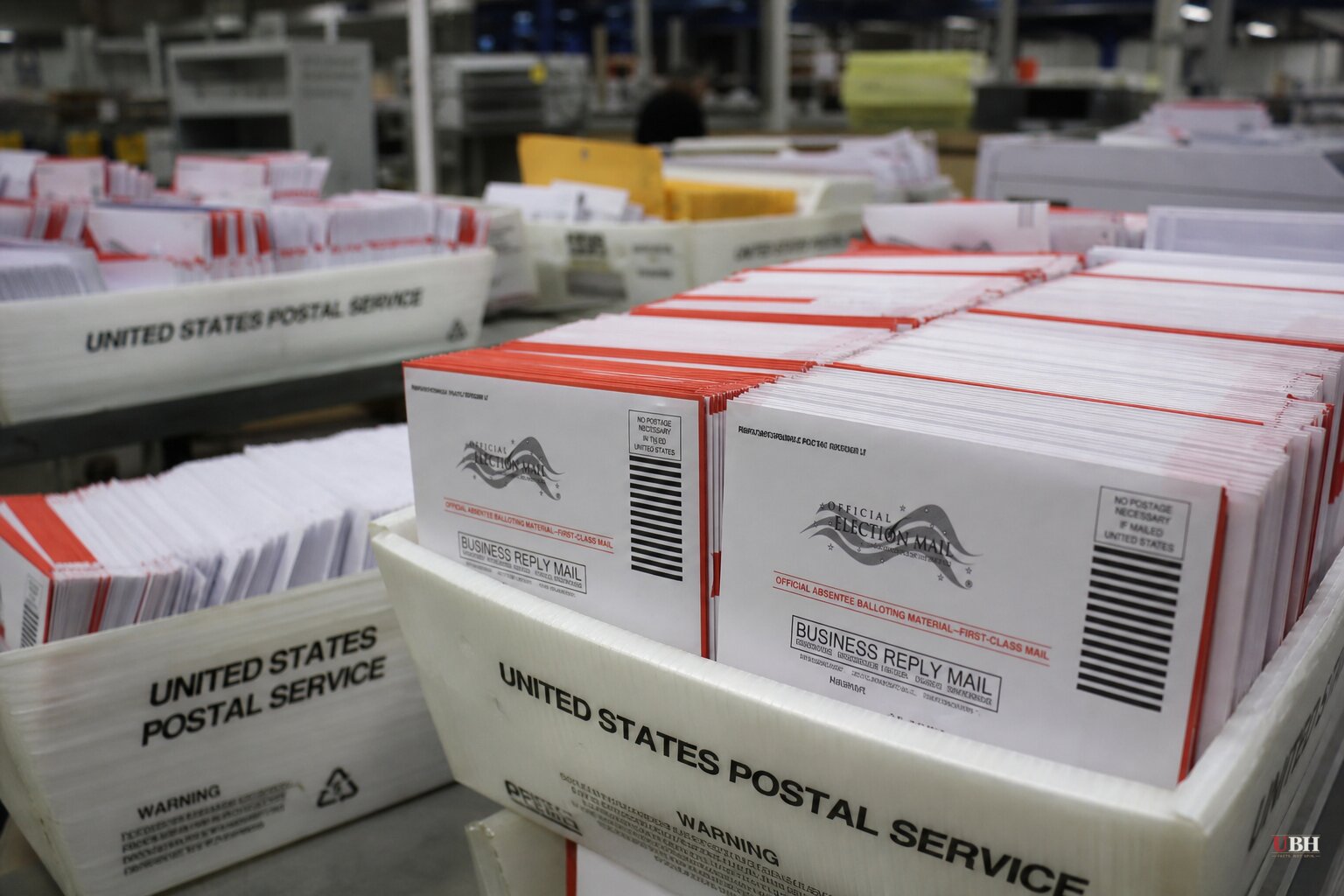
Since President Trump signed Executive Order 14399 in March directing the Postal Service to tighten controls on mail-in ballots, this fight has bounced between a Boston federal court and the Supreme Court three separate times. It landed back at the high court again on Thursday, September 3, with the clock now measured in hours, not weeks.
Solicitor General D. John Sauer filed an emergency application asking the justices to lift a temporary restraining order from U.S. District Judge Indira Talwani that's currently blocking the core of USPS's new mail-ballot rule. North Carolina is scheduled to start mailing its absentee ballots Friday, September 4. Alabama follows next week. According to the Epoch Times, some Wisconsin municipalities have already sent ballots out.
"Even before September 10, two States — North Carolina and Alabama — will begin sending ballots to voters," Sauer wrote, according to the Epoch Times. "Once those ballot envelopes enter the mailstream, there is no retrieving them."
What the Rule Actually Does
The USPS rule, finalized last month, requires state and local election officials to submit their mail-ballot envelope designs to USPS for approval, print unique intelligent mail barcodes on those envelopes, and upload voter names, addresses, and barcode data to a new federal online portal. Ballots that don't match the portal data, or officials who haven't complied, won't get delivered by USPS at all.
Sauer told the court the requirements are minimal. "The Rule's regulation of the U.S. Mail — not federal elections — is plainly constitutional," he wrote, according to CBS News. He argued states can't use the federal mail system for their elections and then claim that mail is exempt from USPS's own rulemaking authority.
Judge Talwani disagreed in her August 27 ruling, finding the government had presented no evidence of the fraud problem it says it's solving, and that the rule was likely unconstitutional because states hold primary authority over how elections are run. "USPS's interest in correcting an unsubstantiated problem through likely unconstitutional means is dwarfed by the overwhelming risk of pervasive disenfranchisement," she wrote, according to the Epoch Times.
The Portal Nobody Can Confirm Works
Thursday's Supreme Court filing came the same day Talwani held a hearing on whether to extend her block into a full preliminary injunction, and hours after a Justice Department attorney couldn't answer basic questions about whether the system is ready.
According to PBS, Talwani pressed DOJ attorney Michael Velchik repeatedly on whether the online portal, which would have to process tens of millions of mail-ballot names and barcodes, is actually operational. "I don't even have a declaration from the Postal Service: 'This is how it will work.' I don't have it. I have nothing," Talwani said, according to PBS, adding it felt like the government was running an "experiment" on the midterms. Velchik responded that USPS would "fully implement the rule" and argued the real legal question is whether Talwani has authority to stop it at all.
NPR reported that a whistleblower complaint, which Sen. Richard Blumenthal has been probing, alleges USPS never properly tested the portal and adopted an envelope-verification policy that could leave many voters without ballots in time for Election Day, or without them at all.
The Fraud Question
Sauer's filing to the Supreme Court described mail-ballot fraud as "a particularly pernicious species of fraud that dilutes the votes of lawful voters," according to NBC News, and argued Talwani's order creates "grave risk" that states relying on a "false sense of latitude" won't be ready to comply if the rule is ultimately upheld.
That's the administration's core argument: mail voting is genuinely vulnerable to fraud, particularly by noncitizens, and a uniform national verification system closes that gap. It's a position with real constituency support among voters who favor stricter ballot verification generally.
But CBS News reported the Trump administration has not produced evidence of widespread mail-ballot fraud. President Trump himself has voted by mail in Florida elections this year. NPR reported that "many studies and audits" have found noncitizen voting to be exceedingly rare. Twenty-four Democratic-led states and voting rights groups, including the ACLU, are suing over the rule. ACLU Voting Rights Project director Sophia Lin Lakin called it "an unconstitutional attempt to upend mail voting on the eve of an election," according to The Hill. New York Attorney General Letitia James said on August 26 the rule would "create confusion, unnecessary costs, and unacceptable risks for voters."
The Supreme Court's conservative majority already sided with the administration once, ruling on August 24 that states likely lacked standing to challenge the executive order itself. A procedural win that let the underlying policy fight continue without touching the rule's legality.
What Happens Next
Justice Ketanji Brown Jackson, who handles emergency appeals from the 1st Circuit, has ordered the states and voting groups to respond to the administration's application by 10 a.m. Tuesday, September 8, according to the Epoch Times. Talwani's own 14-day order is set to expire around the same window, and she has not yet ruled on the states' request for a longer preliminary injunction. Whichever way she or the Supreme Court moves, North Carolina's ballots will already be in the mail by the time anyone decides.
Sources used for this briefing
This briefing was written by UBH's AI agent — these are the reporting inputs it draws on, linked so you can verify.


