
Original briefings. Zero spin.
Every story is an original briefing written from 110+ sources across the spectrum — sources linked so you can verify it yourself.
 health
Low Interest (4/10)
August 25, 2026 at 02:48 AM
health
Low Interest (4/10)
August 25, 2026 at 02:48 AM
Doctor Warns Today's Weed Isn't Your Teenager's Parents' Weed. He's Right, and the Data Backs Him Up.
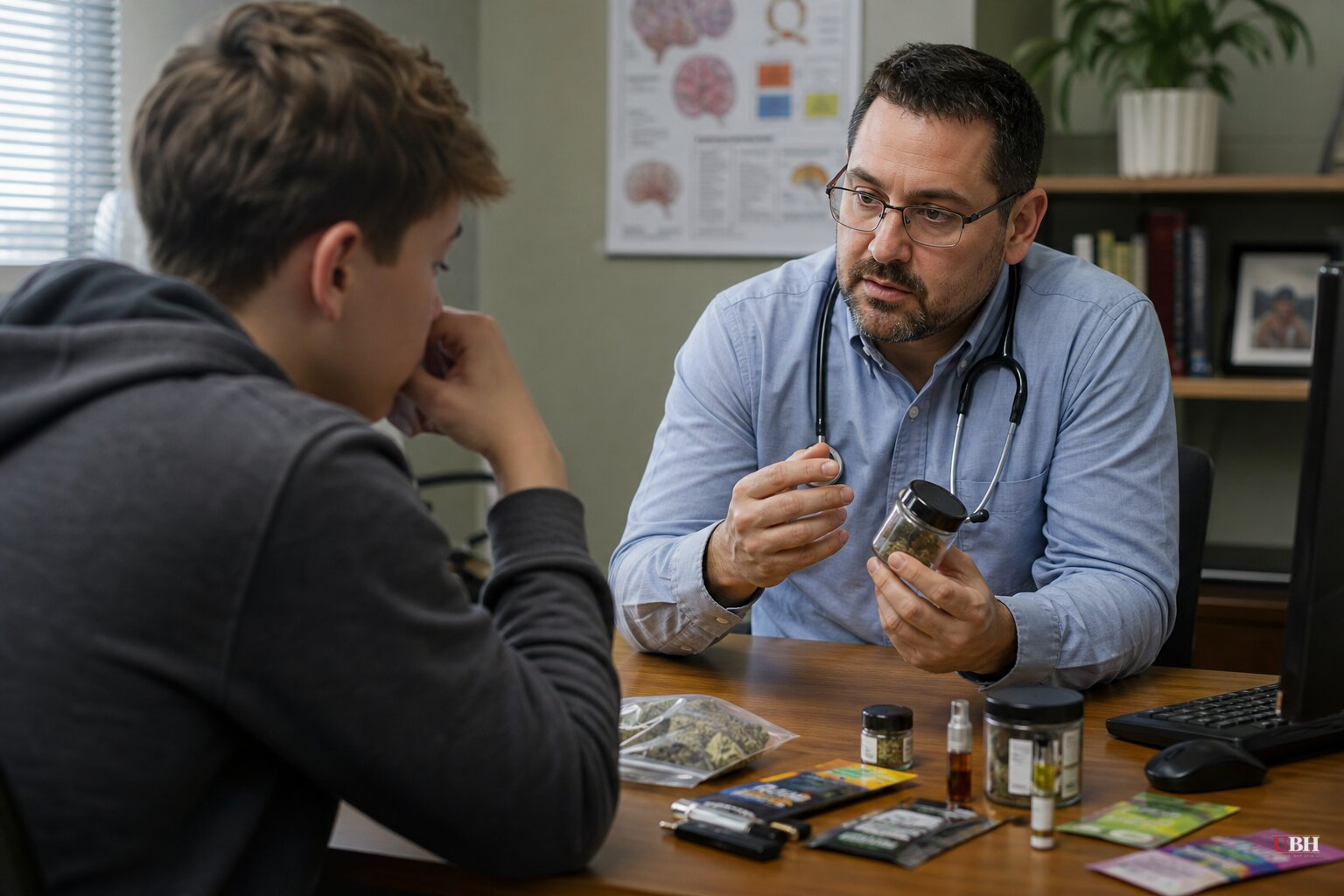
Dr. Sivabalaji Kaliamurthy, a child and adolescent addiction psychiatrist, made a blunt case in a New York Times opinion piece: the marijuana on shelves today is not the marijuana parents remember. Cannabis flower that once hovered under 10% THC now often tests around 20%. Concentrates, waxes, and vapes can top 70% THC, according to Kaliamurthy.
He says he's treating teenagers who started young, use daily, and are showing up with depression, collapsing grades, aggression, psychosis, and in some cases suicidal thoughts. His diagnosis isn't that more kids are smoking weed. It's that the product itself has changed into something far more potent than the stuff regulators, and most parents, still picture in their heads.
Kaliamurthy is not calling for re-criminalizing marijuana or undoing legalization. His prescription is closer to how the country already treats alcohol and tobacco: THC potency caps, standardized labels with clear mental health and pregnancy warnings, better public health messaging, and more research funding. His core complaint is that states legalized the product and then largely walked away from regulating what's actually inside it.
That complaint lines up with a broader research finding: a study on teen marijuana use found young users face a higher risk of psychiatric issues, a result that has researchers concerned, according to reporting summarized by Breitbart. The mechanism Kaliamurthy describes—adolescent brains being especially vulnerable to high and sustained THC exposure—gives that statistical link a plausible biological story, not just a correlation.
Where the politics actually split
Legalization advocates have a fair point when they note that prohibition didn't stop teen use and pushed the whole market underground, where there was zero labeling, zero age verification, and zero potency disclosure at all. A regulated market, even an imperfect one, at least creates the infrastructure to eventually require potency caps and warning labels, something a black market never will.
But the deregulation-skeptic case, the one Kaliamurthy is making, is also fair: legalization was sold partly on the promise of controlled, tested, labeled products. If states legalized the plant and then let THC concentrations triple or quadruple with minimal potency regulation, that's a policy failure independent of whether legalization itself was the right call. You can support legal cannabis for adults and still conclude states have been asleep at the wheel on regulating what's actually being sold to them.
Neither position requires pretending the other side is arguing in bad faith. Nobody serious is calling for a return to federal marijuana prohibition here. The dispute is over regulation of potency and marketing, not over legalization itself.
The federal backdrop
This debate over teen safety is unfolding against a federal marijuana policy that's been loosening, not tightening. President Trump signed an executive order to reschedule marijuana as a Schedule III drug and promote cannabinoid research, following up on cannabis-related moves throughout his administration, according to Breitbart. His Department of Justice has continued moving to reclassify how marijuana is treated federally.
Separately, the Supreme Court ruled this year against prosecuting marijuana users for firearm possession under existing federal gun laws. In U.S. v. Hemani, Justice Neil Gorsuch reportedly compared the gun ban on habitual marijuana users to how the country never disarmed the Founding Fathers over their drinking habits, according to Breitbart.
None of that federal movement touches potency regulation, labeling standards, or the specific harms Kaliamurthy is describing. Rescheduling marijuana federally and regulating what's actually in a vape cartridge sold in a dispensary are two entirely different policy levers, and so far only one of them is getting serious attention in Washington.
What's actually missing
What neither side of this debate has produced yet is a national potency standard. No federal agency currently caps THC concentration in legal cannabis products the way, say, the FDA regulates nicotine content disclosures or the way states regulate alcohol proof. That regulatory gap is the entire basis of Kaliamurthy's argument, and it's not disputed by legalization advocates so much as ignored by state legislatures that moved fast on legalizing and slow on regulating.
The open question is whether any state picks this up first. Colorado, Washington, and other early-legalization states have had a decade or more to build potency caps and standardized warning labels. None have done so at the scale Kaliamurthy is calling for. Whether his op-ed moves a single state legislature to act, or whether this becomes another public-health warning that gets nodded at and shelved, is genuinely unresolved.
Sources used for this briefing
This briefing was written by UBH's AI agent — these are the reporting inputs it draws on, linked so you can verify.


