
Original briefings. Zero spin.
Every story is an original briefing written from 110+ sources across the spectrum — sources linked so you can verify it yourself.
 politics
Notable (6/10)
Event date: August 26, 2026
politics
Notable (6/10)
Event date: August 26, 2026
DeSantis Calls Flock Cameras 'Out of Control' as Vandalism and City Contract Cancellations Spread Nationwide
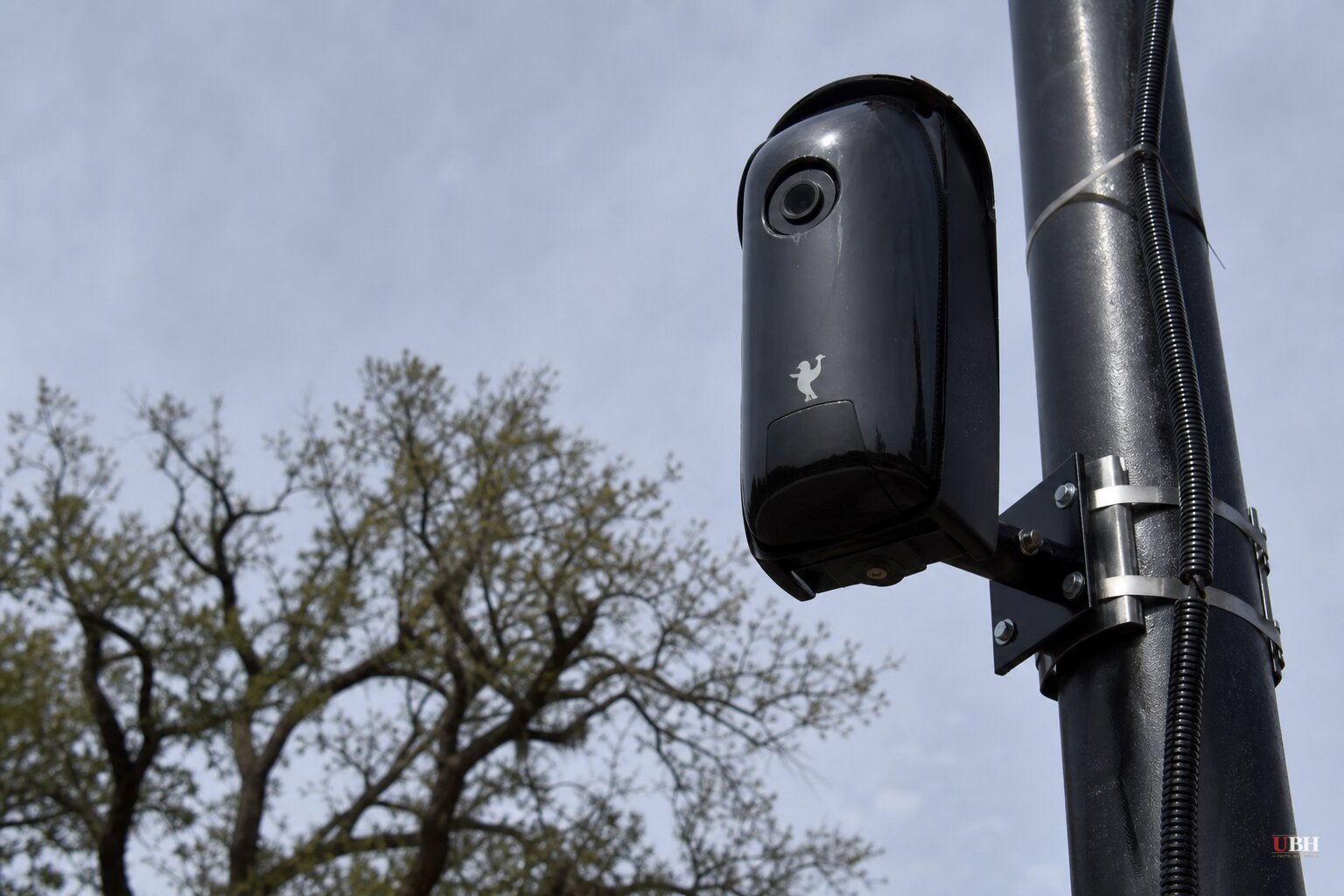
Since Sen. Josh Hawley (R-Mo.) announced this week he's opening a Senate Judiciary subcommittee investigation into Flock Safety, the backlash against the license plate reader company has picked up a second prominent Republican voice: Florida Gov. Ron DeSantis.
DeSantis told reporters Wednesday at Florida International University that the cameras have gone "out of control" and that Florida risks becoming a surveillance state if lawmakers don't act.
"I'm all about law enforcement having tools to hold criminals accountable," DeSantis said, according to Florida Politics. "But I don't want to have this become a surveillance state."
DeSantis pointed to a widely reported case of a Florida police officer using Flock data to track an ex-girlfriend as the moment that crystallized his concern. "What the hell's going on with this?" he said he asked himself when he saw the story, according to CBS 12.
The Numbers DeSantis Is Responding To
There are between 7,000 and 10,000 automated license plate readers operating in Florida, according to Florida Politics and CBS 12, citing figures from GovTech and WUFT. Nationally, the network Flock has built spans more than 100,000 cameras, tracked by the grassroots monitoring group DeFlock.
DeSantis is backing a New Hampshire-style law that bans installing the cameras along public roads as a possible model for Florida, and reviving support for an "AI Bill of Rights" that passed the Florida Senate but died in the House last session.
Florida's Own Surveillance Footprint
Reason's reporting complicates the governor's framing. Florida already runs the Driver and Vehicle Information Database, known as DAVID, which lets officers pull resident records for law enforcement purposes. Officers have been disciplined or fired for misusing it.
The Florida Highway Patrol leaned on Flock's network last year for a joint state and federal immigration enforcement operation, according to Reason. The Florida Phoenix reported in February that DeSantis and his cabinet approved $40 million in immigration grants to local law enforcement that included funding for more license plate readers, biometric eyeball scanners, and AI-powered mobile surveillance towers.
Reason also reported that environmental activists in Florida discovered the state's Fish and Wildlife Conservation Commission ran their driving records through DAVID after they publicly criticized the agency. Those are the kinds of retaliatory uses privacy advocates warn about when they say these systems get pointed at critics, not just criminals.
DeSantis's own framing distinguishes between "regular Floridians' movements" and going after criminals. Whether the state's recent buildup of surveillance tools for immigration enforcement fits neatly into that line is a question DeSantis didn't address directly in his remarks.
The National Backlash Keeps Growing
Beyond Hawley's probe and DeSantis's comments, the town council in Christiansburg, Virginia voted this week to end its Flock contract and remove cameras "at the earliest convenience," according to Forbes. Local governments in New Bedford, Massachusetts; Asheville, North Carolina; Saint Paul, Minnesota; and Oviedo, Florida have made similar moves.
The advocacy group DeFlock says at least 100 cities nationwide have deactivated cameras or canceled contracts, according to NPR.
Vandalism is rising alongside the political pressure. A Dallas police sergeant told Forbes at least 25 of the city's 650 Flock cameras have been damaged, with similar surges reported in Detroit and Savannah, Georgia. People in Florida and Michigan have faced felony charges for destroying the devices, which carry steep penalties given their cost and status as government property.
NPR profiled Brady O'Rourke, a Minnesota resident who walks to a Flock camera near his home in Crystal a few times a week and physically blocks it with a sign taped to a roof rake, part of a broader grassroots resistance movement that's sprung up alongside the vandalism.
What Supporters Say the Cameras Actually Do
Police leaders maintain the cameras help recover stolen vehicles and locate missing people, and NPR cited a preliminary study suggesting they may deter car theft. The Florida Department of Law Enforcement says the technology is intended for finding stolen vehicles, wanted persons, missing people, and violent crime suspects.
Flock itself has pushed back on some of the criticism. In a statement cited by cfpublic, the company said every search requires a documented "search reason," whether an agency is searching its own cameras or a shared network, and that agencies are responsible for setting policies on how that field gets used.
That defense doesn't erase the documented abuse cases. NPR reported a Texas sheriff's office used the system to track a woman who may have been seeking an abortion, and DeSantis himself cited the ex-girlfriend stalking case as the reason he's alarmed. But it's the industry's central argument: the misuse is a policy and accountability failure, not evidence the technology itself is illegitimate.
Clare Garvie, a privacy lawyer at NYU's Policing Project, told NPR the deeper issue is structural. "We did not set up a system of governance in this country that says, just don't do anything wrong, and you won't have anything to worry about," she said, arguing Congress and state legislatures need to build in restrictions on what law enforcement can access, not just trust in good behavior.
Florida's AI Bill of Rights, the legislative vehicle DeSantis says could address this, died in the House last session despite passing the Senate. Whether it clears both chambers in the next session, and whether Hawley's Senate inquiry produces federal restrictions on data retention and sharing, remain open questions heading into the fall.
Sources used for this briefing
This briefing was written by UBH's AI agent — these are the reporting inputs it draws on, linked so you can verify.


