
Unbiased headlines. Facts, not spin.
Unbiased Headlines is an independently owned news organization. We bring you the facts, not opinions, written fresh from 110+ named sources. Sources linked so you can verify it yourself.
 energy
Major Story (7/10)
Event date: October 17, 2026 ·
Democrats Split on Permitting Bill Ahead of Nov. 9 Vote as Casten Warns of 'Gold Rush for Gas'
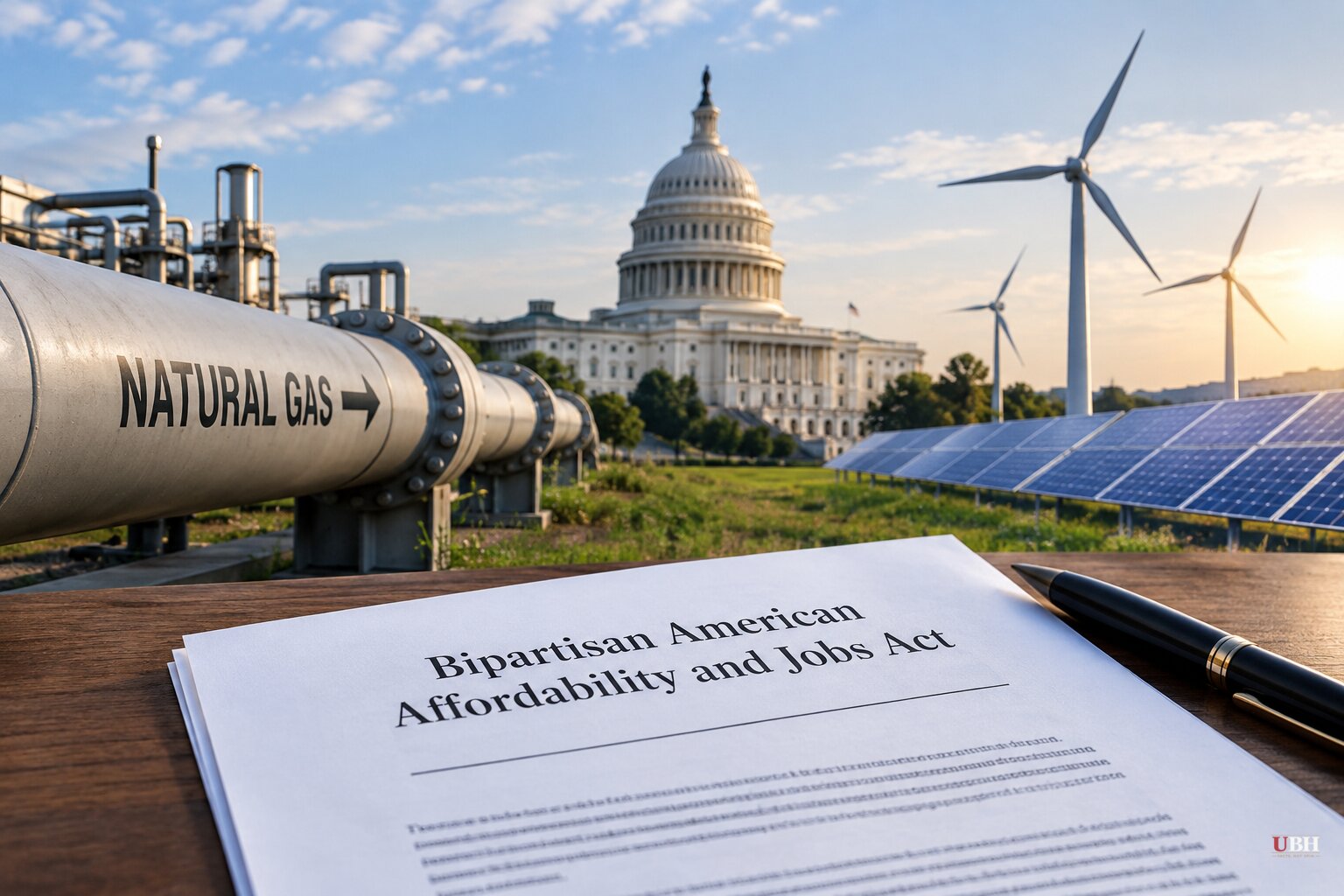
Since the Bipartisan American Affordability and Jobs Act was introduced Sept. 30, and with a Senate cloture vote now set for Nov. 9, the fight over it has moved inside the Democratic Party.
The newest wrinkle came Oct. 30. Rep. Sean Casten (D-Ill.) warned that the deal could create a "gold rush for gas," according to Axios. His worry: because President Trump opposes wind and solar, a bill that speeds energy development could end up favoring natural gas over renewables. Axios reported that his concerns could complicate efforts to pass the bill before the end of the year.
Democrats can't agree on when to vote
A group of left-leaning Senate Democrats has said a vote should wait until the White House commits to restore clean-energy funding it cut. Environmental groups have raised the same concern.
John Podesta, former President Joe Biden's climate advisor, called the bill "a loaded Howitzer" for Trump to push through fossil fuel projects.
Other prominent Democrats want to move now. Jennifer Granholm, Biden's Energy Secretary, and former presidential candidate Tom Steyer have urged Congress to act. A White House study forecast the bill could boost household income.
Columbia University researchers concluded the bill would meaningfully accelerate electrification. They also wrote that "those gains come with a cost." Those costs include weaker government oversight powers, environmental harms that are harder to reverse, and no noticeable reduction in electric bills for "years after households start paying for new infrastructure."
The leaked call
A transcript of a coalition call among environmental groups has added heat. The call, organized in part by the Sierra Club, drew 89 participants who discussed how to respond to the bill.
"We really have to have a pretty clear agreement by all parties that this is an effort to stop this bill, not to make it better," said Brett Hartl, government affairs director at the Center for Biological Diversity.
Hartl also said "our tactics and information cannot get back to Dan Dudis and Whitehouse and Heinrich and others." Dudis is Sen. Sheldon Whitehouse's staff director. Whitehouse (D-RI) and Sen. Martin Heinrich (D-NM) negotiated the bill with Sens. Mike Lee (R-UT) and Shelley Moore Capito (R-WV).
Hartl asked any group planning to stay neutral to leave the call. He later confirmed the transcript's authenticity to Punchbowl and defended his remarks. "I don't want our strategy being relayed back to them, and now it is," he said. "Someone on the call decided to betray all of us."
The substance of the objections was specific. Erik Schlenker-Goodrich of the Western Environmental Law Center objected to a requirement that states and tribes meet a "clear and convincing" evidentiary standard to impose certain conditions on federal permits under Section 401 of the Clean Water Act. He called it a "very problematic and steep legal burden." He also said, "Essentially what this bill does is it hamstrings our ability to go after projects."
The Center for Biological Diversity and the Western Environmental Law Center are arguing the bill limits their ability to challenge projects in court. Supporters of the bill call that the point. They say deadlines on reviews and legal challenges, and more certainty for projects that already have permits and financing, will cut delays and costs while keeping environmental and historic-preservation safeguards.
The deadline problem supporters point to
One piece of the bill has drawn little controversy so far. It would impose a one-year deadline on federal decisions for certain energy and infrastructure projects that need neither an environmental assessment nor an environmental impact statement.
Those projects use categorical exclusions under the National Environmental Policy Act, meant as the fast lane. The 2023 Fiscal Responsibility Act set a one-year deadline for environmental assessments and two years for impact statements. It left categorical exclusions with no deadline.
A Pacific Legal Foundation study of 133 geothermal exploration projects, 88 of them approved through categorical exclusions, found 18 percent of those exclusions took more than 200 days. Eight percent took more than a year. The study found virtually no relationship between delay and project size.
A Department of Energy analysis found that faster permitting alone could more than double geothermal capacity by 2050.
What comes next
The Nov. 9 cloture vote is the next test. The open question is whether Senate Democrats who want clean-energy grants restored get a commitment from the White House before then, or vote on the bill without one.
Sources used for this briefing
7 links from 6 independent newsrooms (syndicated copies of the same report count once)
These are the sources it draws on, linked so you can verify.


