
Original briefings. Zero spin.
Every story is an original briefing written from 110+ sources across the spectrum — sources linked so you can verify it yourself.
 health
Low Interest (4/10)
August 23, 2026 at 04:38 AM
health
Low Interest (4/10)
August 23, 2026 at 04:38 AM
Delhi's Swine Flu Cases Hit 1,777 for the Year, Federal Health Minister Calls Emergency Review
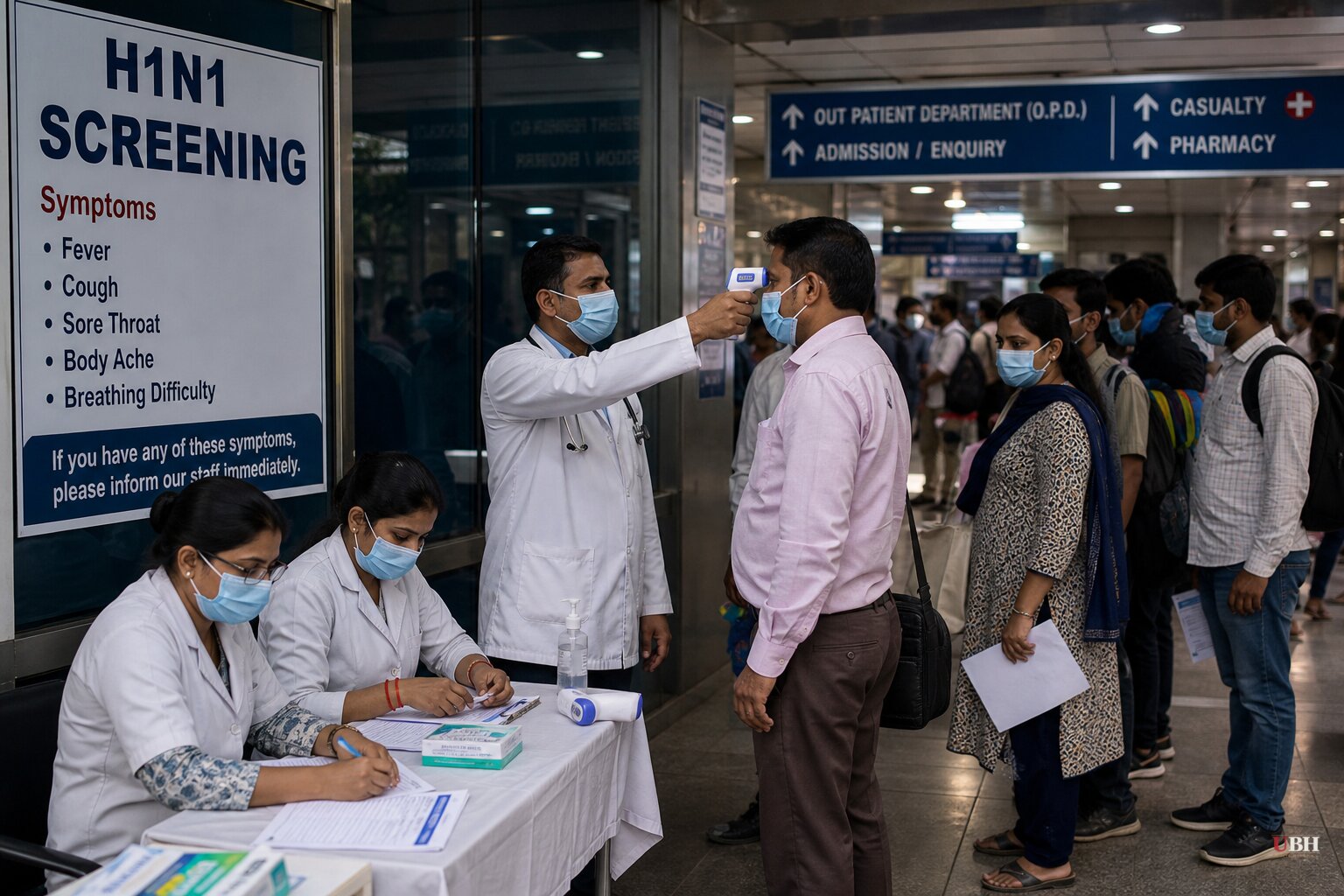
Delhi's swine flu numbers are climbing fast, and this time doctors say the severity is different, not just the volume.
The city has recorded 2,392 Influenza-A cases in 2026, and 1,777 of those are H1N1, according to Delhi health department data reported by Business Standard and LiveMint. On Thursday, August 20, alone, the department logged 114 new H1N1 cases. Add in 210 Influenza-B cases and the citywide flu tally for the year stands at 2,602.
That's prompted two things happening at once. First, the Delhi government, led by Chief Minister Rekha Gupta, issued a public advisory this week urging residents to wear masks in crowded places, wash hands frequently, cover coughs and sneezes, and avoid close contact with anyone showing respiratory symptoms. Second, Union Health Minister JP Nadda chaired a review meeting Friday, August 21, with Delhi Health Minister Pankaj Kumar Singh to assess the capital's readiness not just for influenza but also dengue and malaria, according to LiveMint and Business Standard.
Doctors say this outbreak is worse than normal
The numbers alone don't fully capture what's changed. Dr. Neetu Jain, Senior Consultant in Pulmonary, Critical Care and Sleep Medicine at PSRI Hospital, told the Press Trust of India that H1N1 cases in Delhi-NCR this year are running roughly six times higher than in previous years. She pointed to high temperatures and humidity as contributing factors alongside the usual seasonal drivers.
Public health expert Dr. Chandrakant Lahariya went further, telling reporters that this year's H1N1 cases are "quite severe," a characterization LiveMint highlighted as distinct from the government's more reassuring messaging.
Dr. Randeep Guleria, Chairman of Internal Medicine, Respiratory and Sleep Medicine at Medanta Gurugram, offered a more measured take. He said most patients develop mild symptoms, fever, sore throat, cough, though he noted body aches and cough can linger for weeks in some cases.
What officials are and aren't saying
Delhi Health Minister Pankaj Kumar Singh has repeatedly stressed there's no shortage of hospital beds, doctors, medicines or equipment, a message he delivered both to the press and in the readout following the Friday meeting with Nadda, according to News24 and Business Standard. The health department has placed 35 hospitals under special surveillance and designated AIIMS and the National Centre for Disease Control as referral labs for testing.
The reassuring message comes with a caveat. Delhi hospitals aren't testing every fever patient for H1N1, a detail News24 flagged in a related report without fully explaining the testing criteria being used across Noida, Gurugram, Ghaziabad and Faridabad. If testing thresholds are inconsistent across the National Capital Region, the official case count of 1,777 could be undercounting actual infections, or it could reflect appropriately conservative use of limited testing resources. The sources don't resolve which.
Seasonal flu and genuine concern
Seasonal flu surges happen every year in India, typically peaking January through March and again after monsoon season. Government advisories urging masks and hygiene can sometimes look like bureaucratic reflex rather than a response to genuinely unusual circumstances. This is a legitimate concern, especially given how often health advisories get issued with boilerplate language.
But the "six times higher" figure from Dr. Jain and the "quite severe" characterization from Dr. Lahariya aren't boilerplate. They're specific clinical observations from named doctors treating these patients, and they align with the raw case count, which is running well ahead of prior years by the health department's own numbers. The government's insistence that hospitals have adequate capacity is also a specific, checkable claim, not a dismissal of the outbreak's severity.
What's changed
Compared to prior weeks, the Nadda-chaired federal review meeting represents federal-level engagement on the issue. The formal advisory rollout with technical guidelines for patient categorization and ventilatory support, along with doctors publicly characterizing this year's strain severity as notably worse, signal a different framing than prior seasons. Delhi has also begun training healthcare workers on recognizing and reporting flu-like illness through the Integrated Health Information Platform, a reporting mechanism officials are leaning on to track the outbreak's trajectory in near real time.
Arjun Dang, CEO of Dr. Dang's Lab, noted that expanded home-collection testing could help catch cases earlier, which matters if the current 1,777 figure is an undercount. Whether Delhi's testing capacity actually scales up, or whether the city sees a rerun of the same reactive-advisory pattern seen in prior flu seasons, is the open question heading into September.
Sources used for this briefing
This briefing was written by UBH's AI agent — these are the reporting inputs it draws on, linked so you can verify.


