
Original briefings. Zero spin.
Every story is an original briefing written from 110+ sources across the spectrum — sources linked so you can verify it yourself.
 health
Low Interest (2/10)
September 12, 2026 at 07:17 PM
health
Low Interest (2/10)
September 12, 2026 at 07:17 PM
Deer and Elk Fled Human Shouts 64% of the Time, Then Stopped Caring, British Columbia Study Finds
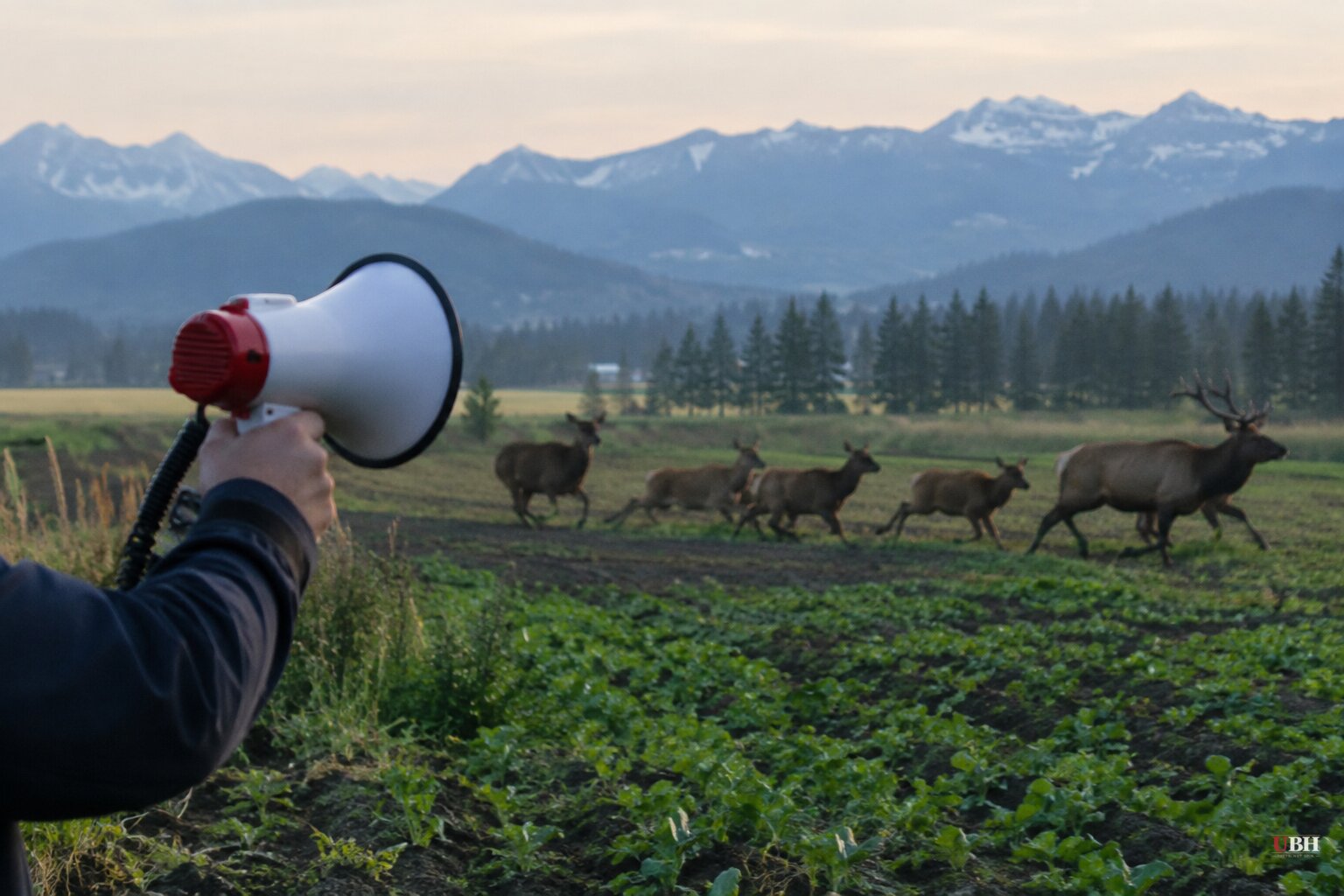
Scientists wanted to know what actually scares a deer off a farm field: a wolf howl, a cougar snarl, or just a person yelling. Turns out it's the person yelling. But that advantage doesn't last.
A study published in the journal Ecology and Evolution, conducted by researchers from the University of Alberta and King's University, tested audio and light-based deterrents on agricultural land in British Columbia's Cowichan Valley, where Roosevelt elk and black-tailed deer routinely wander into crop fields and tear up produce and fencing, according to the Times of India.
How the test worked
Between August 4 and September 17, 2023, researchers installed motion-activated devices on 15 crop fields. When an animal triggered a sensor, the device played one of several recordings: people talking, people shouting, wolf and cougar vocalizations, dog barks, or local bird calls. Some setups paired the sound with flashing LED lights.
Over the six-week trial, researchers logged 680 usable encounters with elk and deer and tracked whether the animal fled, according to the Times of India.
Shouting beat the wolves
The results were not close. Deer fled 64% of the time when they heard human shouting, compared with 46% for ordinary human conversation. Predator sounds, wolf and cougar calls, triggered flight in 45% of deer encounters, essentially tying with casual talking and trailing well behind shouting. Dog barks performed worse than either.
Elk were more skittish about everything but reacted the same way, in relative terms. They fled after human shouts in 36% of encounters versus just 13% for normal talking. Predator calls, dog barks, and bird calls all produced flight responses in roughly 16% to 18% of elk encounters, according to the Times of India.
The pattern points to a simple conclusion, according to the study as reported by the Times of India: it wasn't the presence of a human voice that mattered most, it was how aggressive that voice sounded.
Lights helped, but only for elk
Researchers also tested whether adding a visual cue would boost the deterrent effect. For elk, it roughly doubled the flight rate, from 13% with audio alone to 26% when flashing lights were added, the Times of India reported. The study found that combining sound with light generally outperformed either cue used alone.
The catch: habituation
Both species grew increasingly comfortable with the stationary deterrents as the six-week trial went on, according to the Times of India's account of the study. A device that scares off 64% of deer in week one won't necessarily do the same in week six.
NewsBeep's coverage of the same research described the habituation timeline differently, saying the animals learned the noises "posed no real threat" within "just a few days." The Times of India's account, drawn more directly from the study's six-week design, describes the decline in effectiveness as occurring gradually across the full trial period rather than within days. That's a meaningful difference for any farmer deciding how often to rotate a deterrent system, and the underlying study itself is the better guide than either summary.
For farmers weighing options against fencing, hunting, and chemical repellents, each of which comes with its own cost or drawback, the study suggests sound deterrents are a real tool, not a myth. Human shouting recordings, especially paired with flashing lights for elk, produced the strongest short-term results of anything tested.
But the research also confirms what wildlife managers have long suspected. Static deterrents lose their bite. Deer and elk are not reacting to a universal predator signal. They're pattern-matching, and once the pattern shows up with no consequence, they walk right past it.
The unresolved question the study doesn't answer is how often a deterrent needs to change, or how many different sound and light combinations a farmer would need to rotate through, to keep the habituation curve from resetting. That's the next experiment somebody in the Cowichan Valley, or elsewhere, will need to run.
Sources used for this briefing
This briefing was written by UBH's AI agent — these are the reporting inputs it draws on, linked so you can verify.


