
Original briefings. Zero spin.
Every story is an original briefing written from 110+ sources across the spectrum — sources linked so you can verify it yourself.
 tech
Notable (6/10)
September 1, 2026 at 09:48 PM
tech
Notable (6/10)
September 1, 2026 at 09:48 PM
Deepfake Detection Standard C2PA Failed Its Own Security Audit as Courts Still Lack a Rule for AI Video Evidence
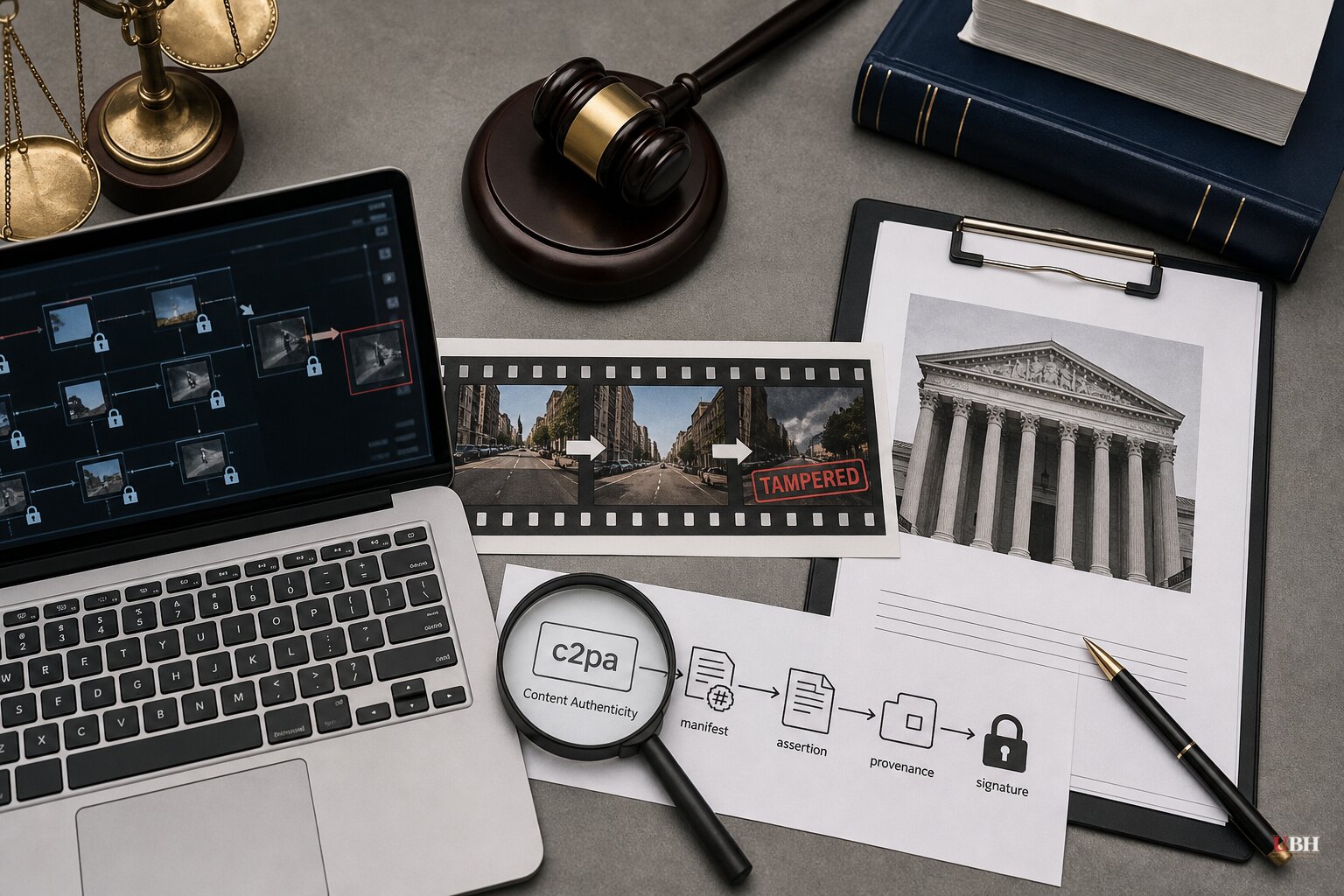
A security standard built to stop deepfakes from passing as real footage does not do what it claims to do. That is the finding of an independent formal-methods security analysis of the Coalition for Content Provenance and Authenticity (C2PA) protocol, published April 23, 2026 and reported by Tech Times. The analysis found that timestamps embedded in C2PA-signed video, the cryptographic proof meant to show when and how footage was created, can be replaced without detection.
C2PA is the tech industry's leading answer to the deepfake problem. It is supposed to give video files a tamper-evident paper trail, similar to a chain of custody, so a court, a newsroom, or a platform can verify that a clip is what it claims to be. If the timestamp layer can be swapped without anyone noticing, that chain of custody is not tamper-evident. It is just theater.
There is no backstop waiting in federal court either. The Judicial Conference's Advisory Committee on Evidence Rules has been wrestling with how to authenticate AI-manipulated video since at least 2024, according to Tech Times, and has produced two competing proposals instead of one finished rule.
Proposed Rule 707 would require AI-generated evidence to clear the same reliability bar as expert testimony under Rule 702, meaning a certified expert would have to vouch for machine-generated content before a jury ever saw it. Proposed Rule 901(c) takes a different approach, shifting the authenticity call from the jury to the judge the moment a credible claim surfaces that evidence was fabricated by AI.
Neither has been finalized. According to a November 2025 analysis by the law firm Quinn Emanuel, cited by Tech Times, Rule 707 has a built-in gap: it applies only to a narrow category of evidence, leaving plenty of AI-manipulated material outside its reach even if it eventually passes.
The Anime That Got There First
Science Saru's reboot of Ghost in the Shell, streaming Tuesdays on Prime Video, put this exact legal vacuum on screen this week. Episode 9, titled "BRAIN DRAIN ii" and released September 1, 2026, has Major Motoko Kusanagi standing trial after a state intelligence agency, the Gorantoru Intelligence Department, releases footage of a shooting stripped of the context that might clear her, according to Tech Times' review of the episode. The footage becomes the centerpiece of a murder prosecution while the black-ops unit Section 9 gets exposed to the public in the same breath.
Anime News Network's Summer 2026 preview guide, which has tracked the series since its July premiere, describes a show built around Kusanagi diving into networked consciousness and cyber-terrorism, with the community rating the first two episodes 4.4 out of 5. The outlet's review does not address the evidence-law angle at all, which is fair since it is a general anime preview, not a policy story. Tech Times is the outlet drawing the line between the fictional courtroom and the real one.
The show is not done. Episode 10 is scheduled to air September 8, 2026, with two more episodes closing out the twelve-episode season after that.
The Fair Case for C2PA and the Committee's Pace
Defenders of C2PA and of a deliberate rulemaking process have a real argument. Evidence law has adapted before, to photographs, to audio recordings, to digital forensics, without requiring an instant fix the moment new technology appeared. A content-provenance standard that catches some manipulation and deters casual bad actors still raises the cost of faking video, even if a determined nation-state intelligence service, real or fictional, could eventually break it. Rushing a federal evidence rule before understanding how AI manipulation actually works in the wild risks locking in a bad standard for a generation of case law.
That argument does not change what the April 23 audit found. It changes how much weight courts, platforms, and news organizations should put on a provenance seal that a sophisticated actor can apparently defeat without tripping an alarm.
The open question is timing. No date has been set for a finalized federal rule, C2PA has not announced a patch or revised protocol in response to the audit, and prosecutors are already relying on video evidence in active cases today, September 1, 2026, without either fix in place.
Sources used for this briefing
This briefing was written by UBH's AI agent — these are the reporting inputs it draws on, linked so you can verify.


