
Original briefings. Zero spin.
Every story is an original briefing written from 110+ sources across the spectrum — sources linked so you can verify it yourself.
 tech
Notable (5/10)
September 1, 2026 at 10:37 PM
tech
Notable (5/10)
September 1, 2026 at 10:37 PM
Perplexity Launches Hybrid Compute, Splitting AI Agent Tasks Between the Cloud and Your Mac
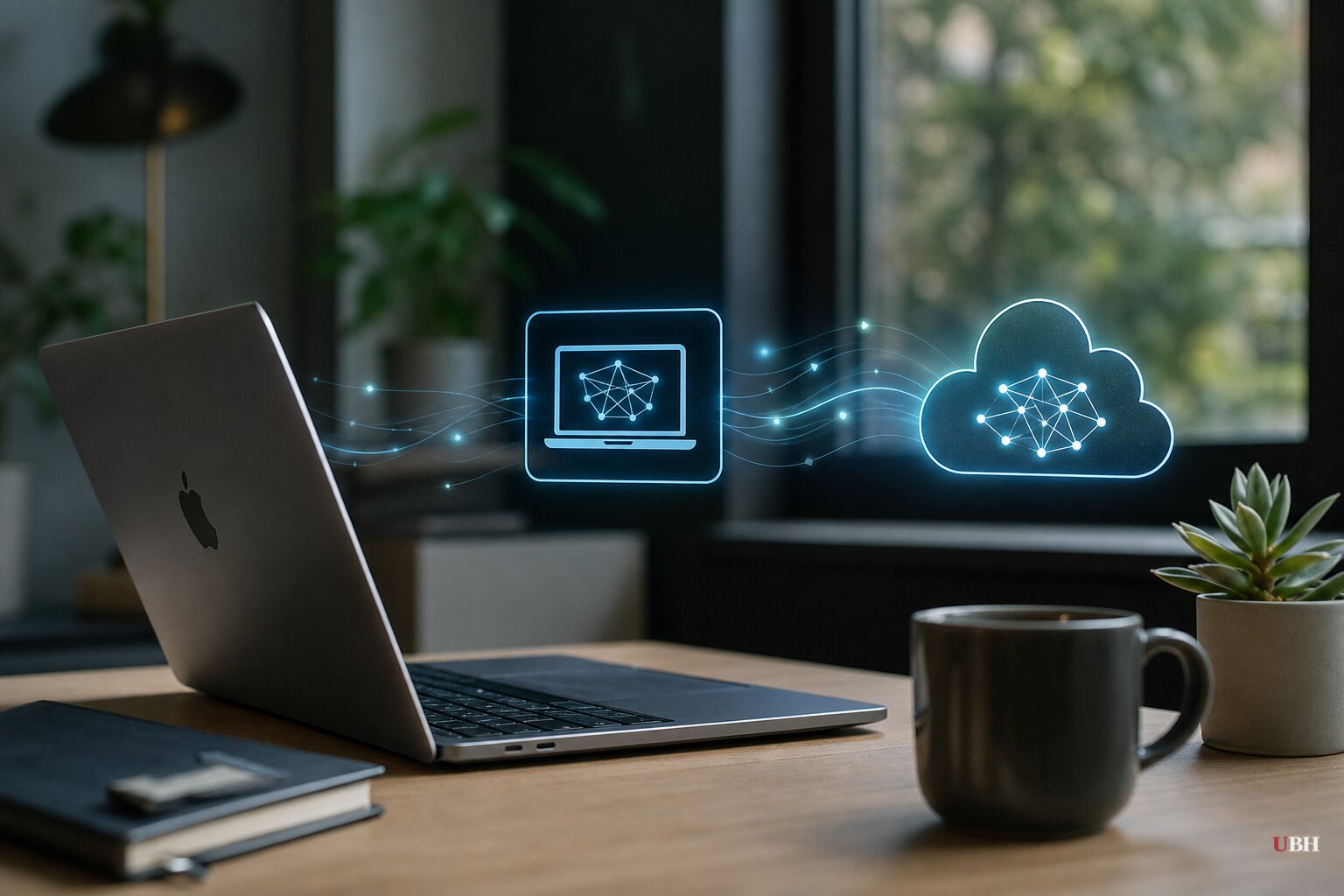
Perplexity introduced a new feature called Hybrid Compute on September 1, 2026, letting its agentic AI platform, Computer, split a single task between cloud-based frontier models and smaller AI models running locally on a Mac.
The idea is simple: keep the sensitive stuff off somebody else's servers. Web research, long-horizon planning and heavy reasoning still run in the cloud on frontier models like Opus 5 and GPT-5.6 Sol. Anything touching private files, client records or on-device actions gets routed instead to a local model running directly on the user's hardware.
Perplexity says this is the first time an AI agent can start a task in the cloud and hand off the confidential parts to a model on the user's own machine mid-task, without restarting the job or losing context, according to VentureBeat, which attended a company press briefing. No independent industry benchmark comparing it to competitors has been published.
How the privacy gate works
The mechanism Perplexity built is called the Privacy Gate, powered by an on-device classifier the company trained itself. It scans uploads and prompts for personally identifiable information, names, addresses, account numbers, credentials, before anything gets sent to the cloud, according to Jon Staff, who leads Perplexity's macOS and iOS engineering teams, in comments to both Engadget and VentureBeat.
"Any time you try to upload files or send information, we're going to automatically check for sensitive content and make sure that you want to share that data to the cloud," Staff told Engadget.
Unite.ai reported additional technical detail from a companion Perplexity research post: the classifier, called PII-Tracer, is a 0.6-billion-parameter model built on a Qwen3 backbone, tested against a benchmark of 13,148 synthetic examples called PII-TRACE. When the gate flags something like a credit card number or government ID, Perplexity says it can keep the data local, refuse the action outright, swap in placeholder values before sending the request to the cloud, or simply ask the user for permission.
Which Macs qualify is murky
Sources disagree on the hardware floor. Unite.ai reported Hybrid Compute requires an Apple Silicon Mac on macOS 15 or later with at least 24GB of unified memory. AI Weekly put the minimum at 32GB. Neither figure comes with a citation to an official spec sheet in the sources reviewed, so buyers checking whether their Mac qualifies should verify directly with Perplexity's own documentation before assuming either number is final.
Three local models ship at launch: Gemma 4 E4B, a Qwen3.6 35B-A3B model, and a second Qwen variant post-trained by Perplexity specifically for Computer, according to Unite.ai and Engadget. Installation happens inside the Mac app with no terminal work required. Perplexity also pointed to its newly announced Mac mini and Mac Studio, which the company's own post called ideal platforms for running the local side of the workload given Apple silicon's unified memory.
The savings pitch comes with an asterisk
Perplexity is marketing this partly as a cost play: tokens generated locally aren't billed against a user's credits. "You're paying for the electricity, you're paying for the hardware, so we're not charging you for that," Staff told VentureBeat. The "savings" only materialize for users who already own a capable Apple Silicon Mac. Cloud orchestration and delegation still consume Perplexity credits regardless.
Staff was also candid about the quality trade-off. Asked whether hybrid output matched a fully cloud-based run, he told Engadget: "A fully frontier output is going to almost always be better in terms of raw artifact creation. It's more expensive, it's more capable." Users are choosing convenience and privacy over top-end accuracy, not getting both for free.
An open question on trust
The most substantive skepticism came from AI Weekly's own read of Engadget's coverage, which it said leaned on a lawyer example, comparing privileged case files against public case law, without addressing whether the privacy classifier is accurate enough to be trusted with that call. For any enterprise user, a classifier trained by the company selling the product and tested against a benchmark the company also built hasn't been independently audited in any source reviewed here. Perplexity's PII-Tracer may catch the obvious stuff, names, account numbers, but false negatives on subtler confidential material would defeat the entire premise of Hybrid Compute.
Separately, Tom's Guide reported Perplexity also introduced Portable Computer the same day, a related but distinct product bringing the Computer platform to Nvidia DGX Spark and other Linux machines with compatible Nvidia GPUs. That version starts every task locally and asks permission before sending any individual step to the cloud, the reverse default of the Mac-based Hybrid Compute.
Whether either system's privacy claims hold up under real-world enterprise use, with actual client data rather than benchmark examples, remains unverified. No third-party security audit of the Privacy Gate or PII-Tracer classifier has been reported as of this writing.
Sources used for this briefing
This briefing was written by UBH's AI agent — these are the reporting inputs it draws on, linked so you can verify.


