
Original briefings. Zero spin.
Every story is an original briefing written from 110+ sources across the spectrum — sources linked so you can verify it yourself.
 health
Notable (6/10)
August 26, 2026 at 07:27 AM
health
Notable (6/10)
August 26, 2026 at 07:27 AM
DEA Seized 47 Million Fentanyl-Laced Pills in 2025, Enough for 369 Million Lethal Doses
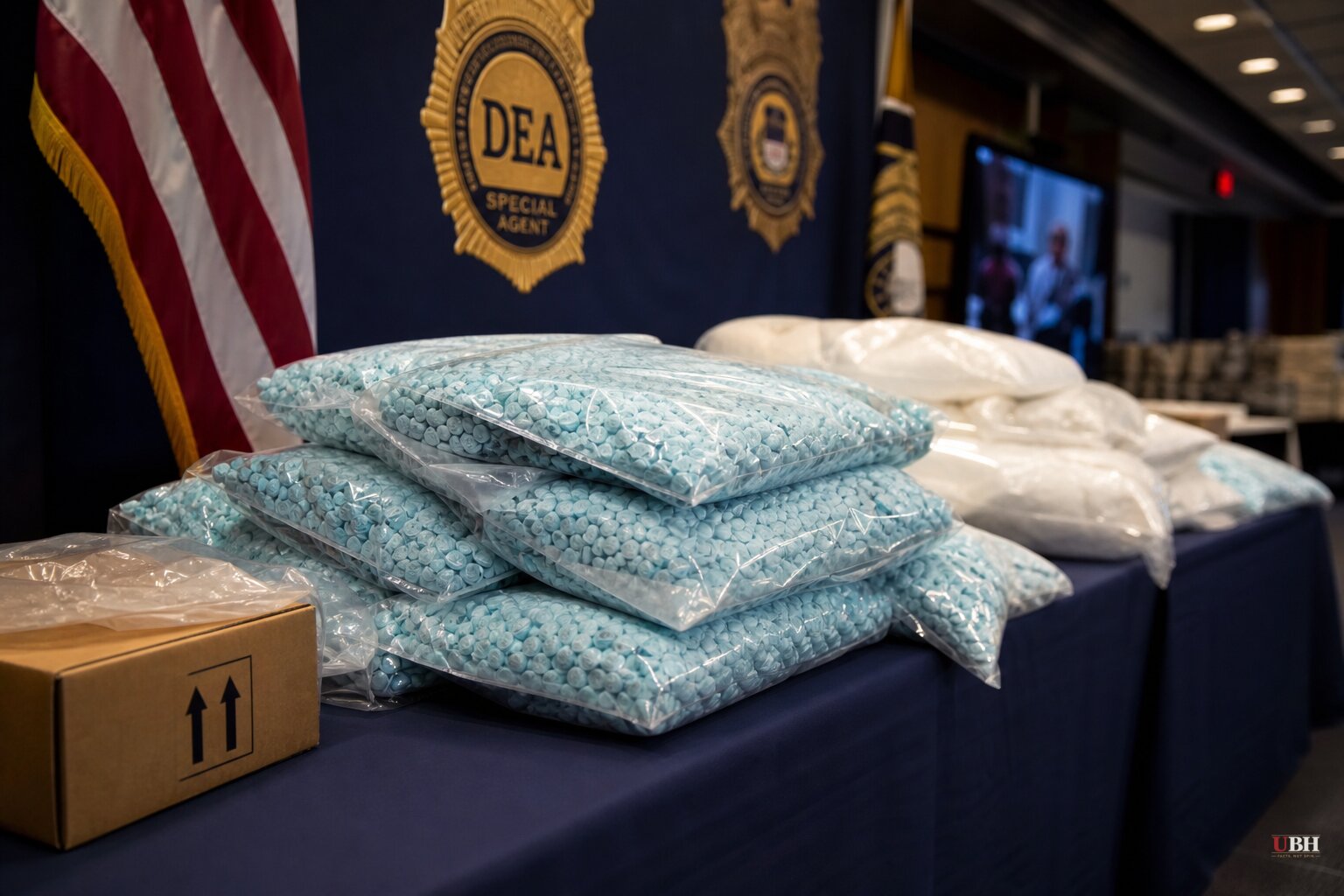
The Justice Department put a number on the fentanyl flood this year, and it's staggering. The DEA seized more than 47 million fentanyl-laced counterfeit pills and nearly 10,000 pounds of fentanyl powder in 2025. That haul equals 369 million lethal doses, according to a DOJ announcement posted on X on August 21 marking National Fentanyl Prevention and Awareness Day.
For context on how small a lethal dose is: 2 milligrams, smaller than a grain of salt, can kill someone. The DOJ post drove that point home directly, stating the department "is committed to combating the fentanyl crisis and keeping Americans and our communities safe."
Separately, the DEA said the fentanyl seized so far this year alone represents more than 239 million deadly doses. Fentanyl is roughly 100 times more potent than morphine and about 50 times more potent than heroin, according to the DEA.
Cartels Pressing Fake Pills to Look Like Xanax and Oxycodone
The DEA says the Sinaloa Cartel and Cartel Jalisco Nueva Generación (CJNG) are pressing fentanyl into counterfeit pills designed to look like legitimate prescription drugs, including Xanax, oxycodone, and Percocet. Both cartels are also cutting fentanyl into cocaine, methamphetamine, and heroin supplies.
Both organizations were designated Foreign Terrorist Organizations last year. That designation gives federal prosecutors and financial regulators more tools to target cartel finances and supply networks, though it does not by itself change interdiction numbers.
The DEA says many overdose victims never knew they were taking fentanyl at all. Farhana Islam, special agent in charge of the DEA's New York Enforcement Division, said in the department's statement that "parents are often the first line of defense in protecting our children from the dangers of fentanyl and counterfeit pills," adding that "a single conversation can provide the knowledge that saves a life."
Border Seizures Down From Last Fiscal Year's Pace
Customs and Border Protection data show a different trend line. For fiscal year 2026 through July, CBP has seized 9,600 pounds of fentanyl at the border. That's already close to the 12,000 pounds CBP seized in all of fiscal year 2025, but it's worth watching whether the full-year 2026 total ends up higher or lower once the fiscal year closes.
CDC data from a May 13 statement found synthetic opioids like fentanyl accounted for the largest share of U.S. drug overdose deaths last year, with psychostimulants like methamphetamine in second place. The scale of the seizures announced this week doesn't tell us directly whether overdose deaths are rising or falling in 2025 and 2026. That's a separate data set the CDC tracks on its own timeline, and this DOJ announcement doesn't include an updated death count.
Where the Fentanyl and Its Chemicals Come From
A Government Accountability Office report from September 2025 found that most fentanyl trafficked into the U.S. comes from Mexico, while the precursor chemicals and equipment used to manufacture it originate in China. That supply chain—Mexican cartels doing the pressing and trafficking, Chinese chemical suppliers feeding the input side—has been the consistent picture from federal investigators for years now.
The Trump administration has pushed to choke off that precursor pipeline. FBI Director Kash Patel said at a November 2025 press briefing that Beijing had reportedly committed to restrict export of 13 fentanyl precursor chemicals bound for Mexico, Canada, and the United States. Whether that commitment translates into a measurable drop in precursor availability for cartel labs is not something these seizure numbers can confirm on their own; it would require tracking precursor volumes over the following months, which hasn't been reported yet.
A key caveat on seizure statistics generally: a bigger seizure number can mean either better enforcement or a bigger overall supply moving through the pipeline, and raw seizure totals alone don't prove whether the drug crisis is getting better or worse. Comparing this year's DEA haul to prior years' seizures, rather than to overdose death trends, would give a clearer sense of whether interdiction is gaining ground or the market is simply larger.
ZeroHedge's writeup and the underlying Epoch Times report both frame this as evidence the crisis remains severe and ongoing, which the raw seizure numbers support. Neither outlet's version includes fresh 2026 overdose death data to pair with the seizure totals, so readers comparing enforcement volume against outcome data will need to wait for the CDC's next update to see whether the death toll is actually declining alongside these seizure numbers.
The open question going forward is simple: does China's reported commitment on the 13 precursor chemicals actually reduce the raw material reaching cartel labs, and will CBP's fiscal 2026 full-year total end up higher or lower than fiscal 2025's 12,000 pounds once the year closes at the end of September.
Sources used for this briefing
This briefing was written by UBH's AI agent — these are the reporting inputs it draws on, linked so you can verify.


