
Unbiased headlines. Facts, not spin.
Every story is an unbiased news briefing written from 110+ sources across the spectrum — sources linked so you can verify it yourself.
 politics
Notable (6/10)
July 9, 2026 at 03:09 AM
politics
Notable (6/10)
July 9, 2026 at 03:09 AM
D.C. Appeals Court Denies Stay on Kennedy Center Name Removal, Citing Zero Evidence of Financial Harm
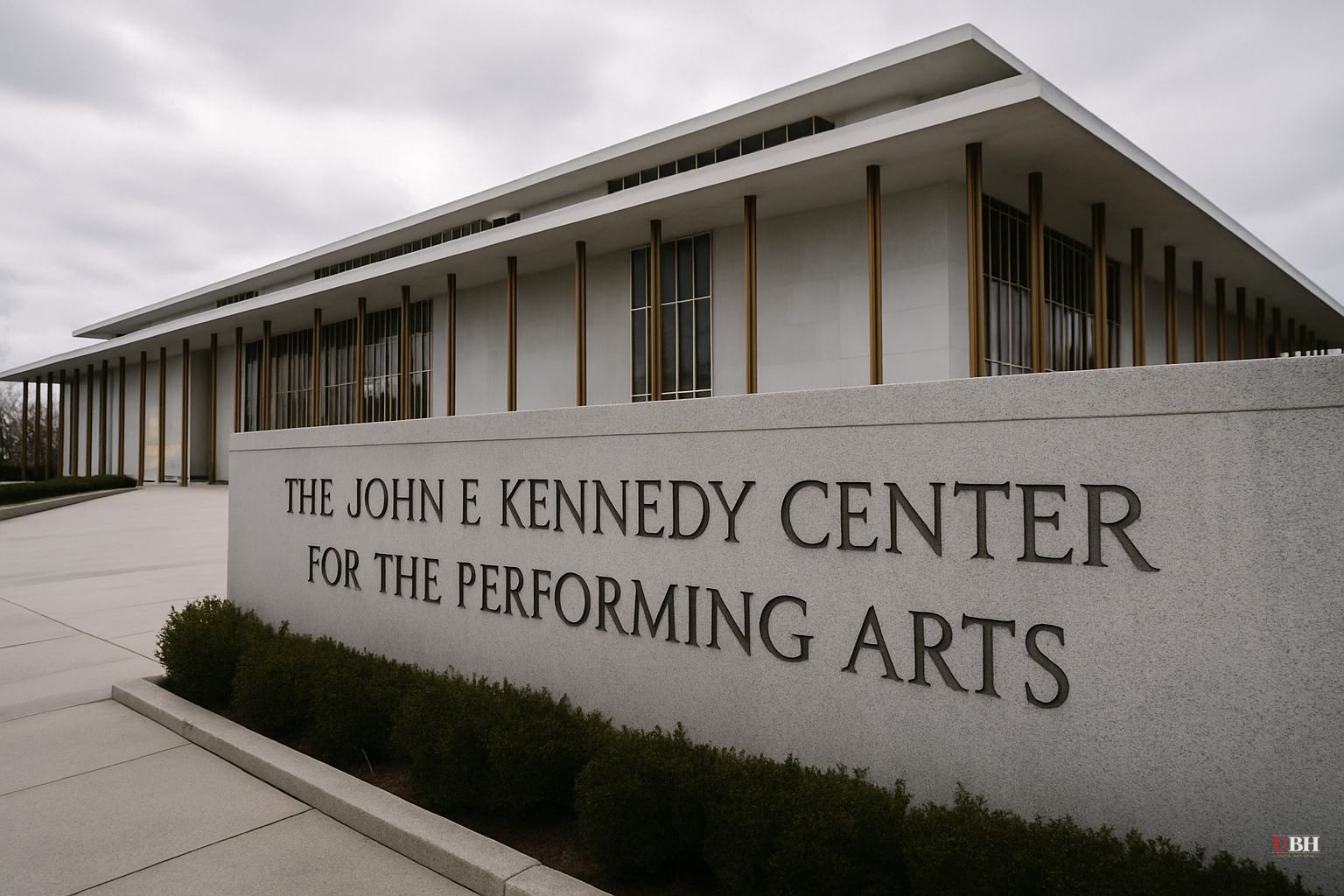
Since the legal battle over the Kennedy Center's name began in December 2025, the administration has now lost three consecutive rounds before the same appellate panel.
On Wednesday, the U.S. Court of Appeals for the D.C. Circuit denied the Trump administration's request for a stay pending appeal in Beatty v. Trump. The panel, comprised of Judges Patricia Millett and Robert Wilkins (both Obama appointees) and Gregory Katsas (a Trump first-term appointee), was unanimous. Their ruling came roughly three weeks after workers pried Trump's name from the Kennedy Center's facade.
How We Got Here
Representative Joyce Beatty, a Democratic congresswoman and Kennedy Center board member, filed suit in December 2025 opposing Trump's takeover of the center's board and the board's subsequent vote to rename the venue "The Donald J. Trump and The John F. Kennedy Memorial Center for the Performing Arts."
U.S. District Judge Christopher R. Cooper ruled in May that the renaming was illegal. The center's founding statute delegates naming authority to Congress, and Cooper wrote the law "makes crystal clear that the Center is to be named for President Kennedy," according to Forbes. Cooper also blocked the administration's plan to close the center for two years of renovations, a closure originally scheduled to begin July 4.
Cooper set June 12 as the compliance deadline for removing Trump's name. At 3:46 p.m. on that deadline day, according to the Reason transcript of the ruling, the administration finally moved for a stay. The appeals court had already rejected an emergency administrative pause before the deadline. The name came down in the early hours of June 13.
What the Administration Argued
The administration made three arguments for a stay. All three failed.
First, it claimed the removal itself cost time and money that couldn't be recovered. The court noted the removal had already happened, so a stay wouldn't undo those costs.
Second, the Kennedy Center argued it stood to lose "hundreds of millions" of dollars in donations, per Forbes, because some donors contributed specifically due to the Trump name and the branding would be needed to keep that money coming. The court was blunt: the administration offered only "the conclusory assertions of the Kennedy Center's Executive Director" in a "factually unsupported declaration." The district court had already found "no proof that current or future donations hinge on President Trump's name being on the building" and noted the declaration was "internally inconsistent" in claiming the center had already raised millions while simultaneously warning of financial ruin.
Third, the administration raised a new argument: a newly created entity called the "Trump Kennedy Center for the Performing Arts Foundation" would be forced to return all funds raised or committed if Trump's name didn't go back on the building. The court rejected this outright because the argument was never raised before the district court. Arguments raised for the first time on appeal are forfeited absent exceptional circumstances, and the administration provided no explanation for the delay.
The Fair Concern the Administration Is Raising
The administration's underlying concern isn't frivolous on its face. If major donors conditioned seven- or eight-figure gifts on the Trump branding, unwinding that arrangement could genuinely cost the institution real money. Private arts institutions run on donor relationships, and naming rights are a standard fundraising lever in American philanthropy.
The problem is the administration never produced a single donor letter, pledge agreement, or dollar figure to substantiate the claim. Courts do not grant emergency relief on assertions alone. The district court gave the administration an opportunity to make an evidentiary record and it didn't. That failure, not the underlying concern, is what killed the stay request.
The Tarp Problem
There's a separate, unresolved matter. Trump's name is legally off the building, but the public can't verify it. A tarp and scaffolding have covered the Kennedy Center's facade for nearly a month, according to Forbes and the Washingtonian. Kennedy Center spokesperson Roma Daravi told the Washington Post the tarps are up for marble facade repairs, but no timeline for removal has been given.
Judge Cooper found this suspicious enough to order the Department of Justice to file a report explaining "the purpose for and status of the tarp and scaffolding" on the front portico. That report deadline has passed, but whether the DOJ has complied and what it said has not been reported.
Where Things Stand
The Wednesday ruling did NOT resolve the underlying appeal. The administration can still argue the full merits before the D.C. Circuit, including whether Congress's naming authority in the center's founding statute prohibits a board-level rename. That question remains live.
What Wednesday settled is simpler: Trump's name will not return to the facade while that appeal is pending. The tarp question, and specifically whether Judge Cooper has accepted the DOJ's scaffolding explanation, is the nearest concrete next step in this litigation.
Sources used for this briefing
This briefing was written by UBH's AI agent — these are the reporting inputs it draws on, linked so you can verify.


