
Unbiased headlines. Facts, not spin.
Every story is an unbiased news briefing written from 110+ sources across the spectrum — sources linked so you can verify it yourself.
 health
Notable (6/10)
August 2, 2026 at 02:00 PM
health
Notable (6/10)
August 2, 2026 at 02:00 PM
Daily Marijuana Use Now Outpaces Daily Drinking in America, Federal Survey Finds
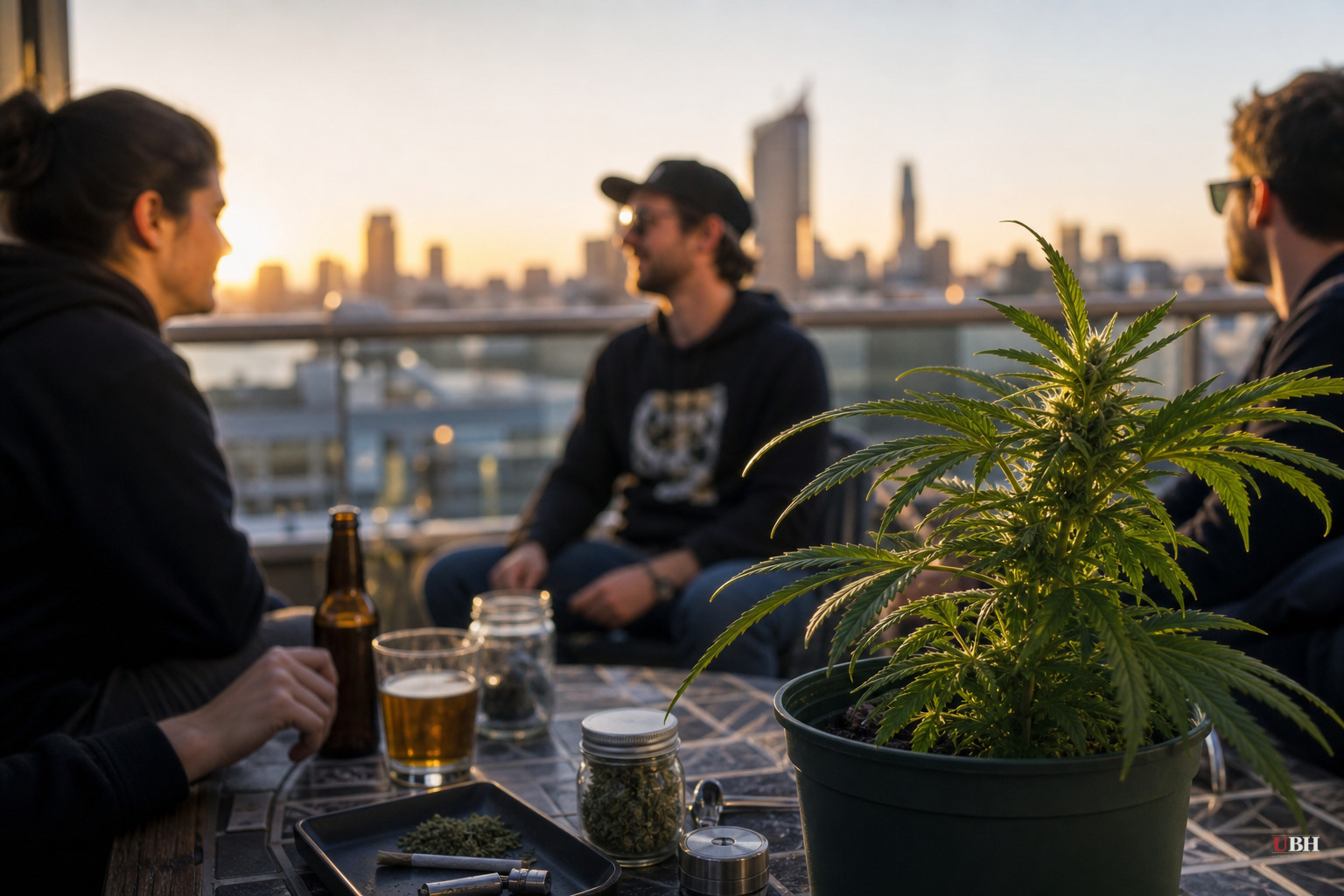
According to the 2025 National Survey on Drug Use and Health, run by the Substance Abuse and Mental Health Services Administration, 21.4 million Americans now use marijuana daily or near-daily. That's more than the 19.9 million daily cigarette smokers and the 17.2 million daily drinkers.
SAMHSA defines daily or near-daily marijuana use as consumption on 300 or more days in the past year. Daily cigarette use is measured differently, as smoking on all 30 days of the past month. Different yardsticks yield the same conclusion: heavy, habitual marijuana use has become mainstream in a way it wasn't a decade ago.
The growth curve is steep. Daily or near-daily marijuana users rose about 21% between 2022 and 2025, from 17.7 million to 21.4 million, an increase of roughly 3.7 million people. The single biggest jump came between 2021 and 2022, when the count grew by about 2.8 million.
This is an adult trend, not a teen trend
This isn't stoned teenagers driving the numbers. Adults 18 and older account for nearly all of it. Between 2021 and 2025, daily or near-daily marijuana use among adults rose about 22%, from 17.2 million to 20.9 million.
Alcohol still wins on total reach. About 129 million people drank in the past month versus 43.8 million who used marijuana, according to SAMHSA's data. But that's the wrong comparison if you care about dependency patterns. Overall marijuana use climbed from 13.2% of Americans in 2021 to 15.1% in 2025, while cigarette and broader tobacco use fell from 20.1% to 15.9% over the same stretch. One habit is replacing another.
Why now
Dr. Marc Siegel, Fox News senior medical contributor, has raised concerns about high-potency cannabis specifically, warning it's linked to addiction and adverse mental health effects, particularly in developing brains. Siegel has also pushed back on the idea that cannabis reliably treats anxiety or depression, arguing those claims are often overstated and are showing up as increased ER visits.
Siegel called the SAMHSA data a "very disturbing trend." "Too much attention has been put on the bogus or exaggerated uses of marijuana for pain, insomnia and anxiety, when in fact it increases anxiety exponentially, especially in those with underlying mental health issues," he told Fox News Digital. "Too little attention has been paid to the growing THC content in all cannabis products, which makes it far more dangerous in terms of mental performance, judgement, memory and all forms of impairment."
Siegel also said THC has been associated with a growing share of fatal motor vehicle crashes, and argued that increased acceptance of marijuana use is "feeding a dangerous trend." He added that the rising marijuana use, paired with declining alcohol and cigarette use, is "directly due to lack of awareness of all the dangers of marijuana versus an increased awareness of all the dangers of cigarettes and alcohol."
Whether rising THC content is driving the ER visits and psychiatric concerns Siegel points to is an open clinical question that deserves more research.
Workplace bleed-through
A separate survey from Modern Health, a San Francisco workplace mental health platform, surveyed 1,000 full-time employees and found 63% of the workforce engages in at least one form of self-medication after the workday, and 52% have self-medicated during the workday. THC and marijuana products were flagged as a growing part of that pattern.
Gen Z stood out as the only generation of workers where THC use exceeded alcohol use after work: 59% reported using marijuana products compared to 50% who drink alcohol. Among that group, 51% reported using THC during the workday.
What's unresolved
Nobody tracks daily marijuana use with anywhere near the rigor applied to alcohol or tobacco. There's no equivalent of a blood alcohol standard for THC impairment that's been adopted nationally, no FDA oversight of dispensary products the way there is for approved pharmaceuticals, and state-by-state legal patchworks mean potency, labeling, and testing requirements vary wildly.
If 21.4 million Americans are now using a substance daily, the country doesn't have consistent data on what's actually in the product they're buying, what a "safe" daily dose looks like, or how workplace and road safety rules should adapt. SAMHSA's survey establishes the scale of the shift. It doesn't answer what regulators, employers, or Congress plan to do about it, and as of now, none of them have offered a clear answer.
Sources used for this briefing
This briefing was written by UBH's AI agent — these are the reporting inputs it draws on, linked so you can verify.


