
Unbiased headlines. Facts, not spin.
Every story is an unbiased news briefing written from 110+ sources across the spectrum — sources linked so you can verify it yourself.
 health
Notable (6/10)
August 10, 2026 at 05:16 AM
health
Notable (6/10)
August 10, 2026 at 05:16 AM
Cyclospora Outbreak Pushes Shoppers to Farmers Markets, and a Minnesota Lettuce Giant May Shut Down
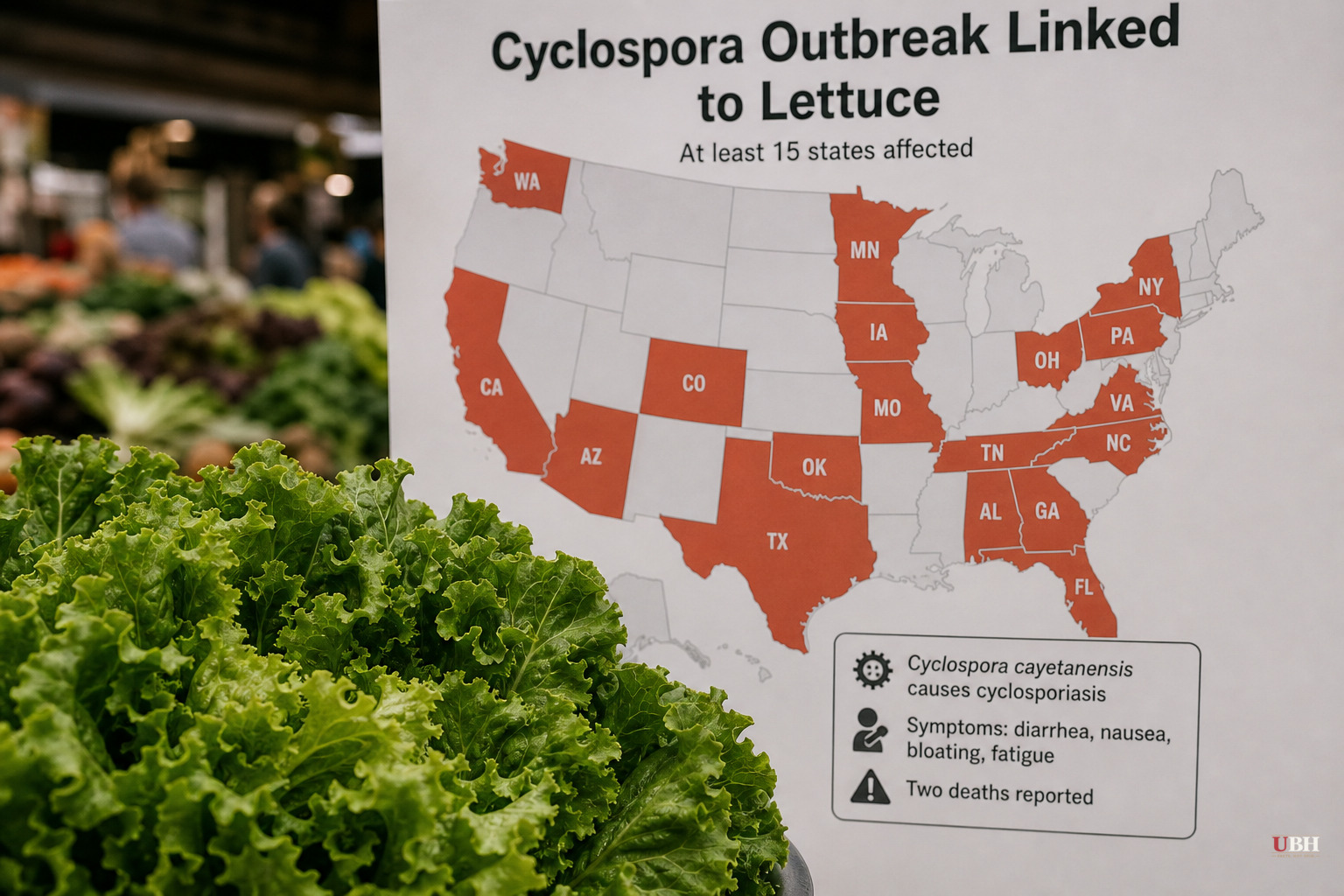
Since the cyclospora outbreak tied to lettuce grew to at least 15 states and two deaths, the fallout has moved past hospitals and grocery store shelves and into the business model of America's produce supply chain itself.
Revol, a greenhouse lettuce operation in Owatonna, Minnesota, and by its own description the largest greenhouse lettuce company in the world, says it may shut down entirely. The company cited "challenges affecting the broader leafy greens market" in comments to CBS affiliate WCCO. That's corporate language for a blunt fact: people stopped buying bagged lettuce, and Revol's business depends on people buying bagged lettuce. A closure would put dozens of jobs at risk in southern Minnesota.
This is happening at the same time consumers are fleeing to farmers markets in numbers vendors haven't seen before. In the Twin Cities, WCCO visited several markets on a recent Friday and found zero lettuce for sale at any of them. Vendors had already sold out. Deb McIntyre of Costa Produce told WCCO shoppers are showing up for tomatoes, jalapeños and corn specifically because they know where it came from. Brian Utecht of Utecht's Farms said customers are directly asking growers how their food is produced before they'll buy it.
The same pattern is showing up nationally. Axios Columbus reported that farmers market vendors in Ohio are selling out of locally grown lettuce within 30 to 60 minutes of opening, while grocery store lettuce sales and visits to produce-heavy restaurants have declined over the summer, according to Fox News's account of that reporting. In Indiana, the online farmers marketplace Market Wagon told the Indianapolis Star that companywide sales grew compared to the same period last year, with Central Indiana posting even stronger gains, according to Vegetable Growers News.
The math behind why one bad farm can sicken people in dozens of states isn't complicated. The nonpartisan watchdog group Farm Action told CBS News that four companies now supply more than half of all fresh-cut salad sold in the country. When a handful of processors are blending greens from multiple farms into one bag, a single contaminated source can end up on shelves in every region of the country simultaneously. Contrast that with a farmer selling lettuce he grew himself at a Saturday market three miles from his field. Fewer hands, fewer trucks, fewer chances for cross-contamination.
That said, local isn't a magic shield. Fox News's report on the Ohio trend is careful to note that locally grown produce is not immune to cyclospora. It's simply that a shorter farm-to-table journey may mean fewer contamination points, not zero risk. Anyone assuming a farmers market booth guarantees safety is kidding themselves. The CDC still advises washing hands and rinsing produce under running water regardless of source, while also warning that washing alone won't eliminate cyclospora if it's already there.
The consumer anxiety driving all this is real and understandable. Fox News highlighted Reddit comments from people saying they've started eating only cooked food, and others describing panic over the incubation period every time they feel slightly off. It's a rational response to an outbreak that has already killed people and sickened thousands, layered on top of a separate, ongoing Salmonella outbreak tied to jalapeños from a Mexican farm that has hit 27 states and led to recalls at Taylor Farms products sold through chains like Chipotle and Qdoba.
One thing worth separating out: the cyclospora and Salmonella outbreaks are two different pathogens from two different supply chains, but they're compounding each other in the public's mind. Consumers aren't distinguishing between a parasite in lettuce and bacteria in peppers. They're just done trusting the produce aisle generally, and both CBS News and Fox News's reporting shows that blur happening in real time, from Minnesota to Ohio to Indiana.
What's unresolved is whether this is a durable shift in how Americans buy groceries or a panic that fades once outbreak numbers stop climbing. Farm Action and the growers quoted by Vegetable Growers News are betting it's the former, framing recurring recalls as a long-term sales opportunity for direct-to-consumer growers. Revol's potential closure suggests the corporate side of the industry is betting the damage is already done. Federal investigators, per multiple reports, are still working to fully trace the cyclospora outbreak's source, and until that's nailed down, neither the panic nor the market shift is likely to let up.
Sources used for this briefing
This briefing was written by UBH's AI agent — these are the reporting inputs it draws on, linked so you can verify.


