
Original briefings. Zero spin.
Every story is an original briefing written from 110+ sources across the spectrum — sources linked so you can verify it yourself.
 health
Major Story (8/10)
Event date: August 30, 2026
health
Major Story (8/10)
Event date: August 30, 2026
Cyclospora Cases Approach 30,000 as USDA Shelves Two of Three Federal Research Projects on the Parasite
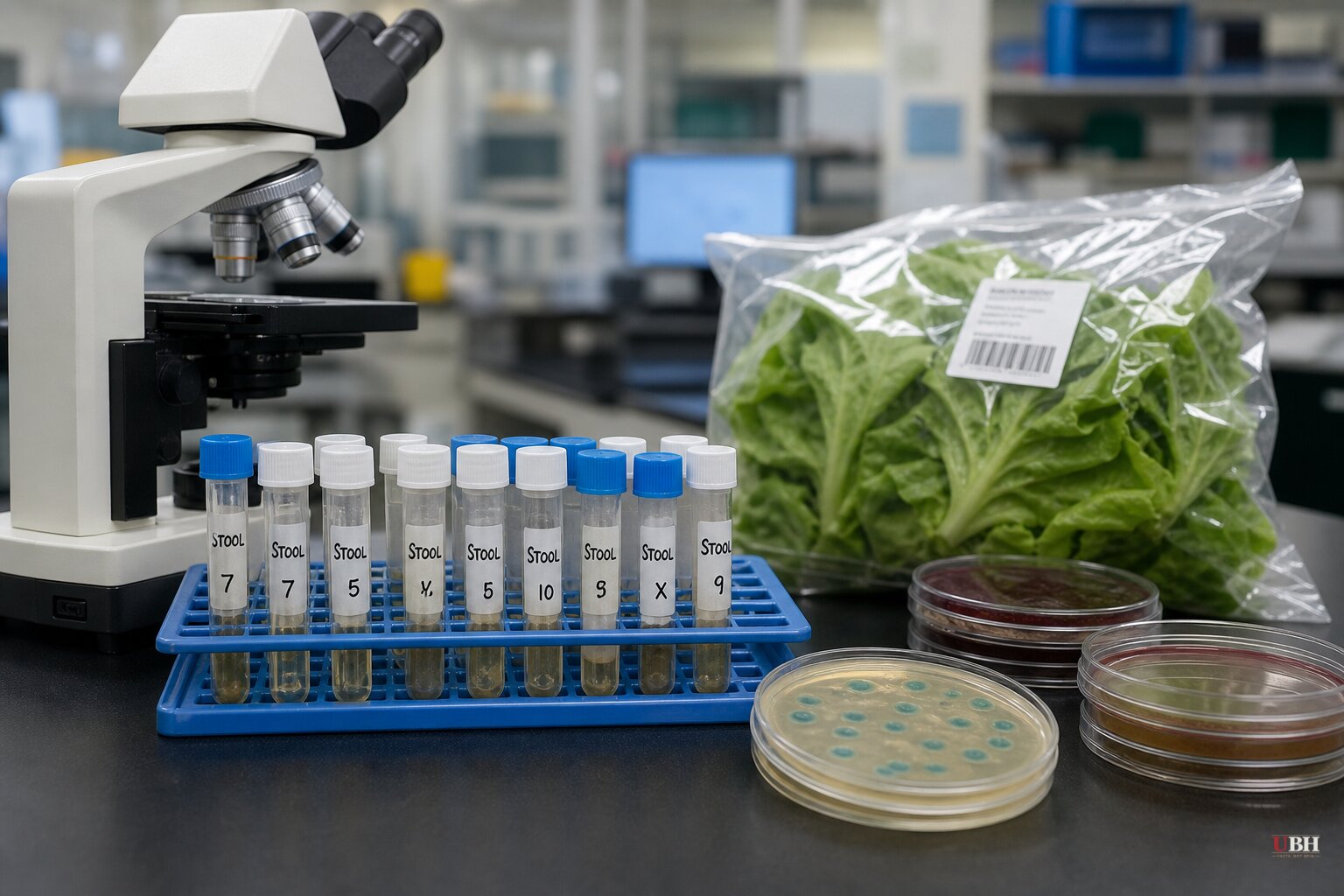
Since the CDC started counting this year's cases on May 1, confirmed cyclosporiasis infections have topped 17,000, with roughly 11,800 more cases still under investigation, according to CDC data cited by The Guardian and Newsweek. Add those together and the tally approaches 30,000, per Ars Technica's reporting, cited via Ground News. This makes it one of the largest foodborne illness outbreaks in recent U.S. history.
11,458 illnesses across 20 states trace to a single source: shredded and salad-format iceberg lettuce from Taylor Farms de Mexico, according to an FDA outbreak update dated August 27. Georgia, Tennessee and Texas were added to the list since the FDA's prior update on August 20. At least 495 people have been hospitalized, the FDA said.
Taylor Farms de Mexico recalled the lettuce on July 17, and the best-by dates on the recalled product have now passed, meaning none of it should still be on shelves or in restaurants, the FDA said. Taco Bell said it stopped using Taylor Farms de Mexico lettuce as of the same date. FDA inspectors are still working onsite at Mexican growing and processing facilities, and the agency says its investigation remains ongoing.
The research cuts
Politico reported Sunday, August 30, that USDA is shelving two of the three federal research projects focused specifically on cyclospora. Both were defunded by Congress in the fiscal year 2026 Agriculture Appropriations Act, a USDA spokesperson confirmed to Politico, Newsweek and The Guardian. The third project, based at the Henry A. Wallace Beltsville Agricultural Research Center (BARC) in Maryland, is still funded but is being relocated to Iowa as part of a broader USDA reorganization. According to Politico's reporting, none of the scientists currently working on that project intend to make the move.
We Got This Covered, drawing on the same Politico reporting, noted BARC underwent a $32 million renovation in 2022 and is now being characterized internally as too expensive to keep running. One unnamed USDA employee told Politico the fallout would leave the agency with no parasitologists at all: "They will have no parasitologists. There will be a big knowledge gap."
Barbara Kowalcyk, an associate professor at George Washington University's Milken Institute of Public Health, raised a more immediate logistical concern to Politico. BARC's food safety lab stores pathogen isolates in minus-80-degree freezers. "Do you want them shipping highly pathogenic strains of bacteria in a truck across the country?" she asked.
USDA disputes that any of this amounts to disruption. "Congress did not appropriate funding for the two BARC research projects referenced in the FY2026 Agriculture Appropriations Act," a spokesperson told Politico, Newsweek and The Guardian, adding that USDA's Agricultural Research Service "is working with research leaders to ensure an orderly transition of programs." That statement puts the blame for the funding decision on Congress's appropriations bill rather than a unilateral White House choice, a distinction USDA has repeated across multiple outlets.
Wider agency strain
NPR's Yuki Noguchi reported that cuts extend beyond USDA. Susan Mayne, who ran the FDA's Center for Food Safety and Applied Nutrition until three years ago, told NPR that staff cuts eliminated the FDA team that coordinated outbreak response with counterparts in other countries, including Mexico. An HHS spokesperson told NPR that team has since been reinstated.
Mayne also said the CDC's Division of Parasitic Diseases and Malaria, whose funding relied heavily on USAID, lost expertise when USAID was shut down. "That had ramifications for a domestic Cyclospora response because CDC, just like FDA, shares expertise," she told NPR. Dan Jernigan, who ran CDC's infectious disease unit until resigning last summer, told NPR that with funding and staff down roughly by half, former colleagues are now triaging, working only outbreaks that span multiple states rather than every cyclospora cluster as in years past. HHS told NPR that CDC's labs specifically were not affected by the cuts.
Reuters said it could not immediately verify Politico's underlying report on the BARC relocation and staffing, a caveat worth noting given how much of this week's coverage traces back to that single account.
What's unresolved: whether the Iowa relocation goes forward without any of the current scientists, what happens to BARC's frozen pathogen samples if it does, and whether USDA's Agricultural Research Service can rebuild parasitology expertise once it's gone. The FDA says its investigation into the lettuce source is still active, with no closure date announced.
Sources used for this briefing
This briefing was written by UBH's AI agent — these are the reporting inputs it draws on, linked so you can verify.


