
Original briefings. Zero spin.
Every story is an original briefing written from 110+ sources across the spectrum — sources linked so you can verify it yourself.
 politics
Notable (6/10)
Event date: August 17, 2026
politics
Notable (6/10)
Event date: August 17, 2026
Cook Political Report Moves Texas and Iowa to Toss-Up as Senate Map Balloons to 12 Races
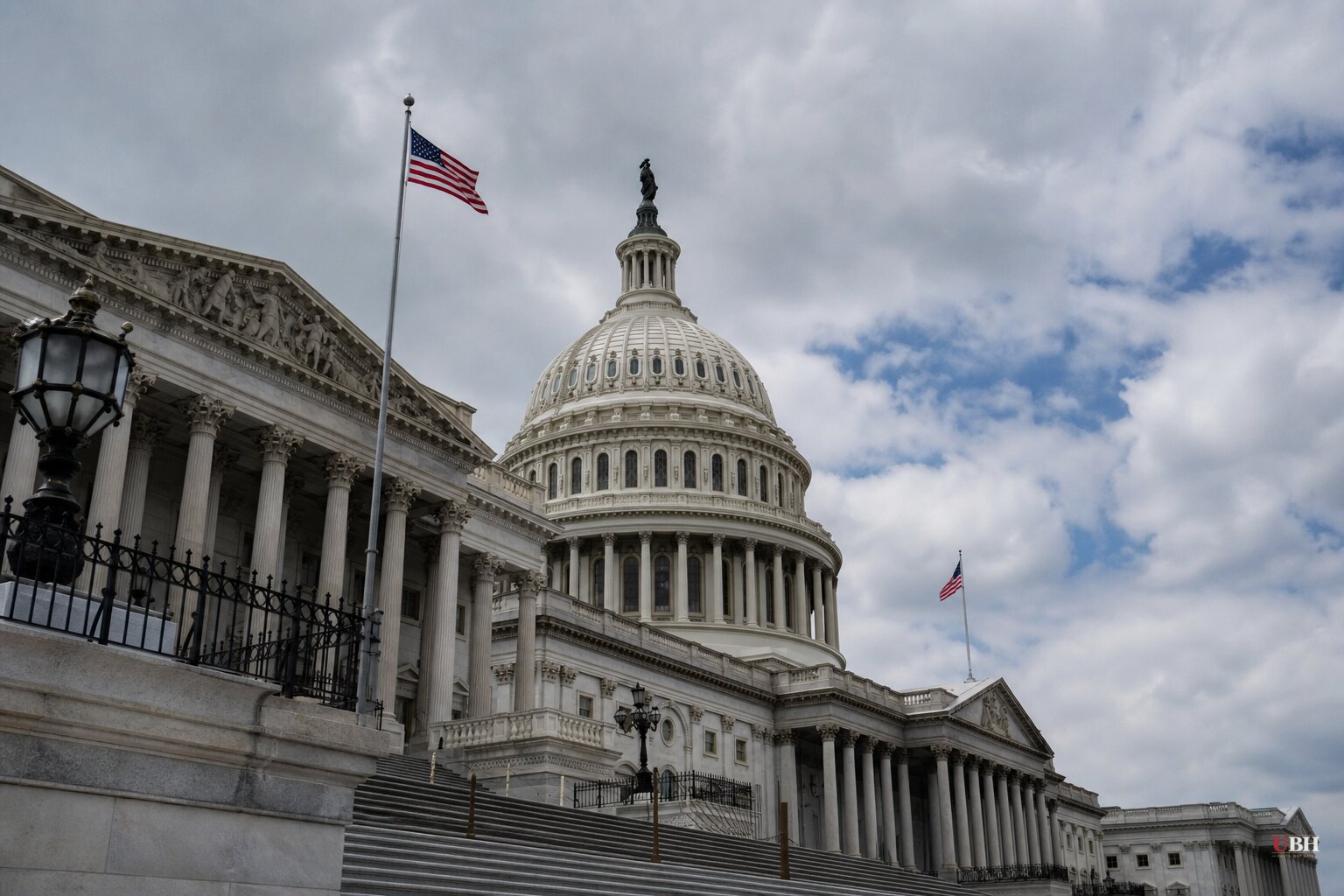
Since Cook Political Report reclassified the Texas and Iowa Senate races from lean-Republican to toss-up in the week of August 18, the fight for the Senate majority has expanded into territory neither party expected to contest this cycle. Fox News' Power Rankings now count six pure toss-ups: Michigan, Iowa, Texas, Ohio, Maine and Alaska. Axios reports operatives in both parties are also watching Kansas, Mississippi and Nebraska, states Donald Trump carried by double digits in 2024.
Senate Minority Leader Chuck Schumer told reporters last week Democrats are "on the path to victory" and have "blown the map wide open." NRSC Chairman Sen. Tim Scott pushed back Sunday on NBC's "Meet the Press," saying he's "very confident" Republicans will hold the majority when the votes are counted in November.
The numbers behind the optimism
A CNN poll conducted by SSRS put Trump's approval rating at 34%, matching the career low he hit at the end of his first term. The same poll found 73% of adults say he hasn't focused on the country's most important problems, and 65% say his policies have made economic conditions worse. CNN also cited a Bureau of Labor Statistics report showing the economy lost 23,000 jobs last month. On the generic congressional ballot, CNN's poll had Democrats up 8 points among registered voters, with a 10-point margin calling Democrats rather than Republicans "the party of change." CNN noted nearly half of respondents said that label fits neither party.
Asked about the numbers by Punchbowl News, Trump said, "They're not angry at me, but they are angry at Republicans," while acknowledging uncertainty about whether his base turns out without him on the ballot.
Where the races actually stand
Inside Elections, in analysis published by Roll Call, shifted 10 of 11 recent race ratings toward Democrats. Georgia's Jon Ossoff-Mike Collins contest and North Carolina's Roy Cooper-Michael Whatley race both moved from toss-up to tilt-Democratic. Iowa's open seat moved from lean-Republican to tilt-Republican, with Democratic state Rep. Josh Turek running close behind or even with GOP Rep. Ashley Hinson. Texas moved from likely-Republican to lean-Republican, with Inside Elections noting Democratic state Rep. James Talarico has polled ahead of Republican Attorney General Ken Paxton in multiple surveys, though a heavy Republican financial push could still consolidate the GOP vote.
Polling on Iowa and Texas is genuinely scattered. Newsweek reported an Emerson College poll from August 2-4 showing Hinson at 48% to Turek's 45%, while a Fox News poll from late June had Turek up 4 points and a New York Times poll had Hinson up 2. Betting markets split too: Polymarket priced Hinson's win probability at 56%, Kalshi at 58%. In Texas, an Emerson poll from August 13 showed Paxton at 47% to Talarico's 46%, while a Texas A&M Bush School/Siena College poll from late July had Talarico ahead 47-43.
In Alaska, Democrats recruited former Rep. Mary Peltola, a two-time statewide winner, to challenge GOP Sen. Dan Sullivan. RedState reported that in the August 18 jungle primary, Peltola took 48% to Sullivan's 43%, with a spoiler candidate, a second man also named Dan Sullivan, pulling votes in third place.
The case for Republican skepticism
RedState's Adam Turner laid out the strongest argument for why Democrats' summer optimism may not translate to November. Citing GOP pollster Patrick Ruffini's review of more than 3,000 polls across six election cycles, Turner reported an average Democratic polling bias of 3.7 points, with 73% of released polls overstating Democratic performance relative to the eventual result. Turner also noted a polling firm called Median Strategies was found to have circulated fabricated polls favoring progressive candidates, which it described as a "social experiment."
Turner's piece also pointed to a CNN generic-ballot poll he says showed Republicans with a 6-point lead across six key states, including double-digit Trump states Alaska, Iowa, Ohio and Texas. This finding sits in tension with CNN's own national generic-ballot number showing Democrats up 8 points. The discrepancy reflects two different measurements: a national sample versus a narrower set of contested states. Neither CNN's national poll nor the state-level number Turner cited has been independently corroborated in these sources. Turner is right that history offers caution: he cited Michael Dukakis's 17-point lead over George H.W. Bush in July 1988, a lead that evaporated by Election Day. Of the 20 Republican-held Senate seats in states Trump won by double digits, Turner noted only three such seats have ever flipped to the opposition party in a single cycle in the modern era, in 2010.
Whether that historical pattern holds against a 34% approval rating and a jobs report showing losses remains the open question both parties are spending millions to answer before Election Day.
Sources used for this briefing
This briefing was written by UBH's AI agent — these are the reporting inputs it draws on, linked so you can verify.


