
Original briefings. Zero spin.
Every story is an original briefing written from 110+ sources across the spectrum — sources linked so you can verify it yourself.
 politics
Major Story (8/10)
September 1, 2026 at 07:21 PM
politics
Major Story (8/10)
September 1, 2026 at 07:21 PM
Congress Splits Along New Lines Over DHS Surveillance Summonses, Flock Camera Network, and a Federal Citizenship Database
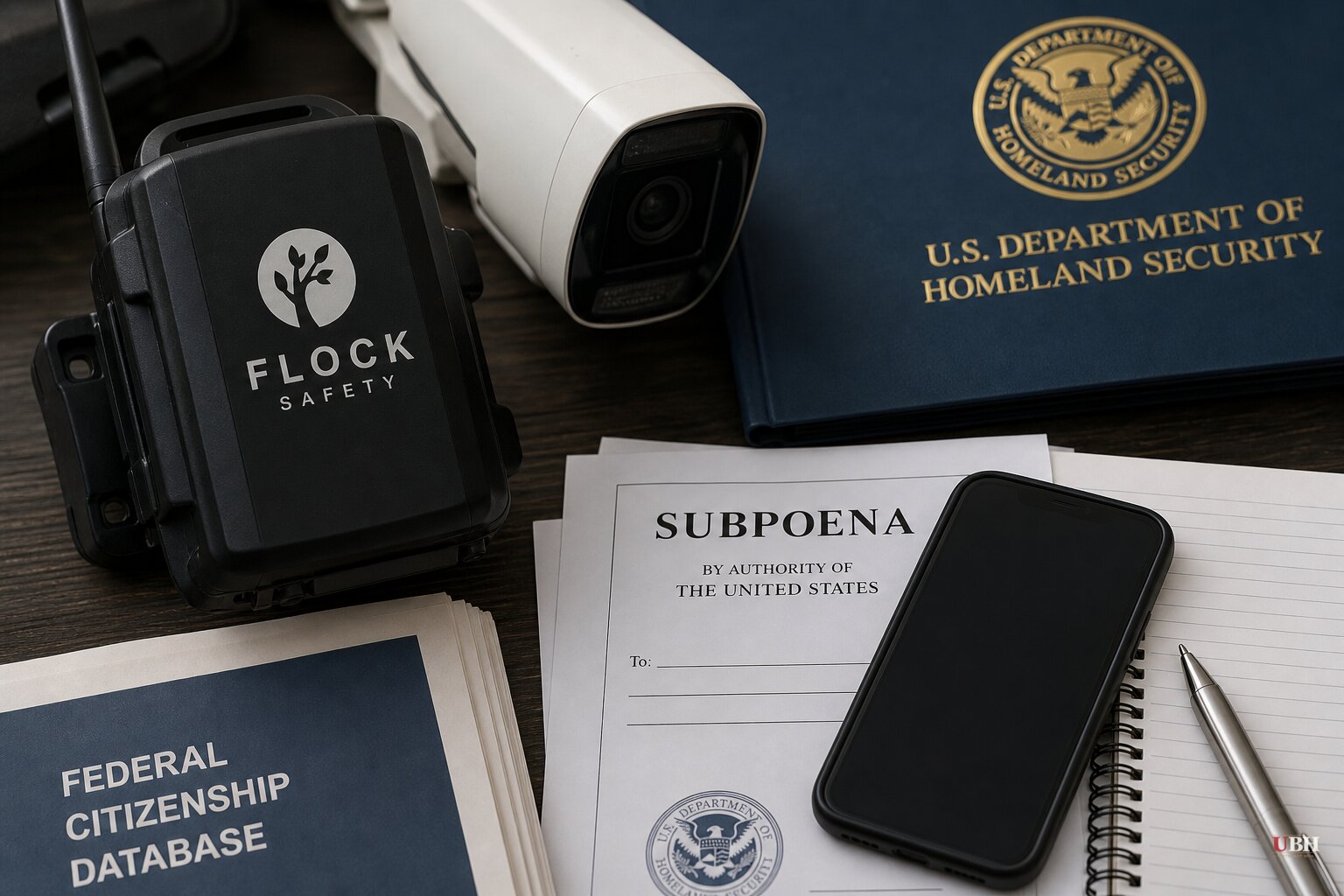
Three separate fights over government data collection are running simultaneously in Washington right now, and they don't split neatly along party lines.
The DHS Summonses
Senator Ron Wyden of Oregon and Representative Pramila Jayapal of Washington, both Democrats, asked the Government Accountability Office this week to investigate how Homeland Security Investigations, the DHS's investigative arm, has been using administrative summonses, a tool meant for customs matters, to collect records on journalists, nonprofits, and labor unions without a judge's sign-off, according to the Guardian.
The case that triggered it: HSI obtained six months of phone records for Minneapolis journalist Georgia Fort and issued a summons to Google seeking YouTube account data on Fort and Don Lemon, according to the Guardian. A judge had already rejected a search warrant for that same information twice, ruling that Fort and Lemon needed a chance to contest it first. Federal prosecutors have charged both with civil rights crimes tied to a January protest at a Saint Paul church they were covering. Both have pleaded not guilty, and no verdict has been reached.
DHS has also used the summonses to get financial records from unions and Venmo transactions from a nonprofit, and issued subpoenas to Meta, X, and Reddit to unmask anonymous critics, the Guardian reported. Each summons reportedly tells the recipient not to notify the target, though Wyden and Jayapal note that language isn't legally binding and companies can ignore it. A GAO spokesperson confirmed the request was received and is under review. No investigation has been opened, and DHS has not issued a public response addressed in the available reporting.
The government's position, though not quoted directly here, is that administrative summonses are a decades-old, legal investigative tool and agencies routinely argue that advance notice to a target can compromise an active case. Whether that justifies using a customs-specific power against journalists and unions is exactly what the GAO has been asked to sort out.
Flock's Camera Network
On the other side of the aisle, Republican Senator Josh Hawley of Missouri is investigating Flock Safety, the company whose automated license plate readers now sit in more than 120,000 locations across 49 states, scanning over 20 billion vehicles a month, according to Fox News.
"I'm investigating Flock cameras to determine who has access to hundreds of millions of Americans' data and what they're doing with it," Hawley, who chairs the Senate Judiciary Subcommittee on Crime and Counterterrorism, told Fox News Digital.
Robert Frommer of the Institute for Justice's Project on the Fourth Amendment told Fox News the problem isn't the cameras themselves but police searching a person's movement history without a warrant. "Go to a judge, explain to the judge why you should be able to use this tool," Frommer said, while allowing for warrantless use in genuine emergencies followed by after-the-fact justification.
Flock's cameras do help solve crimes and locate missing people, which is the case law enforcement makes for keeping the network running. Several Texas cities have already pulled their cameras over privacy concerns, per Fox News, showing this isn't purely a partisan revolt.
The Citizenship Database Lawsuit
A third front involves a March 31, 2026 executive order directing DHS, the Social Security Administration, and the State Department to build "State Citizenship Lists" for all 50 states, giving states 60 days to cross-check voter rolls against the federal data, according to Citizens for Responsibility and Ethics in Washington (CREW).
The Electronic Privacy Information Center, represented by Protect Democracy and CREW, filed suit in the U.S. District Court for the District of Maryland, alleging no statute authorizes the administration to centralize Americans' Social Security numbers, addresses, and citizenship records this way. CREW's complaint says DHS itself has acknowledged the lists will contain inaccuracies, and that the administration is threatening to investigate election officials who issue ballots to people the federal list flags as ineligible. These are allegations in a filed complaint; no ruling has been issued.
The administration's underlying goal, verifying that only citizens vote, is a mainstream and legitimate election-integrity concern shared by many voters. The dispute here isn't over whether noncitizen voting should be prevented. It's over whether a rushed, centralized federal database built from data never meant to be merged is the right tool, especially with a 60-day compliance clock ticking before the midterms.
A Legislative Response
Amid all three fights, the House passed the bipartisan NDO Fairness Act (H.R. 6048), which would force federal courts to apply a stricter standard before issuing secrecy orders that bar tech companies from telling customers when law enforcement accesses their cloud data, according to Microsoft's own account of the bill's passage. Microsoft says the push traces back to 2021 revelations that the first Trump Justice Department used such orders in a leak probe that hid subpoenas targeting members of Congress and reporters for years, some renewed even after the investigations became public, per the Justice Department's Inspector General. The bill now heads to the Senate, where its fate is unresolved.
Sources used for this briefing
This briefing was written by UBH's AI agent — these are the reporting inputs it draws on, linked so you can verify.


