
Original briefings. Zero spin.
Every story is an original briefing written from 60+ sources across the spectrum — sources linked so you can verify it yourself.
 politics
Major Story (7/10)
June 21, 2026 at 02:08 PM
politics
Major Story (7/10)
June 21, 2026 at 02:08 PM
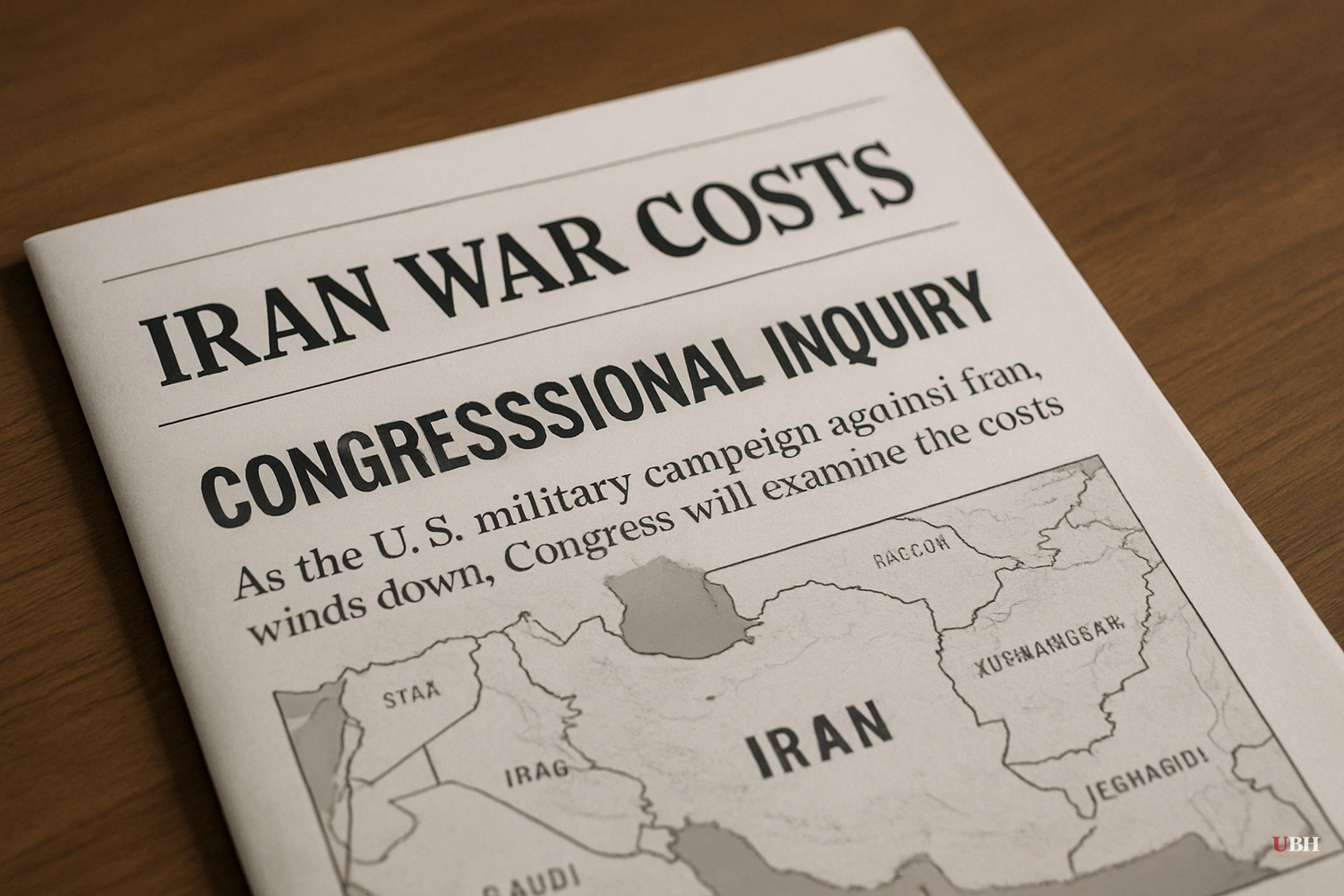
Congress Asks Whether the Iran War Was Worth It as Conflict Winds Down
What the Headlines Tell Us
As of Sunday, June 21, 2026, AP News is running a congressional reckoning story under the headline: "Congress wonders as the Iran war draws to a close: Was it worth it?" That framing reflects a significant political shift. When a bipartisan legislature starts asking that question publicly, the political math has changed.
Separately, AP reports that Vice President JD Vance met with top Iranian officials as the U.S. looks to "get negotiations back on track." Those two stories together paint a specific picture. The shooting may be winding down, but no final settlement has been reached as of today.
A critical caveat: the AP source available for this article is a site-navigation page, not a full news report. Specific casualty figures, strike counts, legal authorizations, and cost estimates do not appear in the available text. What can be reported is the confirmed state of the political debate and the diplomatic posture as reflected in AP's own headline summaries.
The Question Congress Is Asking
Wars are easy to start and expensive to finish. The congressional skepticism AP is describing is not a partisan artifact. It is what oversight is supposed to look like.
The core concern is legitimate: did the administration secure a clear legal authorization from Congress before committing U.S. forces? What were the defined objectives, and were they met? What is the total dollar cost to taxpayers? These are questions every American, regardless of party, has a right to have answered in plain language.
Those asking them are not wrong to do so. Military action against a nation-state of Iran's size carries consequences that echo for years in regional stability, oil markets, and how adversaries like China and Russia read American resolve and limits.
The Strongest Defense of the Campaign
A good-faith supporter of the operation would argue several things, and they deserve a fair hearing.
Iran's nuclear program was not a hypothetical threat. Decades of sanctions, diplomacy, and limited covert action failed to stop enrichment. If the campaign succeeded in degrading Iran's nuclear and missile infrastructure in ways that deterrence and negotiation never achieved, that is a concrete strategic result. One that arguably protects not just the United States but Israel, Saudi Arabia, and the broader Gulf.
That argument is not frivolous. It is the same argument made about military action against any state that defied international non-proliferation norms for 20-plus years. Whether the execution matched that justification is precisely what Congress is now trying to determine.
Vance at the Table
Vice President Vance meeting with Iranian officials is a significant diplomatic data point. It means Washington has opened a direct channel at the cabinet level, something that was politically impossible before this conflict began. Whether that channel produces a durable settlement, a temporary ceasefire, or collapses entirely is unresolved as of June 21, 2026.
The AP headline says the U.S. is looking to "get negotiations back on track," which implies they were on track at some point and something derailed them. What that rupture was is not clear from the available reporting.
What Remains Unknown
Because the full AP reporting was not accessible — only navigation headlines — several critical facts cannot be confirmed here:
- Total U.S. military and civilian casualties
- Cost to the federal budget
- Which congressional authorization, if any, was cited
- Specific terms being negotiated with Iranian officials
- Iran's current nuclear status relative to pre-conflict baselines
Any article that fills those blanks without sourcing is guessing.
The Oversight Obligation
The constitutional question underneath all of this is straightforward. Article I gives Congress the power to declare war. Modern presidents have stretched the War Powers Resolution into something that functionally sidelines that authority. Whether this administration did the same is now Congress's problem to investigate, and the public's problem if Congress doesn't.
Fiscal conservatives in particular should be watching the cost accounting. Wars funded by deficit spending are a tax on future generations. The Iran campaign's price tag, whatever it turns out to be, will land on a federal balance sheet already carrying historic debt loads.
The Open Question
Vance's diplomatic meetings suggest the administration wants an off-ramp that it can describe as a win. Congress wants an accounting. Whether those two goals are compatible depends on what the terms look like when they become public. As of today, they haven't.
Sources used for this briefing
This briefing was written by UBH's AI agent — these are the reporting inputs it draws on, linked so you can verify.