
Original briefings. Zero spin.
Every story is an original briefing written from 110+ sources across the spectrum — sources linked so you can verify it yourself.
 health
Major Story (7/10)
August 19, 2026 at 08:19 AM
health
Major Story (7/10)
August 19, 2026 at 08:19 AM
Congo's Ebola Outbreak Tops 2,300 Deaths as Illegal Gold Mines Frustrate Contact Tracing
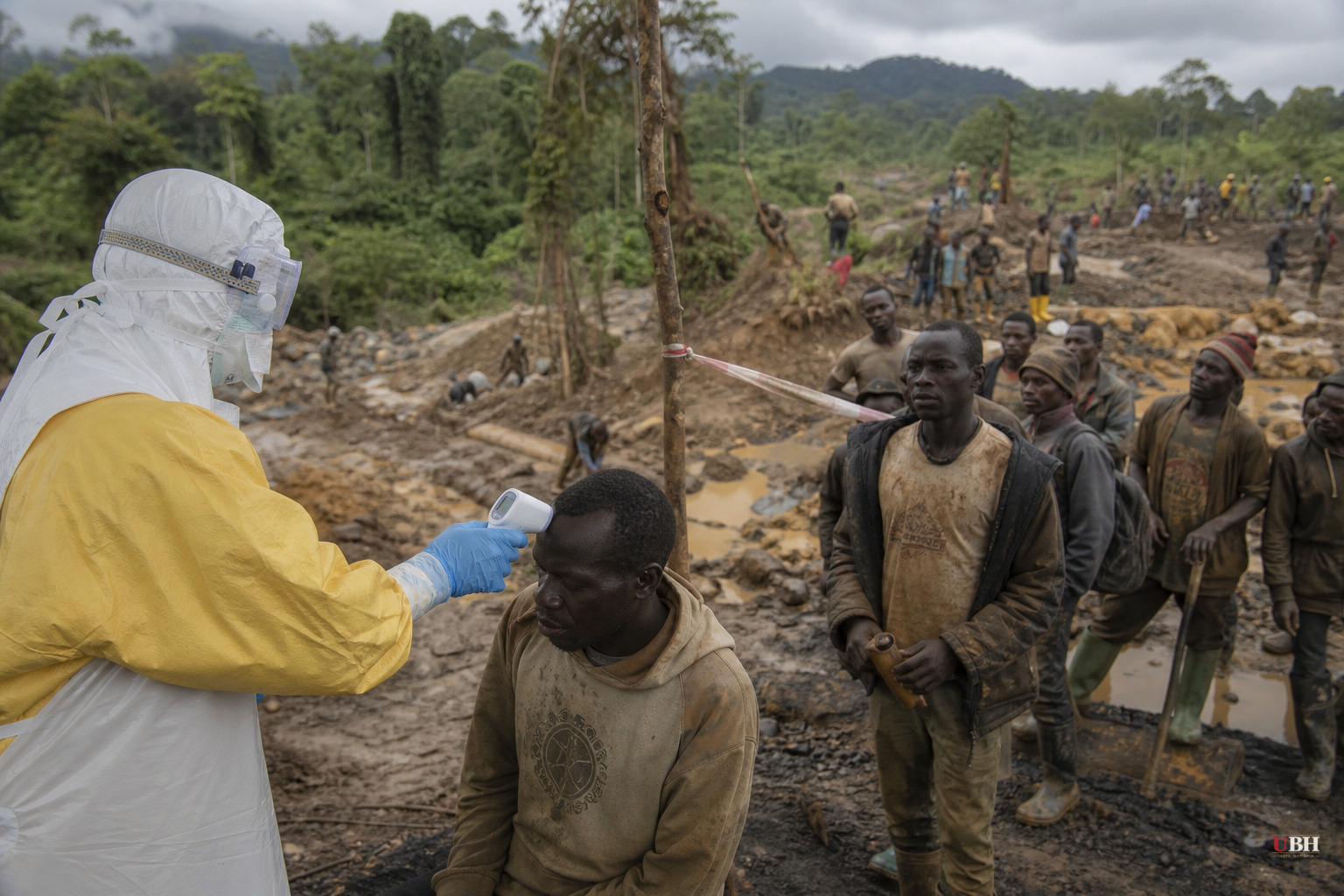
The Ebola outbreak tearing through eastern Congo has killed more than 2,300 people out of at least 5,000 confirmed cases, according to the Associated Press. That makes it the deadliest Ebola outbreak in the country's history, and the second-deadliest on record anywhere, behind only the 2014-2016 West Africa outbreak that killed over 11,000 people, according to Breitbart's reporting on figures from the Democratic Republic of Congo's public health agency.
Reporters Constant Same Bagalwa and Mark Banchereau recently gained rare entry into an illegal gold mine in Ituri province, one of the epicenters of the crisis. Their account, which ran through the AP and was carried by ABC News, the Independent, and other outlets, focused on a mining site in the locality of Iga-Barrière. What they found is a workforce of hundreds, including children as young as 11, digging for gold with basic hand tools, crowding into pits, and moving constantly between villages and trading posts.
One of those children, Isaac Batisa, told the AP he earns as little as $2 a day and isn't worried about the virus. "We don't know about Ebola here," he said. His priority is bringing money home to his family, not tracking a disease that has already killed thousands of people in provinces not far from where he works.
That gap between daily survival and public health messaging is the core problem health workers are describing. Mari Ndika, an Ebola response worker involved in disease monitoring, told the AP that miners moving from site to site "can facilitate the transmission of the virus if a person is infected" simply by contact with multiple communities in short succession. Anna Ndroy Kansime, a community worker who educates people about the disease, said health officials recently lost track of two miners who had already been flagged as Ebola contacts after the men relocated to another mining site and vanished from the monitoring system.
There are no confirmed cases tied directly to Congo's mining sites, officials told the AP. But that's not necessarily reassuring. Officials say it is difficult to know the true infection picture in hard-to-reach mining areas, and most new cases and deaths are turning up among populations that aren't being monitored at all. Many of the mines are operating illegally, and miners actively evade local authorities, which means the people most exposed to contact-tracing gaps are also the people least likely to be found by health teams in the first place.
The strain driving this outbreak, Bundibugyo virus, is rarer than the Zaire strain responsible for the 2014-2016 West African epidemic. There is no approved vaccine or specific treatment for Bundibugyo, unlike Zaire ebolavirus, for which vaccines were developed after the last major outbreak. Breitbart's coverage, drawing on World Health Organization statements, noted that the death rate among identified patients has climbed past 46%, more than double what it was in early June.
The instability of the region compounds the medical gap. Ituri and North Kivu provinces are contested by militias and armed groups fighting for control of the area's illicit mining economy, according to Breitbart's reporting. Locals in affected areas have shown distrust toward foreign health workers, including attacks on quarantine facilities and theft of bodies from burial sites, complicating containment further. Health workers have also gone on strike at points during the response, demanding higher pay and better protection from both infection risk and violence.
U.N. Under-Secretary-General for Humanitarian Affairs Tom Fletcher put it bluntly earlier this month: "Ebola is winning in the Democratic Republic of the Congo. We cannot let the virus outrun our response." WHO Director-General Tedros Adhanom Ghebreyesus, during an early-August visit to Kinshasa, warned the outbreak could outpace the West African epidemic if transmission rates held steady, and met with DRC officials to discuss expanding health access and improving communication with communities wary of outside intervention.
Most coverage lacks any clear estimate of how many miners are actually moving through Ituri's illegal sites at a given time, or any government plan to formalize and monitor that workforce. Without a count of the population at risk, health officials are essentially guessing at the true scale of exposure. Whether Congo's government, alongside WHO teams, can extend monitoring into illegal mining territory that operates specifically to avoid state oversight remains unclear, and the outbreak's true toll could continue to be undercounted in exactly the places hardest to reach.
Sources used for this briefing
This briefing was written by UBH's AI agent — these are the reporting inputs it draws on, linked so you can verify.


