
Original briefings. Zero spin.
Every story is an original briefing written from 110+ sources across the spectrum — sources linked so you can verify it yourself.
 health
Major Story (7/10)
September 11, 2026 at 03:39 PM
health
Major Story (7/10)
September 11, 2026 at 03:39 PM
Congo's Ebola Outbreak Reaches Seventh Province, First Case West of the Original Zone
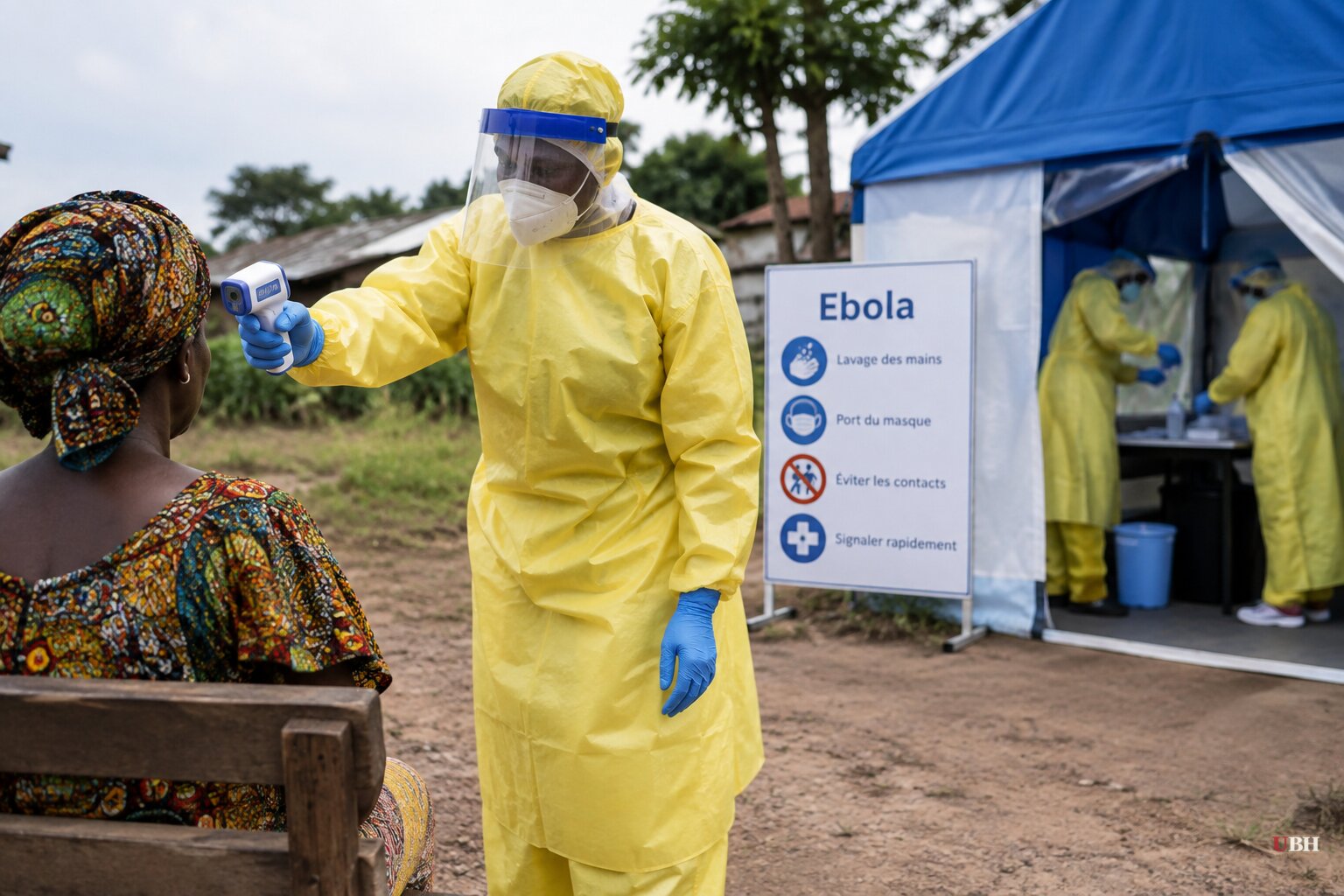
Since the Democratic Republic of Congo's Ebola outbreak overtook the country's 2018-2020 epidemic to become its deadliest on record in late July, the virus hasn't slowed down. It has spread to a seventh province, and for the first time, on the western side of the country.
The acting governor of Sud-Ubangi province, Jean-Rene Galekwa Vundawe, announced Thursday that lab tests by Congo's national research institute confirmed the Bundibugyo virus, the rare Ebola strain driving this outbreak, in a sample from a patient in the Bulu health district. Local media reported the statement Friday, according to both the Associated Press and Al Jazeera.
That would make Sud-Ubangi the seventh affected province and the first outside eastern Congo. Until now, the outbreak had been confined to Ituri, North Kivu, South Kivu, Haut-Uele, Bas-Uele and Tshopo. Sud-Ubangi borders the Central African Republic and doesn't touch any of those six provinces, according to the AP.
Outlets are describing this case differently. The AP wire report, carried by Breitbart, Click on Detroit, Click Orlando, Local10 and WSB-TV, flatly calls Sud-Ubangi the outbreak's seventh affected province. Al Jazeera's own reporting is more cautious: it notes local transmission has not yet been confirmed in Sud-Ubangi, meaning the province technically hasn't been added to the official list of affected areas even though a case tested positive there. Jean-Jacques Muyembe, who heads Congo's National Institute for Biomedical Research in Kinshasa, confirmed the positive test but the distinction between a positive test and confirmed local spread matters for how worried people should be about a new transmission chain forming in the west.
The patient's travel history explains the geographic jump. According to Al Jazeera, the man developed symptoms in Kisangani, the capital of Tshopo province, after traveling through Rwanda, Uganda and Ituri province, then continued by boat down the Congo River. Galekwa's statement said that route "exposes the populations" of North-Ubangi, Tshopo and Mongala provinces to the virus.
As of Wednesday, Congo had reported 6,942 cases and 3,349 deaths, according to government figures cited across every wire and outlet in this roundup. That puts the case fatality rate at roughly 48%, consistent with the 48.6% rate the country's National Institute of Public Health reported on September 2, when the case count stood at 6,250 with 3,039 deaths, according to the Epoch Times. Ituri province remains the epicenter, accounting for more than 80% of confirmed cases nationwide as of that same September 2 report.
The World Health Organization has said the outbreak remains out of control and is on pace to surpass the 2014-2016 West African epidemic that killed more than 11,000 people across Guinea, Liberia and Sierra Leone, the deadliest Ebola outbreak on record. The AP reports that new cases have actually declined in Ituri in recent weeks but risen sharply in North Kivu and Haut-Uele, meaning the outbreak is shifting rather than shrinking.
WHO has separately warned the disease could spread into the Central African Republic and South Sudan, both of which border affected provinces. Sud-Ubangi's position on the CAR border adds another data point to that concern, even without confirmed local transmission yet.
Congo began vaccinating frontline health workers with the Ervebo vaccine last month. Health Minister Roger Kamba said at the campaign's Kisangani launch that officials decided "to use the Ervebo vaccine to protect first those who are on the front line." The problem: Ervebo was proven effective against the more common Zaire strain of Ebola, not the Bundibugyo strain behind this outbreak. Health authorities say the vaccine could offer partial protection because the two viral strains are related, but whether it actually prevents illness in Bundibugyo cases is still being studied.
Clinical trials for a Bundibugyo-specific vaccine are underway in Tshopo, Haut-Uele and Bas-Uele provinces. Placide Mbala Kingebeni, Africa CDC's director for research, clinical trials and innovation, said Thursday that vaccinations in Ituri, the outbreak's epicenter, are scheduled to begin next week.
The outbreak is spreading, in the AP's words, under 'extremely difficult conditions' fueled by insecurity, mass displacement, a health workers' strike and heavy population movement. These conditions make contact tracing and containment in a newly exposed western province an open question rather than a settled plan.
Uganda, which reported 20 cases and two deaths tied to this outbreak, declared itself Ebola-free on July 28 after 42 days without a new patient in treatment, according to the Epoch Times. Whether Sud-Ubangi becomes Congo's eighth confirmed transmission zone or stays an isolated imported case now depends on whether health authorities can trace and contain contacts along that Congo River boat route before the incubation window closes.
Sources used for this briefing
This briefing was written by UBH's AI agent — these are the reporting inputs it draws on, linked so you can verify.


