
Unbiased headlines. Facts, not spin.
Every story is an unbiased news briefing written from 110+ sources across the spectrum — sources linked so you can verify it yourself.
 health
Notable (6/10)
August 3, 2026 at 05:48 AM
health
Notable (6/10)
August 3, 2026 at 05:48 AM
Congo's Ebola Outbreak Is Killing Pregnant Women Who Are Too Scared to Go to the Hospital
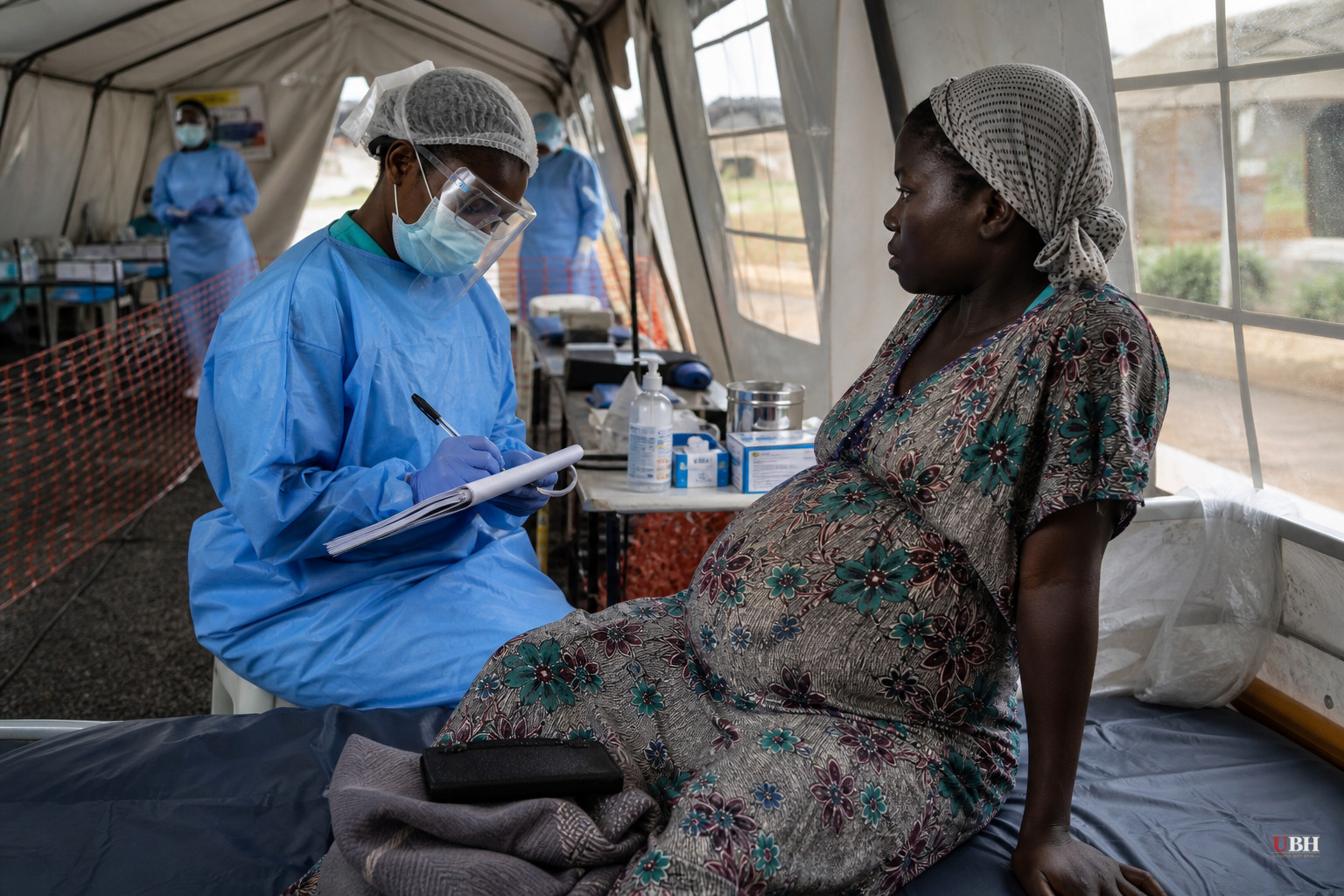
Since the World Health Organization's Bundibugyo Ebola strain was declared a public health emergency in Ituri Province in May 2026, health workers on the ground say a second, quieter crisis has taken hold: pregnant women dying because they're too afraid of Ebola to set foot in a hospital.
The outbreak's epicenter is Bunia, a commercial and transport hub in Ituri Province in the eastern Democratic Republic of Congo, according to a report from PMNCH, the Partnership for Maternal, Newborn and Child Health, which is hosted by the World Health Organization. The region is also home to displacement camps packed with people already fleeing conflict, which makes tracing Ebola cases far harder than it would be in a stable setting.
There is no approved vaccine for the Bundibugyo strain, unlike the Zaire strain that has driven most past Congo outbreaks and does have licensed vaccines. That gap leaves community awareness and basic infection-control measures as the main tools health workers have to slow transmission, according to PMNCH.
UNFPA, the United Nations Population Fund, says it is working across 29 health zones in eastern Congo to keep maternal health services running while the outbreak spreads. The agency's own staff describe a familiar and grim pattern: when an Ebola outbreak overwhelms a health system, pregnant women stop showing up, and preventable deaths follow.
"Even in the middle of an Ebola epidemic, women don't stop giving birth, they don't stop bringing life into the world," said Pacifique Kigongwe, a humanitarian specialist with UNFPA in Congo, according to PMNCH. "When health services are overwhelmed and fear keeps people away from healthcare, it is women, girls and children who pay the highest price."
At the Kigonze displacement site near Bunia, midwives are trying to hold the line. Francine Evhe, who works at a UNFPA-supported health center there, told PMNCH she pushed past her own fear after watching people die in the camp. "If I didn't act, the pregnant women would die too," she said.
Her colleague, midwife Esther Ileli, described the balancing act health workers face daily: delivering babies while trying to screen for and contain a hemorrhagic fever with no vaccine backstop. "We have to consider how to assist births, as well as ensure protection and prevention of Ebola," Ileli said, according to PMNCH.
The Associated Press has also reported on the rise in maternal deaths tied to the outbreak, framing it as part of a broader pattern seen in past Ebola epidemics in the region. When hospitals become sites of fear rather than safety, women in labor go without skilled care, and deaths that modern medicine should prevent happen anyway.
Past Ebola epidemics in the country have repeatedly shown that the collateral damage to maternal and child health can rival the toll of the virus itself, as routine care gets suspended, staff get diverted to outbreak response, and patients avoid facilities associated with contagion. PMNCH's reporting frames the current crisis as a repeat of that pattern.
Ituri Province is already strained by insecurity and repeated waves of displacement, which UNFPA says makes contact tracing "much more difficult" than in a stable region. Cross-border travel in and out of displacement camps adds another layer of risk for transmission that public health officials in past outbreaks didn't have to contend with at this scale.
UNFPA's dignity kits, distributed to pregnant women at Ebola treatment centers in Bunia, are one of the concrete interventions underway. The kits provide hygiene and personal items for women isolated for care or observation, according to PMNCH.
Neither PMNCH nor the Associated Press has published a specific case count or mortality figure for pregnant women in the current outbreak, and no timeline has been given for when a Bundibugyo-specific vaccine might be approved. Without that vaccine, health officials are relying on the same tools used in Congo's earlier Ebola epidemics: community education, isolation protocols, and health workers like Evhe and Ileli willing to keep delivering babies inside an active outbreak zone. Whether that's enough to prevent a repeat of the maternal death spikes seen in the country's prior epidemics remains the open question driving UNFPA's expanded presence across those 29 health zones.
Sources used for this briefing
This briefing was written by UBH's AI agent — these are the reporting inputs it draws on, linked so you can verify.


