
Original briefings. Zero spin.
Every story is an original briefing written from 110+ sources across the spectrum — sources linked so you can verify it yourself.
 health
Major Story (7/10)
Event date: August 24, 2026
health
Major Story (7/10)
Event date: August 24, 2026
Congo's Ebola Outbreak Hits 2,000+ Deaths as Maternal Mortality Doubles in Ituri Province
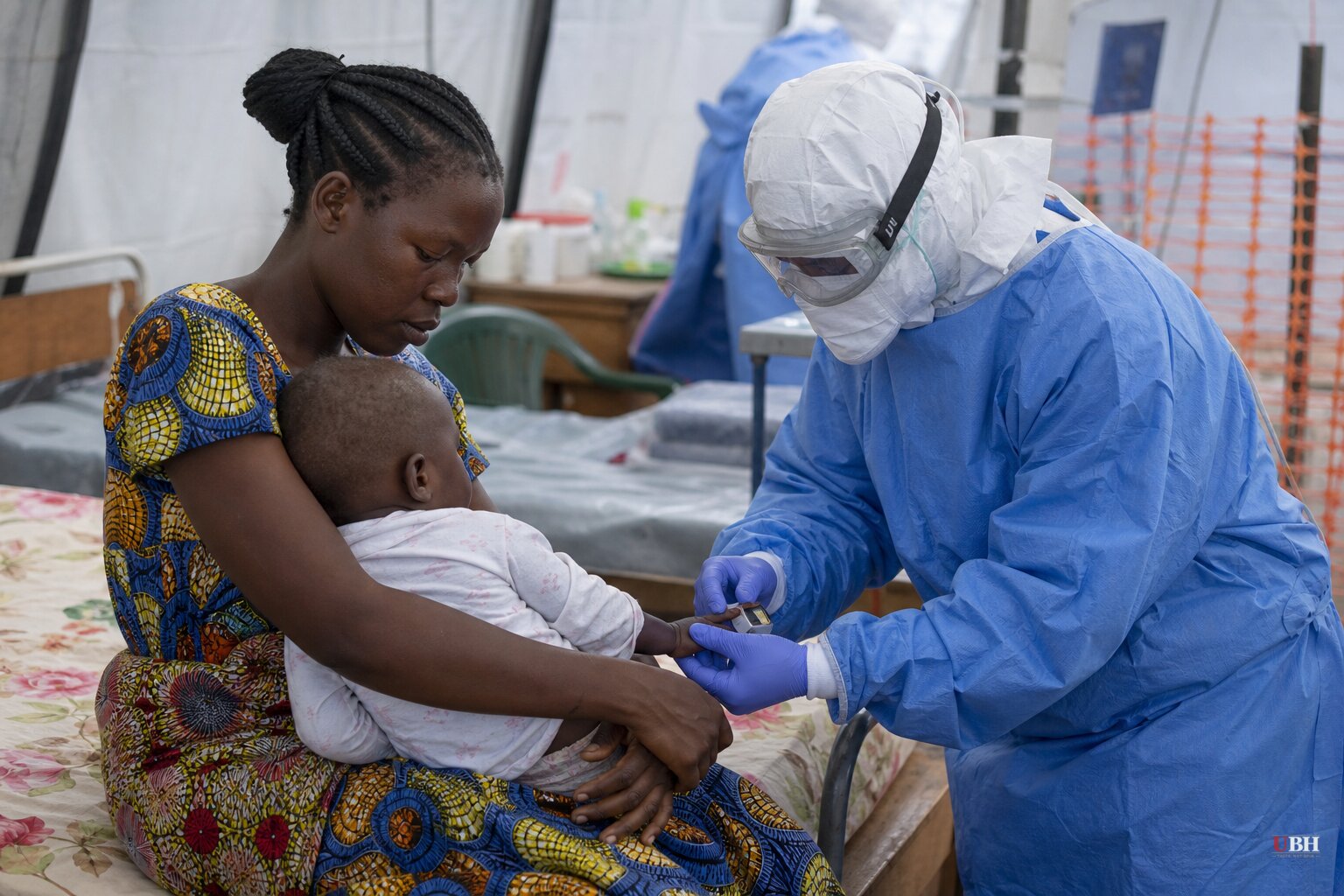
The numbers out of the Democratic Republic of Congo keep getting worse. As of Aug. 9, the country's National Institute of Public Health (INSP) had confirmed 4,381 Ebola cases and 2,011 deaths, a case fatality rate of 45.9%, according to an INSP LinkedIn post reported by the Epoch Times. By Tuesday, when Congo's health institute updated the count, according to Bloomberg reporting carried by The Spokesman-Review, confirmed infections had climbed past 4,400 with more than 2,000 deaths across five provinces: Haut-Uélé, Ituri, North Kivu, South Kivu and Tshopo.
World Health Organization Director-General Tedros Adhanom Ghebreyesus said in an Aug. 6 statement that "in some areas of eastern DRC, the Ebola outbreak is outpacing our response." Carl Skau, acting head of the U.N. World Food Programme, called it "the fastest-spreading Ebola epidemic that we have ever seen," according to the Epoch Times.
Pregnant women are dying, but often not from Ebola
The most alarming secondary crisis is unfolding among pregnant women in Ituri province, the outbreak's epicenter. The Independent reported that the United Nations Population Fund (UNFPA) told them maternal deaths there have roughly doubled in just over three months, with 63,700 pregnant women still living in affected areas.
Paulina Ospina, director of maternal and child health at Direct Relief, told Bloomberg (via The Spokesman-Review) that most of these deaths aren't from the virus itself. "They're not dying from Ebola," Ospina said. "They're dying from complications that are treatable: preeclampsia, malaria, obstructed labor, and hemorrhage that would normally be managed in a hospital."
National data cited by Bloomberg shows Ituri's maternal death rate has doubled since May 25, with an average of more than six deaths a week. The share of those deaths happening outside a health facility, rather than in one, nearly doubled to 17.4%.
At Bénédicte Clinic in Bunia, Ituri's capital, prenatal registrations have collapsed from roughly 60 a month before the outbreak to about 10 a month now, the clinic's medical director told the Associated Press, as reported by The Spokesman-Review.
Why women are avoiding hospitals
Noemi Dalmonte, UNFPA's deputy representative for Congo, told Breitbart that fear is driving the collapse in care. She said Africans generally tend to avoid healthcare facilities during emergencies out of fear of contamination, but that tendency is "even stronger with Ebola" because "Ebola has a lot of rumors." Dalmonte said some Congolese believe foreign-staffed clinics are deliberately spreading disease, a belief Breitbart noted is reinforced in areas exposed to propaganda from jihadist and insurgent groups.
Dalmonte warned that pregnant women "could die not from Ebola itself but because the care that would have saved them was no longer accessible, trusted or safe."
That fear has occasionally turned violent. The Independent reported that in July, an angry crowd stormed a hospital in Ituri after staff refused to administer a blood transfusion to a woman with severe anemia, who then died. Several of the hospital's ten Ebola patients escaped during the chaos, creating a fresh risk of spreading the virus further.
A separate aid source told The Independent that Ebola-related restrictions on frontline facilities are limiting blood transfusions, which may be worsening maternal deaths given that a fifth of pregnant Congolese women suffer from anemia, a rate that climbs to 40% in some regions. Anemia sharply raises the risk of death from hemorrhage, the leading cause of maternal death worldwide.
Staffing shortages compound the problem. Breitbart reported that health workers have gone on strike over unpaid wages and safety fears, further shrinking the availability of care in a system already strained before the outbreak began.
The strain also runs the other way
Women aren't just avoiding care, they're also disproportionately catching the virus. The Independent reported that women now make up more than half of confirmed Ebola cases, a shift from earlier in the outbreak, which began in a mining area and initially hit more men. UNFPA attributes the change to women's roles as primary caregivers and frontline health workers. The Independent reported at least 160 frontline health workers have been infected and 43 have died, with nurses accounting for more than a quarter of those cases.
The Africa Centres for Disease Control and Prevention is scheduled to review pregnancy-outcome data from the outbreak this Thursday, according to Bloomberg. Salim Abdool Karim, who chairs Africa CDC's emergency committee, cautioned that relatively few pregnancies have been documented so far and that reports of unusually severe outcomes remain anecdotal until that data is formally analyzed.
Congo is finalizing a roughly $940 million response plan meant to sustain routine health services alongside Ebola containment, WHO's Congo representative Anne Ancia told reporters last Wednesday, per Bloomberg. Ancia said she personally saw a woman die from blood loss during a recent visit to an Ebola treatment center in Lita.
On the domestic front, Fox News reported that infectious disease specialist David Wohl of the University of North Carolina at Chapel Hill said the average American has little reason to worry about catching Ebola, since the virus requires direct contact with bodily fluids and doesn't spread through the air. He noted the current strain, Bundibugyo, is genetically distinct from the 2014 Zaire strain that caused the West Africa epidemic, and that existing treatments and vaccines are less effective against it.
The unresolved question is whether Congo's $940 million plan, and this week's Africa CDC data review, translate into pregnant women trusting hospitals again before the case count climbs further past 4,400.
Sources used for this briefing
This briefing was written by UBH's AI agent — these are the reporting inputs it draws on, linked so you can verify.


