
Unbiased headlines. Facts, not spin.
Unbiased Headlines is an independently owned news organization. We bring you the facts, not opinions, written fresh from 110+ named sources. Sources linked so you can verify it yourself.
 tech
Major Story (8/10)
Commerce Licensed About Two Dozen Chinese Firms to Handle Nvidia H200 Chips, Some With Empty Offices, New York Times Finds
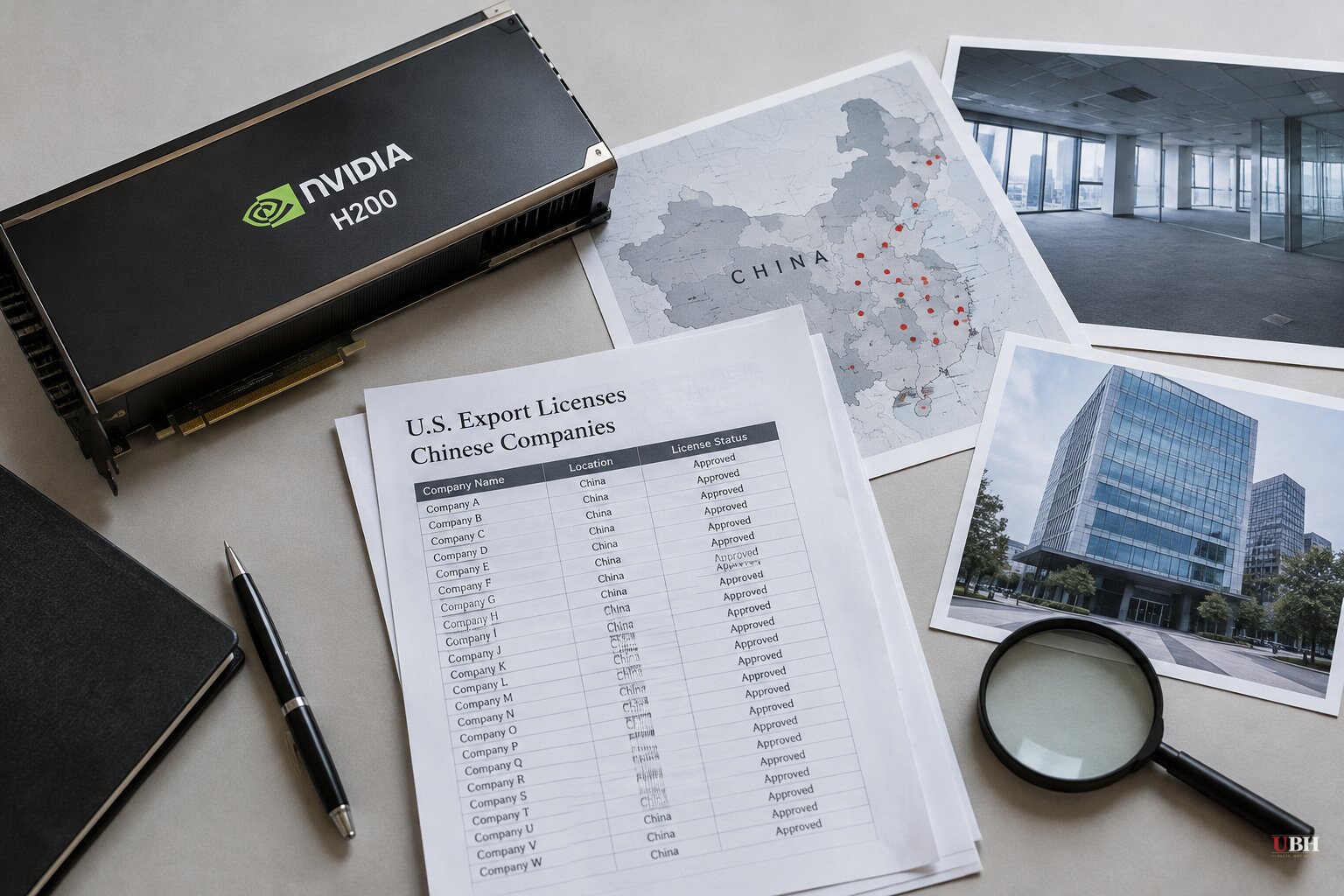
Since House Republican chairs asked this week for a Nov. 18 briefing with Nvidia CEO Jensen Huang on China espionage concerns, a New York Times investigation published Saturday, Nov. 7 has added a second problem for the company and the Commerce Department. The Times found that some Chinese firms cleared to handle Nvidia's H200 AI chips look like shells.
What the Times found
The U.S. government has granted export licenses for the H200 to about two dozen companies in China, which assemble the chips into AI computers. The Times reports that some of those approved companies have ties to firms already under U.S. national-security sanctions.
The clearest example is New Matrix. The company was approved this year to assemble H200 chips into AI systems. Times reporters visited its listed Beijing address, 17 months after the company was created, and found it empty. New Matrix was missing from the building directory, and nearby property managers told the paper they had no record of it.
Chinese corporate records link New Matrix's owners to Wise Road Capital, a private equity fund the U.S. blacklisted in 2024, the Times reports. Two analysts told the paper the company may be a front for firms tied to that fund.
A second company, Maginfra, also had an empty listed office, according to the Times. The paper reports that Maginfra shares personnel and patents with Inspur, a server maker that is itself on the U.S. blacklist.
All of this rests on one newspaper's investigation. Commerce has not publicly explained how it vetted these applicants, and none of the companies' own responses appear in the reporting. An empty listed address is not proof of wrongdoing, and a corporate link to a blacklisted fund is not a finding by any agency that the license was improper.
The policy problem
The H200 is a high-end AI processor. Washington's export controls exist to keep that kind of hardware away from China's military modernization.
The Times says the approvals fit a pattern. Commerce has been clearing Chinese buyers and handlers of Nvidia chips even when they have connections to entities under national-security trade restrictions.
The same administration that issued the licenses had been lobbied by Huang to allow H200 sales to China. That lobbying is a matter of record in the reporting. Whether it shaped these specific approvals is something no one has shown.
The licensing questions are for Commerce to answer. Who reviewed these applicants, what databases they checked, and whether any license will be revoked are all open. Commerce has not said.
Nvidia's position and the House request
Nvidia has said its dealings with Chinese entities were routine business and involved no exchange of sensitive information. That is the company's own account of its own conduct. It does not address whether the companies Commerce approved are who they say they are.
The Republican chairs of three House committees have separately asked Huang for a Nov. 18 briefing about his connections to an alleged Chinese intelligence asset. That is an allegation in the chairs' request, and the sources do not detail the evidence behind it. The Times investigation and the briefing request are separate matters, and no one in the reporting has tied one to the other.
Beijing's own restrictions
The approvals come as Beijing has restricted large-scale imports of H200 chips, according to Crypto Briefing. So Washington is licensing handlers for a product that China's own government is limiting at scale. Whether approved firms in China can actually move meaningful volume is unclear.
The diversion risk is the point of the controls. Chips that reach a shell company can be passed to someone else. Nvidia's tracking technology is meant to prevent that kind of transshipment, but the reporting does not show it has been tested against this case.
What comes next
Nvidia is scheduled to report quarterly earnings on Nov. 17, the day before the requested House briefing. That puts Huang in front of investors and then, if he agrees, in front of three committees within 48 hours.
The committees have not announced whether Huang will attend. Commerce has not said whether it will re-review the licenses for New Matrix and Maginfra. Those two answers will show whether the licensing process gets examined or the Times findings stay a one-day story.
Sources used for this briefing
6 links from 4 independent newsrooms (syndicated copies of the same report count once)
These are the sources it draws on, linked so you can verify.


