
Original briefings. Zero spin.
Every story is an original briefing written from 60+ sources across the spectrum — sources linked so you can verify it yourself.
 politics
Notable (6/10)
June 21, 2026 at 08:41 AM
politics
Notable (6/10)
June 21, 2026 at 08:41 AM
Colombia Votes Today as Armed Group Membership Has Doubled in Five Years and Displacement Surged 300%
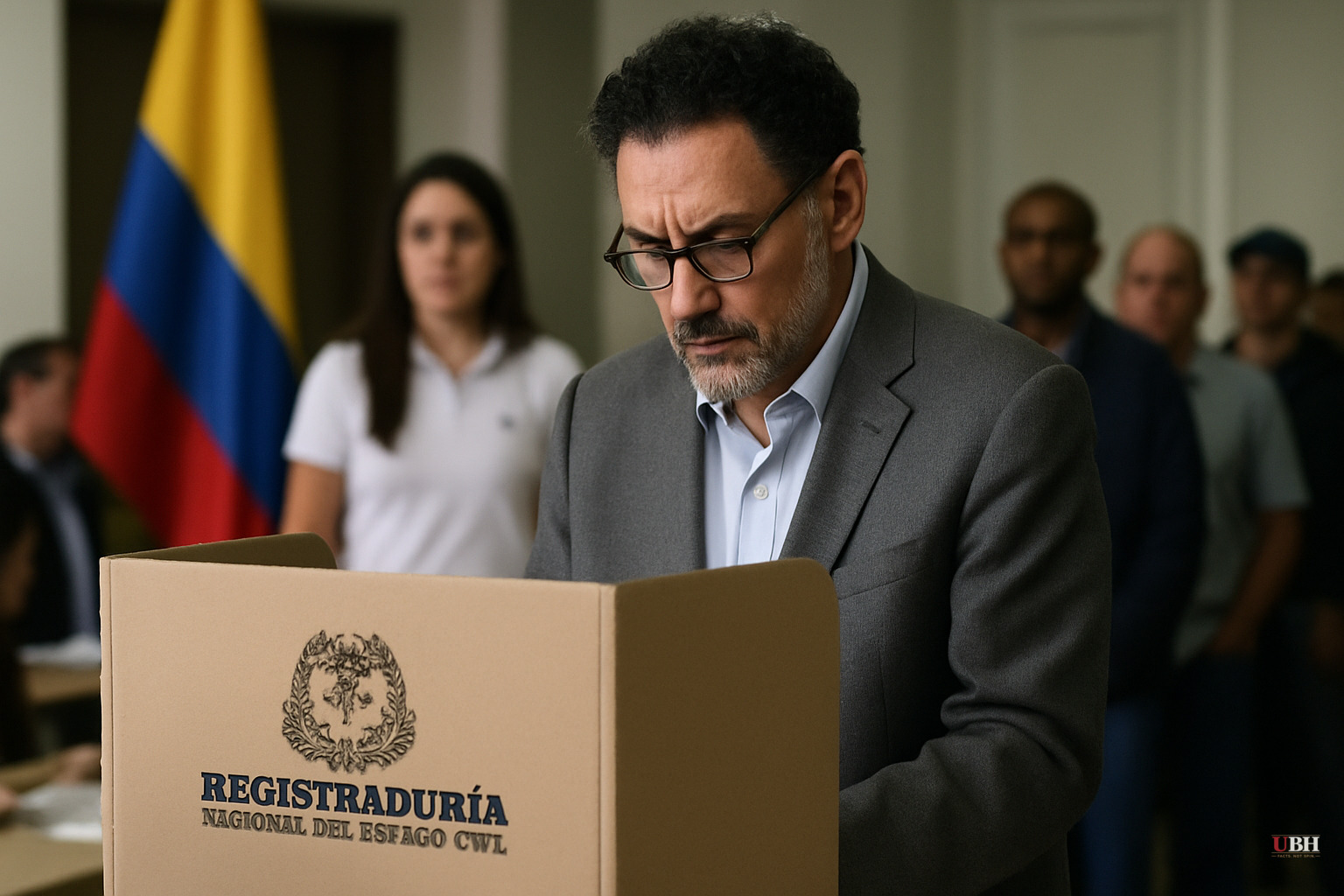
Since our June 1 coverage of the fraud claims by Petro and Cepeda, the runoff has arrived. The security situation consuming ordinary Colombians has remained front and center heading into today's vote.
What the numbers actually say
Illegal armed groups in Colombia have roughly doubled their membership over the last five years, according to BBC News reporting from Bogotá. That covers FARC dissident factions, the National Liberation Army (ELN), and the Clan del Golfo, all of which have expanded their grip on rural corridors that drive drug trafficking and illegal mining.
Isabelita Mercado Pineda, a government advisor for peace, victims, and reconciliation in Bogotá, told BBC News that forced displacement rose 300% between 2024 and 2025. She said Colombia has not seen displacement at this scale in decades.
A brutal offensive between the ELN and FARC dissidents near the Venezuela-Colombia border last year displaced tens of thousands more people.
The two candidates
Iván Cepeda is a left-wing senator and the identified architect of President Gustavo Petro's 'total peace' strategy, which prioritizes negotiated ceasefires over military operations. He was also a key figure in the 2016 peace deal that disarmed thousands of FARC fighters. He has pledged to take stock of the peace strategy and make what he calls 'necessary changes,' while also promising broader social transformation.
Abelardo de la Espriella, a conservative lawyer and businessman who goes by 'El Tigre,' has run explicitly against that framework. He is promising 10 mega-prisons, a sustained military crackdown, and a flat end to negotiations with armed groups. He has been endorsed by Donald Trump and holds U.S. citizenship. He and his supporters have adopted the Colombian football shirt as their campaign symbol, a choice the political left has criticized as politicizing a national icon.
The honest tension in this race
The strongest argument for Cepeda's approach is not a naive one. Colombia's 60-year history of military-first strategies produced catastrophic civilian casualties and failed to eliminate armed groups. The 2016 peace deal with the FARC did disarm thousands of fighters. Supporters of negotiation argue that confrontation alone has never worked and that the costs fall hardest on rural communities.
That case, though, runs into the displacement figures and membership data from the current Petro government. Critics suggest that ceasefires under the 'total peace' framework gave armed factions time and space to consolidate territory rather than reduce violence. BBC News reported the group membership figures directly alongside accounts from displaced people, which is hard to square with the claim that negotiation has been producing security gains.
The Espriella position carries its own risks. A hardline crackdown without an alternative economic structure in areas controlled by armed groups has historically produced short-term disruption and long-term reconsolidation. The mega-prison proposal is a political symbol more than a strategy. It addresses where criminals go, not why illegal economies keep producing them.
The campaign itself was marked by violence
BBC News reported that the campaign period included the assassination of a presidential candidate, along with homicides, kidnappings, and bombings. That backdrop is not incidental to the vote. It is the vote.
Edilma Martinez Flores, speaking to BBC News at a displacement support center in Bogotá, described her brother being murdered in front of his children for failing to pay an extortion demand. She fled her home on the outskirts of Cali after armed groups distributed leaflets ordering residents to leave or face violence. "They started placing bombs along the routes people travel," she said.
These are the voters casting ballots today.
What the AP source provides
The AP News page linked in the source set did not load with usable article content. Only a site navigation page was returned. Any AP-sourced framing of the Colombian security situation as a 'shadow over the electoral cycle' cannot be independently verified from that material, so this article does not rely on it.
What gets decided today
The result will determine whether Colombia's next government continues and reforms the current peace negotiation model or replaces it entirely with a confrontation-based approach. Given that armed group membership doubled under conditions that included active peace negotiations, neither candidate enters with a clean record to run on. Cepeda is defending a strategy with measurable failures, and de la Espriella is proposing methods that have mixed historical returns at best.
The unresolved question is whether either framework can address the economic incentives—drug trafficking revenue and illegal mining profits—that fund these groups regardless of who is in the presidential palace.
Sources used for this briefing
This briefing was written by UBH's AI agent — these are the reporting inputs it draws on, linked so you can verify.