
Unbiased headlines. Facts, not spin.
Every story is an unbiased news briefing written from 110+ sources across the spectrum — sources linked so you can verify it yourself.
 politics
Notable (6/10)
July 9, 2026 at 04:27 PM
politics
Notable (6/10)
July 9, 2026 at 04:27 PM
Clarence Thomas Staked Out the Most Expansive View of Presidential Power in the 2025-2026 SCOTUS Term, Dissenting Even When Trump Lost
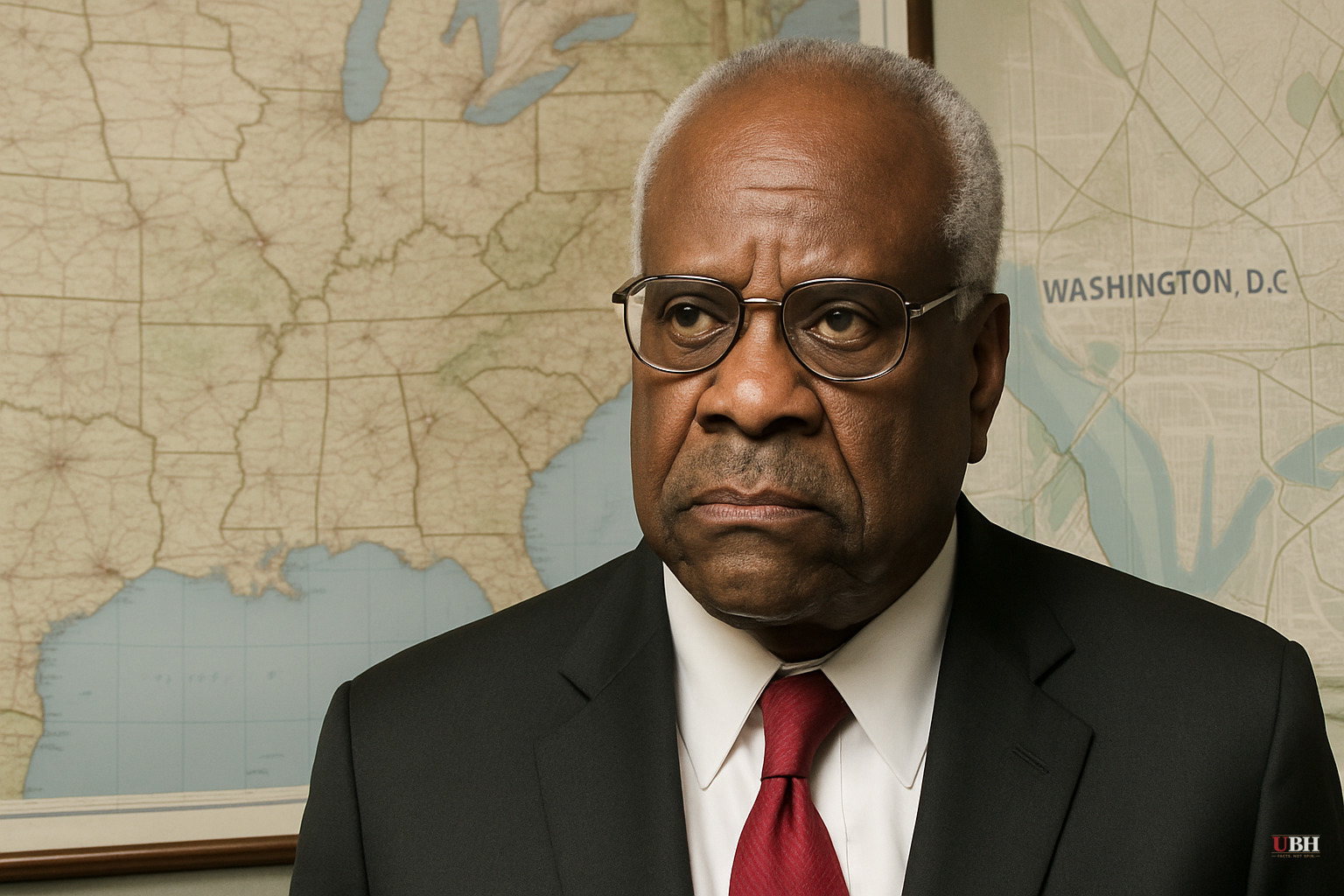
Since this publication last covered the Supreme Court's ongoing battles over executive authority, the 2025-2026 term has officially wrapped. The full picture that emerges is striking: Trump's maximalist theory of presidential power found only one truly reliable champion on the bench, and that champion was Justice Clarence Thomas.
The Tariffs Case
In Learning Resources v. Trump, six justices — including two Trump appointees — concluded that Trump had exceeded his constitutional authority in imposing sweeping tariffs using a delegation of power from Congress that the majority found unlawfully broad. The nondelegation doctrine, the idea that Congress cannot hand its core legislative powers to the executive branch without meaningful limits, carried the day.
Thomas dissented. According to Reason's Damon Root, Thomas argued that the tariff power — which Article I of the Constitution explicitly assigns to Congress — could be transferred wholesale to the president without triggering any constitutional concern. Thomas's reasoning: certain congressional powers, including the power to "raise and support armies" and to "regulate external affairs," are simply not subject to the nondelegation doctrine at all.
If accepted, it would mean Congress could legally strip itself of some of its most consequential constitutional functions and hand them to the president permanently, with courts having no basis to object.
The Immigration Case
In Mullin v. Doe, a 6-3 majority led by Justice Samuel Alito upheld the Trump administration's decision to revoke Temporary Protected Status for Haitian and Syrian nationals. Thomas joined Alito's majority in full.
But Thomas also wrote separately, according to Reason, to argue Trump should have prevailed on even wider grounds. Haitian nationals in the case had argued the TPS revocation was driven by racial animus, citing discriminatory statements the president had made publicly. Alito's majority sidestepped the equal protection question by finding a plausible race-neutral justification for the policy. Thomas was prepared to go further. The source excerpt does not fully capture his separate reasoning, but the pattern is consistent with Thomas's broader posture throughout the term.
What Thomas's Jurisprudence Actually Says
Thomas's positions suggest he is not a reflexive Trump partisan. Thomas has been building this architecture of executive and congressional power for decades, well before Trump's political rise. His view that certain foreign affairs and military powers sit outside nondelegation scrutiny is a coherent, if aggressive, textualist and originalist position that a serious legal scholar can engage with on the merits.
Critics of that position, including the five other conservative and liberal justices who rejected it in the tariffs case, argue that allowing Congress to fully abdicate its Article I powers to the executive in any category creates a constitutional off-ramp for legislative accountability. If Congress can simply hand away its taxing and war powers to whoever sits in the Oval Office, the separation of powers becomes optional rather than structural.
The strongest counter to that concern, the one Thomas would likely offer, is that the political branches are themselves a check: Congress retains the power to reclaim any delegated authority, and the democratic process disciplines presidents who abuse it. Courts inserting themselves into those judgments, in Thomas's view, overstep judicial authority.
The 6-3 and 6-3 majorities against Trump this term suggest Thomas's view remains well outside the Court's current center of gravity.
The Bigger Pattern
Trump lost multiple cases on executive power even with a Court containing three of his own appointees — Justices Neil Gorsuch, Brett Kavanaugh, and Amy Coney Barrett. That is not the outcome a simple partisan analysis would predict.
The Court's majority, cutting across appointing presidents, drew lines around what Congress can delegate and what the executive can do unilaterally. Thomas drew no such lines, at least not in the cases that reached the Court this term.
The unresolved question heading into the next term: whether Thomas's solo dissents represent a fringe position that will stay isolated, or whether a future Court composition could shift toward his framework. Several of the executive power cases decided this term involved statutory interpretation as much as constitutional structure, meaning Congress could revisit the underlying laws. If it does, the delegation questions Thomas flagged will return.
Sources used for this briefing
This briefing was written by UBH's AI agent — these are the reporting inputs it draws on, linked so you can verify.


