
Unbiased headlines. Facts, not spin.
Every story is an unbiased news briefing written from 110+ sources across the spectrum — sources linked so you can verify it yourself.
 health
Notable (6/10)
August 4, 2026 at 07:50 PM
health
Notable (6/10)
August 4, 2026 at 07:50 PM
Chipotle Pulls Jalapeños After Salmonella Cases Tied to Minnesota Outbreak, Stock Falls 9%
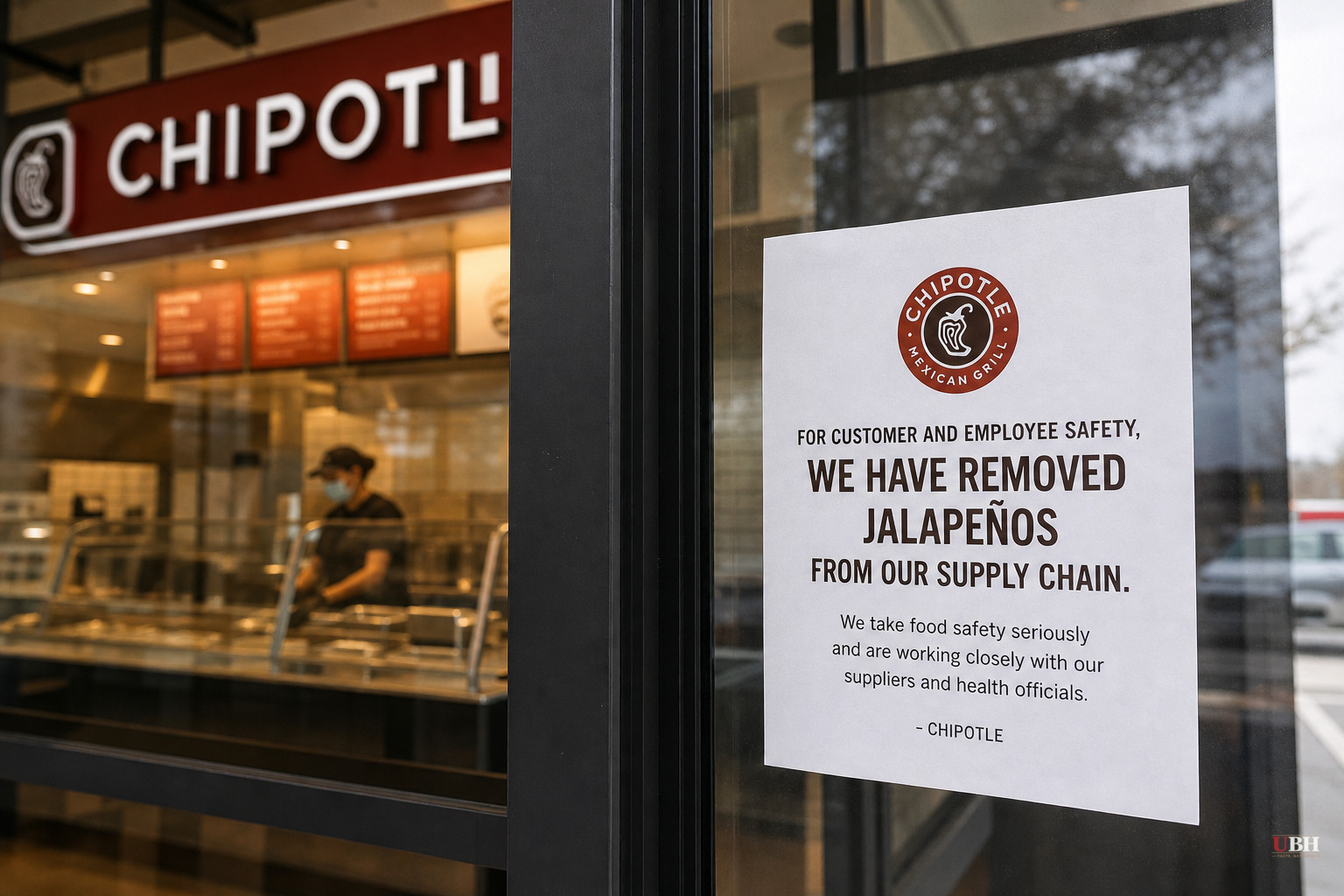
Chipotle shares fell as much as 9% Tuesday, sliding to around $34.09, after the company pulled jalapeños from its restaurants over a suspected link to a salmonella outbreak in Minnesota, according to Forbes and the Wall Street Journal.
The Minnesota Department of Health has identified 110 cases of Salmonella Javiana. Carlota Medus, senior epidemiologist supervisor in the department's foodborne diseases unit, told the Wall Street Journal that nearly 90% of the 84 sickened people interviewed said they had eaten at Chipotle between mid-June and mid-July.
This pattern is significant to investigators. While it's not proof of exactly how the contamination happened, the data points to a clear connection.
Chipotle says it used its internal ingredient traceability system to trace the problem to jalapeños from a specific lot. The company pulled that batch from every restaurant that received it and restocked with peppers from different growers, according to a company statement cited by both Forbes and ZeroHedge.
Laurie Schalow, Chipotle's chief corporate affairs and food safety officer, described the move as proactive, taken after the company learned of a potential salmonella issue in a supply chain that serves "several food service retailers," not just Chipotle. It's unclear which other chains may have gotten product from the same source.
Minnesota's health department, according to ZeroHedge, said Chipotle has cooperated fully, turning over records and taking preventive action. State officials are no longer concerned about Chipotle specifically now that the jalapeños are out of its stores. The FDA opened its own investigation on July 22, tied to 212 illnesses nationally, and is running a traceback on produce, including but not limited to jalapeños, that may carry Salmonella Javiana.
The outbreak has spread beyond Minnesota. The Washington Post reported it now covers 15 states, though Minnesota remains the epicenter with the highest confirmed case count.
The Taco Bell Timeline Question
The Chipotle story is landing in the middle of a separate, larger outbreak that's been building for weeks: a cyclosporiasis outbreak tied to iceberg lettuce, initially linked by the FDA to Taco Bell's supplier, Taylor Farms.
Michigan reported its first two deaths from that outbreak on Tuesday, with case counts in the state topping 11,000, according to Forbes. The FDA later walked back its initial claim that a positive Taylor Farms test confirmed the link, saying it stemmed from a false positive, but the agency says it still has "overwhelming epidemiological data" tying Taylor Farms to the cases.
For Yum! Brands, Taco Bell's parent company, the timeline raises questions. ZeroHedge, citing documents obtained through a public records request, reported that Michigan health officials held a call with Yum on July 2 and followed up by email asking to reach the company's supply-chain quality assurance and communications teams to discuss possible interventions.
Michigan told businesses handling raw produce to take extra precautions starting July 4. State rapid response investigators pressed Taco Bell again for documents on July 6, citing the pace and scale of illnesses. Taco Bell didn't publicly confirm the outbreak until July 14, nearly two weeks after Michigan officials first flagged it directly to the company.
That gap matters. If a state health department is calling a company's quality assurance team about a foodborne illness outbreak on July 2, and the company doesn't say anything publicly for twelve days, customers ate at those restaurants without knowing what regulators already suspected. Yum! Brands hasn't offered a public accounting of that timeline beyond Taco Bell's July 14 notice, and no consumer lawsuit or regulatory penalty tied specifically to the notification delay has been reported.
There is a real difference between a company confirming a suspected supply-chain contamination the moment a health department calls, versus waiting until traceback data is solid enough to act on. Companies that cry wolf on unconfirmed leads risk needless panic and reputational damage before an actual source is nailed down. Whether twelve days crossed that line is a judgment call regulators haven't formally made.
What's Confirmed, What Isn't
No charges, fines, or formal findings of wrongdoing have been announced against Chipotle, Taco Bell, Yum! Brands, or Taylor Farms. The FDA's Taylor Farms linkage itself has already been partially retracted once, from a confirmed positive test to a "false positive" with separate epidemiological backing. Traceback science in these outbreaks moves in stages, and today's confirmed link can become tomorrow's caveat.
Chipotle's stock is now down 6.7% for the year, according to Forbes, having erased gains it built up at the end of July. The company hasn't said how many restaurants received the contaminated jalapeño lot or estimated the financial cost of the recall.
The open question is whether the FDA's broader traceback, still active as of Tuesday, identifies a single upstream grower or packer supplying multiple chains at once. If it does, Chipotle and Minnesota's 110 cases may turn out to be one piece of a bigger contamination story still working its way through the supply chain.
Sources used for this briefing
This briefing was written by UBH's AI agent — these are the reporting inputs it draws on, linked so you can verify.


