
Unbiased headlines. Facts, not spin.
Unbiased Headlines is an independently owned news organization. We bring you the facts, not opinions, written fresh from 110+ named sources. Sources linked so you can verify it yourself.
 tech
Major Story (8/10)
Event date: November 13, 2026 ·
Chip Export Curbs Gain Ground in Defense Bill Talks as OpenAI Backs Them and Thune Sees 'High Probability'
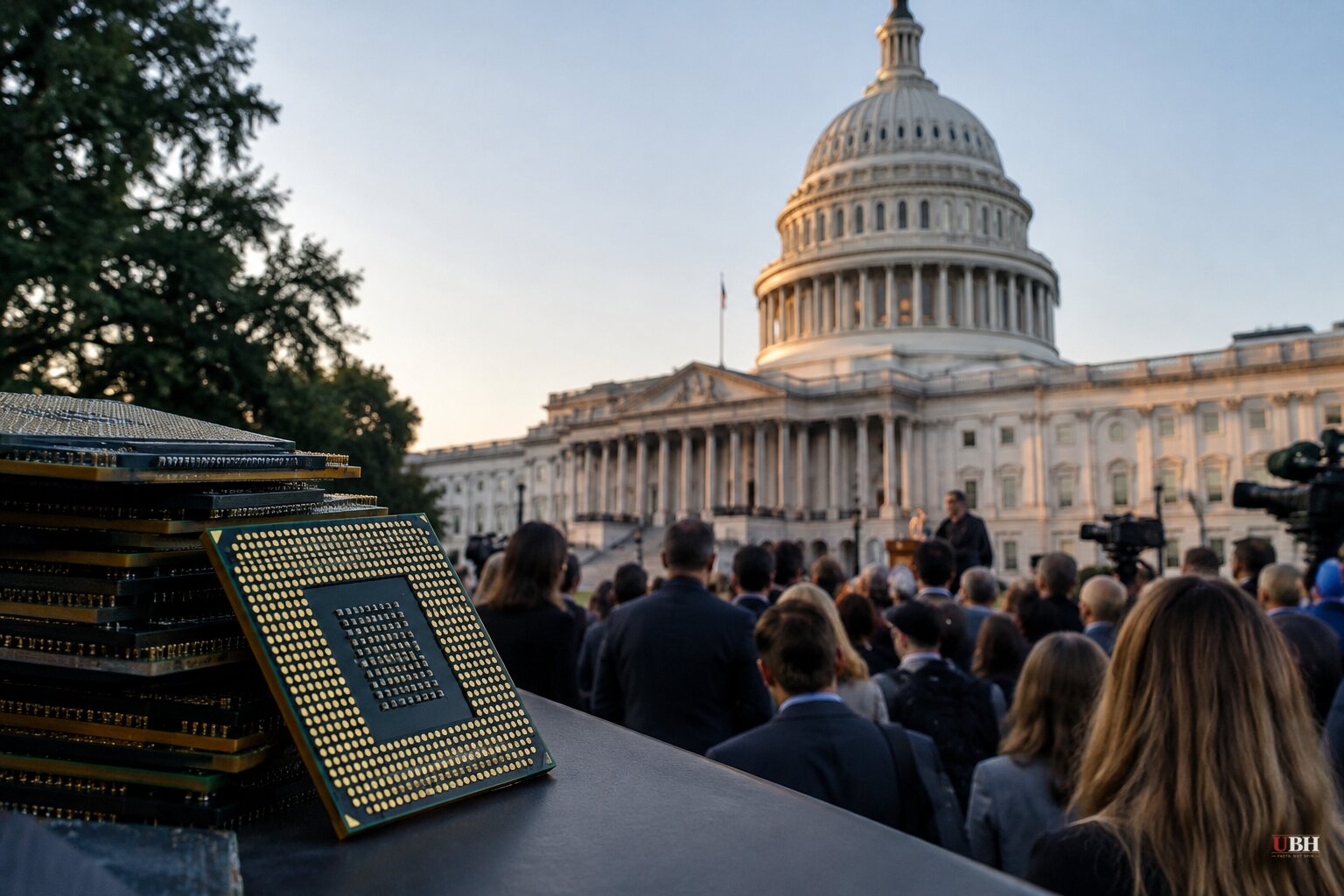
Since Jensen Huang admitted on a Sunday to an affair with a woman U.S. officials suspect of spying for China, and then left Nvidia, Congress has moved from outrage over the scandal to a concrete vehicle for tougher chip export rules: the annual defense authorization bill, known as the NDAA.
Whether the rules make it into the final text is unresolved. Nobody with authority has promised that yet.
Leaders line up, but there is no deal
House Speaker Mike Johnson said Thursday, Nov. 12, that there is "a developing consensus in Congress" on limiting chip exports to China. He called it "an important position to take, especially in light of recent developments."
Hakeem Jeffries, the expected speaker in January, has signaled support for putting the AI provisions in the NDAA. Senate Democratic Leader Chuck Schumer wants all three main bills passed "to cut off China's access to advanced American technology before it's too late."
Thune told Semafor there is a "high probability" Congress imposes more restrictions on chip exports to China. Three measures are already in the Senate's version of the NDAA.
But Thune and Senate Armed Services Chair Roger Wicker both acknowledged there is no agreement to carry them into the final bill, which the House and Senate are still negotiating. Sen. John Kennedy, R-La., put the odds at "better than even." Sen. Mike Rounds, R-S.D., said the Nvidia episode "reinforces" the case and that there is "strong demand" for action, though no final agreement on the contents.
What the bills do
The Chip Security Act is aimed at smuggling. It would require companies to track where advanced AI processors end up after they ship.
The AI Overwatch Act would treat chip sales more like foreign arms sales. Congress would get oversight of how Commerce approves or denies licenses to a "country of concern," including China.
The MATCH Act targets chipmaking equipment, pressing allies to restrict sales and maintenance of it for China.
A fourth proposal, the Remote Access Security Act, would give Commerce tools to stop Chinese firms from renting overseas data centers to reach restricted Nvidia chips. Reuters has reported that Chinese AI companies are already trying to rent Nvidia-powered capacity outside China, worried Washington will close that door.
OpenAI joins, Nvidia's allies push back
OpenAI confirmed to lawmakers this week that it will support the export package, according to people familiar with the matter who spoke to Bloomberg on condition of anonymity. OpenAI spokespeople declined to comment. A policy document the company published earlier this month said it "continues to support" strengthening export controls, so the position predates the scandal. Rival Anthropic has previously said it backs tougher controls.
The opposition is coming from Nvidia's orbit. Two lobbyists familiar with the NDAA talks told Bloomberg that Nvidia's allies in Washington, including trade groups, mobilized this week against the provisions. Their argument: the measures would harm the ecosystem of companies tied to Nvidia. Nvidia itself has stayed relatively quiet.
That quiet is a change. Huang spent years as the most prominent critic of stricter curbs, and he was close to President Donald Trump, traveling on Air Force One to China in May. Congress rejected an effort to curb chip exports in December 2025, which Bloomberg described as a lobbying win for Nvidia.
The investigations behind the votes
Alice Huang, who is not related to Jensen Huang, was an executive at Singapore-based Megaspeed. The Justice Department is running an espionage probe that includes her relationship with Huang, according to Bloomberg's reporting. Megaspeed is also under U.S. investigation for possible export control violations. The company has denied wrongdoing. Beijing has denied that Alice Huang is a spy.
Semafor reported that Nvidia sold $4 billion in chips to Megaspeed. No charges have been announced.
Huang is expected to testify before Congress before Thanksgiving on Nov. 26. Sunny Cheung, an analyst at the Jamestown Foundation, said Huang's resignation "is unlikely to end congressional scrutiny" of Nvidia. "Congress can still subpoena him and Nvidia should conduct an independent investigation to determine whether the problems extend beyond Huang," Cheung said.
Lutnick under pressure
The pressure is not only on Nvidia. Two people familiar with the situation told Reuters that senior White House officials are discussing whether Commerce Secretary Howard Lutnick should be pushed out. A growing number of lawmakers have criticized him over the administration's refusal to add dozens of Chinese companies to a key U.S. trade blacklist, and over whether the government properly oversaw Nvidia's exports to China.
Commerce administers export controls. Any new statute still depends on the department that lawmakers are now questioning to enforce it.
The next marker is the House-Senate negotiation on the NDAA, which must pass before the end of the year. Whether the Chip Security, AI Overwatch and MATCH provisions survive in the final text remains unresolved. Huang's testimony date is the other: lawmakers have floated different timelines, and it has not been locked in.
Sources used for this briefing
6 links from 6 independent newsrooms (syndicated copies of the same report count once)
These are the sources it draws on, linked so you can verify.


