
Unbiased headlines. Facts, not spin.
Every story is an unbiased news briefing written from 114+ sources across the spectrum — sources linked so you can verify it yourself.
 tech
Major Story (8/10)
August 19, 2026 at 11:07 AM
tech
Major Story (8/10)
August 19, 2026 at 11:07 AM
Chinese Firms Are Renting Banned Nvidia AI Chips Through Southeast Asia, White House Says
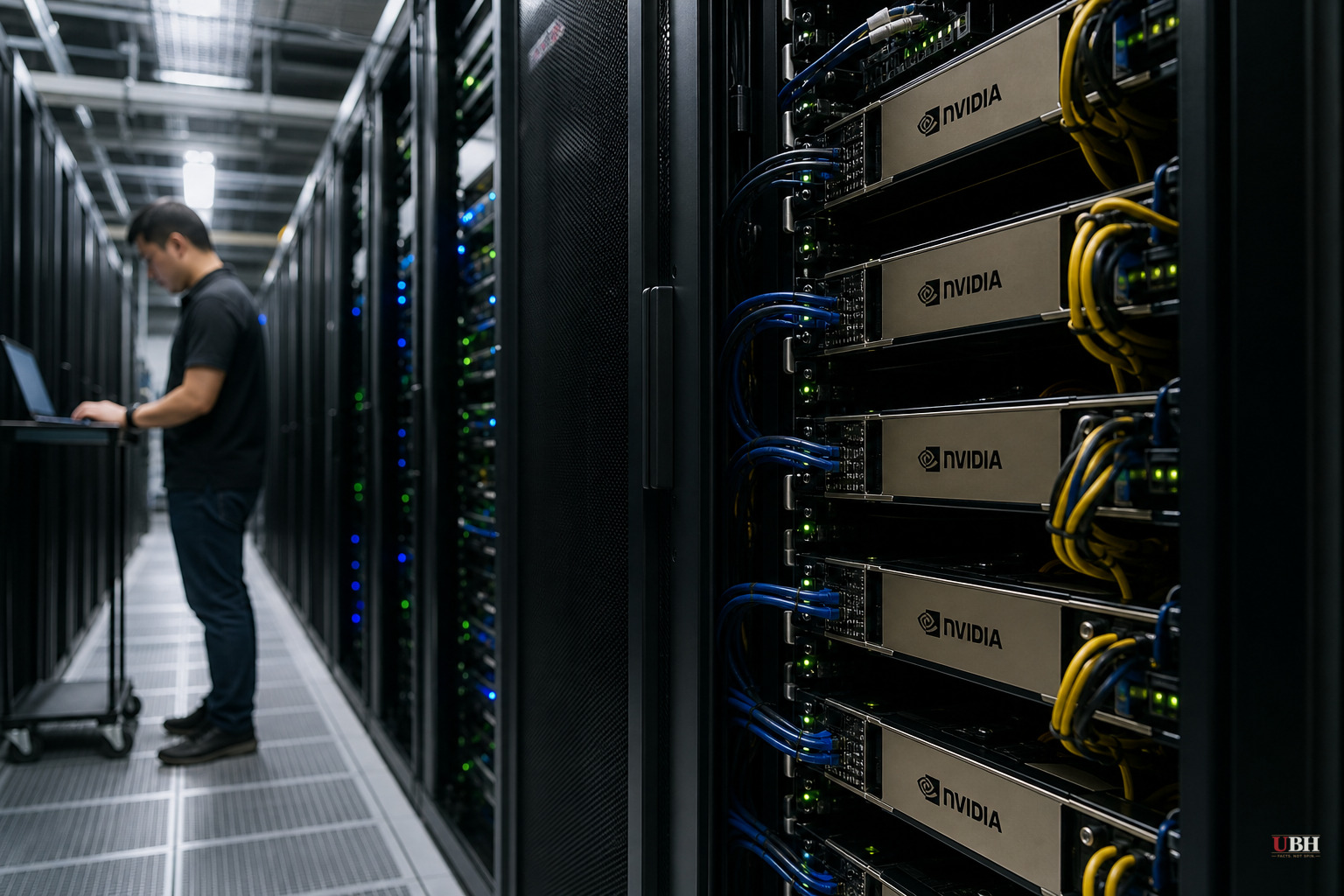
The U.S. government bans Nvidia from selling its most advanced AI chips directly to China. That policy has a hole in it, and Washington knows it.
White House official Michael Kratsios accused Moonshot AI, a Chinese company, of training its new Kimi K3 model using Nvidia's restricted GB300 chips, according to CNBC. Moonshot didn't buy the chips. It reportedly accessed their computing power remotely through a data center in Thailand.
Cassia King, a senior researcher at the Institute for AI Policy and Strategy, told CNBC the arrangement is legal "so long as Moonshot isn't actually buying and owning the physical hardware directly." U.S. export rules control who owns physical chips. They don't control who rents time on a server running those chips from another country.
CNBC reported that Chinese hyperscalers including ByteDance, Alibaba and Tencent have reportedly tapped Nvidia compute power through cloud providers in Thailand, Malaysia and Japan. A source familiar with the matter told CNBC that ByteDance was working with Singapore-based cloud provider Aolani to access chips located in Malaysia. That arrangement was first reported by the Wall Street Journal in March.
Aolani told CNBC it serves "a global and diversified customer base spanning customers from North America and Asia" and that its customers "do not have ownership" of the underlying hardware. ByteDance and Tencent did not respond to CNBC's request for comment. Alibaba declined to comment.
A White House official told CNBC the administration "has implemented the most rigorous export control regime in modern history, and remains committed to safeguarding America's national and economic security." The Commerce Department's Bureau of Industry and Security did not respond to CNBC's request for comment. Legislation to close the remote-access loophole is reportedly being discussed in Congress, but CNBC noted real hurdles remain before any bill could take effect.
The H200 Story Is a Different, Messier Picture
While the top-tier chip ban has a workaround problem, a lower tier of Nvidia hardware is now moving into China through the front door, slowly.
The Financial Times reported that ByteDance and Tencent have each received roughly 10,000 Nvidia H200 processors over the past few weeks, marking the first real hardware deliveries since President Trump approved H200 exports to vetted Chinese buyers in December 2025. Tom's Hardware and Business Standard both confirmed the FT's reporting.
The H200 is at least two generations behind Nvidia's most powerful chips, according to Business Standard, and Nvidia's more advanced Blackwell GPUs remain banned from export to China. Roughly 10 Chinese firms, including Alibaba, ByteDance, Tencent and JD.com, were licensed to buy H200s by May. Tom's Hardware and the Financial Times reported each company's allowance could run up to 100,000 units, though Business Standard cited US licensing terms capping purchases at 75,000 chips per customer — a discrepancy the sources don't fully reconcile.
The catch: Beijing, not Washington, has been the real bottleneck. Every purchase requires case-by-case approval from China's National Development and Reform Commission, and Tom's Hardware reported that a U.S. trade official told Congress in mid-July that only a very small quantity of licensed chips had actually shipped. Nvidia CEO Jensen Huang has said the company's China market share fell from 95% to zero amid the standoff.
Beijing is reportedly directing companies to keep most of their allotted chips out of mainland China entirely, routing them to Hong Kong instead, according to the Financial Times. That creates a logistics problem: ByteDance and Tencent don't currently operate data centers there, and Hong Kong's entire power grid for data centers totals about 581 megawatts, per Hong Kong Free Press. A single company's full 100,000-unit allowance would need roughly 125 megawatts just for the servers, according to Tom's Hardware's calculations, before accounting for cooling overhead. A planned data center cluster meant to absorb that load isn't expected to open until 2029.
Business Standard framed Beijing's move as strategic patience, not surrender, noting Chinese officials still want domestic chipmakers like Huawei to close the gap rather than let companies lean on Nvidia hardware. Forbes contributor John Tamny made a related point from a free-market angle: export controls have driven explosive profit growth at Chinese chipmakers like Hua Hong Grace and SMIC, up 385% and 267% respectively in the second quarter, according to a South China Morning Post report cited by Forbes. Tamny's argument is that Washington's restrictions are accelerating the very self-sufficiency they're supposed to prevent, while costing U.S. firms the customer relationships and market feedback that drive long-term innovation.
Chip export controls exist because the Pentagon and intelligence agencies assess that unrestricted access to frontier AI compute could accelerate Chinese military AI applications. Whether Beijing's own bureaucratic slow-walking, the Hong Kong power bottleneck, and the remote-access loophole together mean the policy is failing or just adjusting to reality is not settled by any source here.
Unresolved questions remain: whether Congress can pass legislation closing the offshore compute loophole before more frontier Chinese models get trained on rented Nvidia power, and whether Hong Kong's infrastructure gap resolves itself before 2029 or forces Beijing to loosen mainland restrictions sooner.
Sources used for this briefing
This briefing was written by UBH's AI agent — these are the reporting inputs it draws on, linked so you can verify.


