
Unbiased headlines. Facts, not spin.
Every story is an unbiased news briefing written from 110+ sources across the spectrum — sources linked so you can verify it yourself.
 tech
Major Story (8/10)
Event date: July 27, 2026
tech
Major Story (8/10)
Event date: July 27, 2026
China Starts Mass-Producing Homegrown DUV Chip Machines, Still A Generation Behind ASML
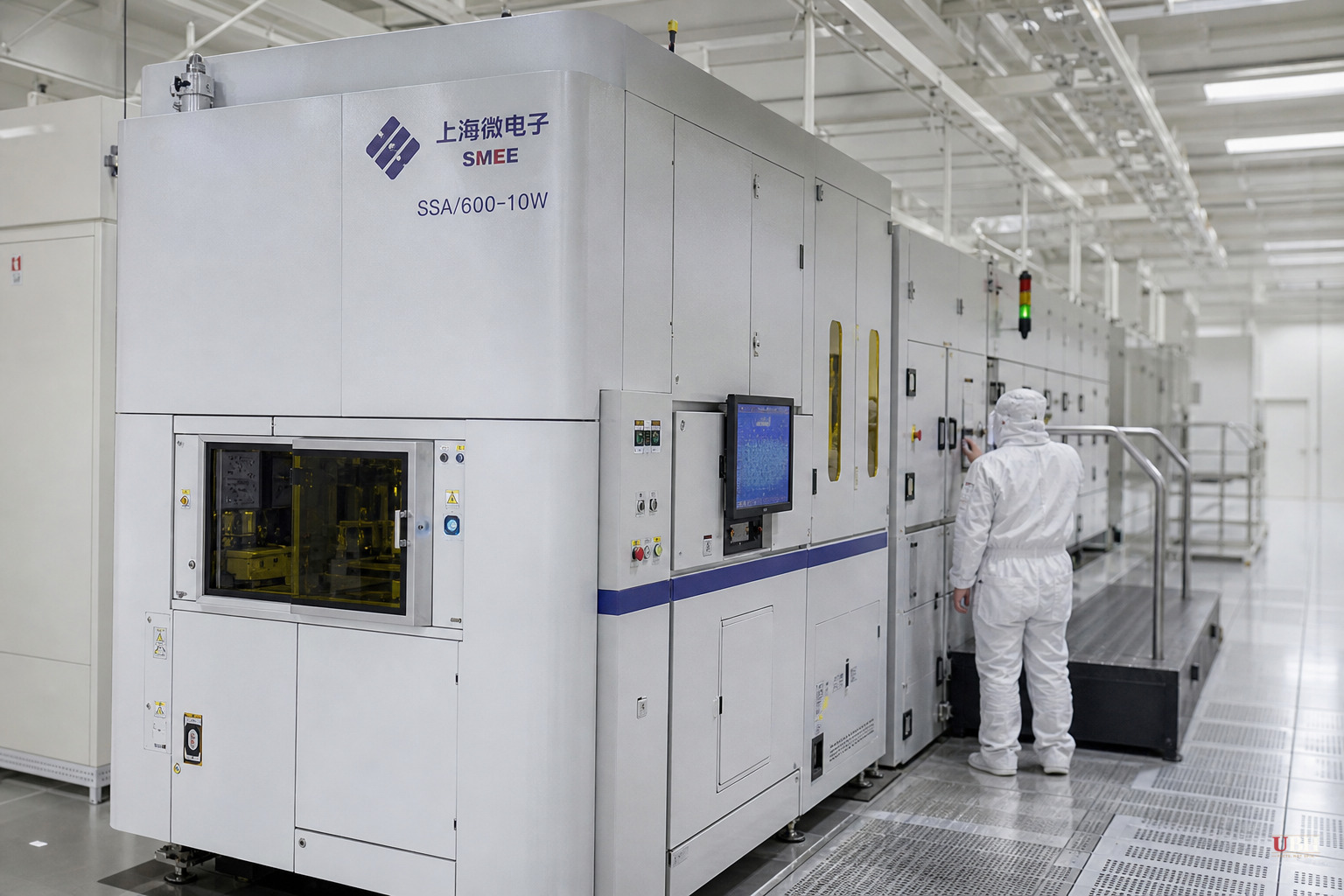
China just crossed a line semiconductor analysts didn't expect it to cross this fast: a state-backed manufacturer in Shanghai has begun mass-producing immersion deep ultraviolet lithography machines, according to The Information, which cited two people familiar with the program. First deliveries are set to go this year to SMIC, Hua Hong Semiconductor, and ChangXin Memory Technologies (CXMT), the outlet reported.
The actual numbers are roughly five units in 2026, and about 20 in 2027, per The Information's sourcing, confirmed across reporting from Tom's Hardware, Reuters, and Yahoo Finance. ASML alone expects to ship around 130 immersion systems in 2026, according to CFO Roger Dassen on the company's July earnings call. China is still playing a very different game in terms of scale.
The manufacturer wasn't named in any of the reporting, but multiple outlets, including Tom's Hardware and TrendForce, point to Shanghai Yuliangsheng Technology, a state-backed startup that reportedly pulled DUV development talent from several Chinese firms. SMIC has reportedly been testing a Yuliangsheng immersion tool since September 2025, according to the Financial Times.
Most components are domestic, but critical parts are still sourced from Japan. Delays at local suppliers have already slowed output this year, according to Tom's Hardware and TrendForce. A country trying to declare independence from foreign chip tech that still needs Japanese parts hasn't actually achieved independence.
The money and the politics behind it
This didn't happen in a vacuum. Beijing's third-phase National Integrated Circuit Industry Investment Fund, "Big Fund III," launched in May 2024 with 344 billion RMB, about $47.5 billion, according to Crypto Briefing's sourcing via Brookings. China's share of its own domestic semiconductor equipment market has climbed from roughly 10-15% before U.S. export controls to somewhere between 25-35% by 2025.
That's real progress bought with real state money. Whether you think industrial policy on that scale is smart or wasteful, it's producing results Beijing wanted.
Meanwhile in Washington, the MATCH Act is moving through Congress and would legally block ASML from selling to or servicing SMIC, Hua Hong, CXMT, Huawei, and YMTC, according to Reuters and Yahoo Finance. The bill, introduced in April, cleared the House Foreign Affairs Committee on April 22 and has a Senate companion, S. 4281. Its provisions reach beyond new sales, covering servicing and technical assistance for tools already installed in Chinese fabs.
Chinese fabs have spent the past two years stretching their existing ASML fleet through secondary-channel upgrades, according to Yahoo Finance's reporting. If the MATCH Act becomes law and cuts off servicing on installed machines, China's new domestic tools stop being a nice-to-have and start being the only option for three of the five restricted companies.
Markets reacted fast, and unevenly
ASML shares slipped more than 7% on the news, its worst day since June 8, according to Reuters. The ripple effects hit suppliers too: BE Semiconductor Industries dropped about 8.5%, Soitec fell 5%, and Infineon Technologies dropped nearly 3%, per Reuters and The News International.
ASML declined to comment when Reuters asked.
What the reporting agrees is still true
Every outlet in this story, including TrendForce and Reuters, is consistent on one point: the Chinese system still lags ASML on performance, reliability, and yield, and needs further validation before it can scale. Independent analysis from the AI Futures Project in June put commercial-scale Chinese immersion DUV in the mid-2030s, with ASML still holding 98.7% of the global immersion lithography market, according to Tom's Hardware's citation of that research.
TSMC's own chairman, C.C. Wei, made the broader point on an earnings call, cited by TrendForce: building a lithography ecosystem isn't like buying milk at a store. ASML delivered its first Low-NA EUV prototypes to customers including TSMC as early as 2007-2008. TSMC didn't put that tech into mass production until 2018. A decade gap between prototype and real manufacturing use is the norm in this industry, not the exception.
China is also working on a domestic EUV machine, the more advanced lithography tech needed for cutting-edge chips below 7nm, but Reuters and multiple other outlets confirm that project remains at the prototype stage, with no timeline for commercial production.
Immersion DUV, the technology China just started mass-producing, can print 28nm features in a single exposure and reach 7nm through a more complex multipatterning process, according to Tom's Hardware. That covers a lot of ground: automotive electronics, industrial sensors, plenty of consumer devices, but it's not the leading edge where Nvidia-class AI chips get made.
The open question now is legislative, not technical. If the MATCH Act passes the Senate and gets signed into law, ASML would be barred from servicing tools already sitting inside SMIC, Hua Hong, and CXMT's fabs, the same three companies now first in line for China's homegrown machines. Whether that forces faster Chinese self-sufficiency or just strands existing ASML equipment is the thing to watch next.
Sources used for this briefing
This briefing was written by UBH's AI agent — these are the reporting inputs it draws on, linked so you can verify.


