
Unbiased headlines. Facts, not spin.
Unbiased Headlines is an independently owned news organization. We bring you the facts, not opinions, written fresh from 110+ named sources. Sources linked so you can verify it yourself.
 defense
Major Story (7/10)
China Sends Envoys to Iran, Oman and Saudi Arabia as Wang Yi Meets Iranian and Saudi Officials in Beijing
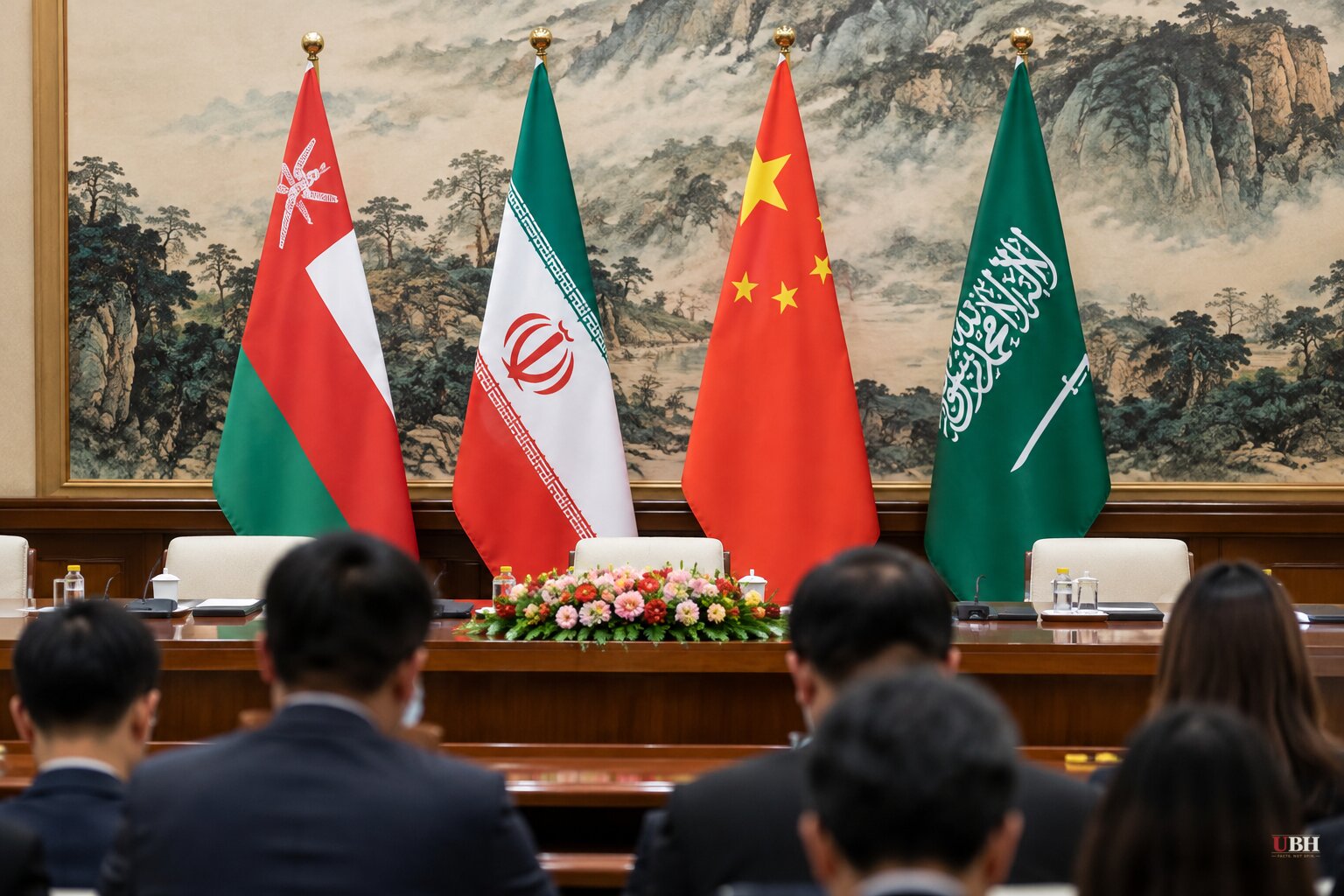
China is putting its diplomats back on the road in the Middle East, and it started with a crowded Monday in Beijing.
Foreign Minister Wang Yi met Ali Bagheri Kani, deputy secretary of Iran's Supreme National Security Council, today, Nov. 2. Wang told him that "dialogue and negotiation remain the only viable path forward" as regional conflicts "drag on and risk further spillover." He added that all parties should "focus on a political settlement in a rational and pragmatic spirit instead of resorting once again to armed conflict."
Wang also reaffirmed China's support for Iran's sovereignty and security.
Saudi message to Xi
The same day, Saudi national security adviser Musaed bin Mohammed Al-Aiban met Wang and handed over a written message from Crown Prince Mohammed bin Salman to President Xi Jinping. The Saudi Press Agency described the letter as covering bilateral relations and issues of common interest. It disclosed no details.
Wang told Al-Aiban the Middle East has again reached a "critical crossroads between war and peace." Al-Aiban led the Saudi delegation to the March 2023 Beijing talks that produced the Chinese-brokered restoration of Saudi-Iranian diplomatic relations, according to the House of Saud Daily Briefing.
The Saudi and Iranian delegations were in Beijing at the same time. China has not said whether the two sides had any contact with each other.
Oman gets the red carpet
Xi also hosted Sultan Haitham bin Tariq of Oman for a state visit at the Great Hall of the People. It is the first visit to China by an Omani head of state since the two countries established relations in 1978.
The two governments signed 14 cooperation documents covering artificial intelligence, green energy and supply chains, plus a currency swap agreement. Their joint statement called for safe navigation to resume through the Strait of Hormuz and urged the United States and Iran to restart dialogue.
Xi said the Middle East and the Gulf "should not become an arena for great-power rivalry and geopolitical conflict." He described ties with Oman as at a "new historical starting point."
Oman sits across the strait from Iran. About one-fifth of global energy exports passed through Hormuz before the war restricted traffic. Al Jazeera's Katrina Yu, reporting from Beijing, noted that many Omani ports lie outside the strait, which makes Muscat especially useful to China.
Envoys fan out
Foreign Ministry spokeswoman Mao Ning announced a round of shuttle diplomacy for November:
- Zhai Jun, special envoy on the Middle East, will visit Iran, Oman and Saudi Arabia in early and mid-November.
- Liu Xianfa, special representative on African affairs, will visit Ethiopia, Djibouti and Egypt in early and mid-November.
- Hu Changchun, special envoy for the Horn of Africa, will visit Eritrea in early November.
Mao said the trips are aimed at promoting peace talks, easing tensions and "playing a constructive role for upholding regional peace and stability."
Why Beijing is moving now
The economics are plain. Yu described China as Iran's biggest trading partner and the biggest customer of Iranian crude. She said Beijing has done little diplomatically toward ending the war for weeks or even months, and that China is "very frustrated, and it wants to be seen to enter" the process.
Breitbart reports that Beijing has tried to route around the problem. It cites a planned Arctic Silk Road and sharply higher oil imports from Brazil, and says China wants Iran and its proxies to stop disrupting regional trade.
Beijing's public framing puts the blame elsewhere. China has consistently blamed the United States and Israel for starting the conflict. Bagheri, according to Iran's Tasnim news agency, said Tehran would not compromise on defending its sovereignty and described the killing of Ayatollah Ali Khamenei and members of his family as "unforgettable war crimes."
What Wang did not say
The House of Saud Daily Briefing pointed to a change in tone. On April 13, Wang said blocking the Strait of Hormuz would not serve the common interests of the international community. On Sept. 16, meeting Iranian Foreign Minister Abbas Araghchi in Beijing, he said, "We urge all parties to take effective measures to reopen the Strait of Hormuz at an early date," according to the Chinese foreign ministry.
The outlet notes that the Monday remarks as relayed to the public did not repeat a demand to reopen the strait. Wang called instead on parties to safeguard the region's energy and shipping lane security.
The timing is tight. According to the same outlet, President Donald Trump's moratorium on striking Iran expires around Tuesday's midterm elections. It also cites Axios as reporting that Israeli Prime Minister Benjamin Netanyahu is pressing Trump to strike after the vote. The outlet says the Hormuz blockade is nearing its fourth month. The White House has not been quoted on any of this in the material from Beijing.
China's pitch is that talks, not strikes, are the way out, and Wang's "once again" wording points at the possibility of renewed U.S. action.
What comes next is on the calendar. Zhai Jun's tour of Tehran, Muscat and Riyadh is set for early-to-mid November, after Tuesday's U.S. vote. Whether Beijing uses those meetings to press Tehran on reopening Hormuz, or only to urge talks, is the open question.
Sources used for this briefing
8 links from 8 independent newsrooms (syndicated copies of the same report count once)
These are the sources it draws on, linked so you can verify.


