
Unbiased headlines. Facts, not spin.
Every story is an unbiased news briefing written from 110+ sources across the spectrum — sources linked so you can verify it yourself.
 politics
Major Story (8/10)
July 21, 2026 at 08:40 PM
politics
Major Story (8/10)
July 21, 2026 at 08:40 PM
China Plans to Triple Facilities Accused of Harvesting Organs From Detained Uyghurs, Experts Warn
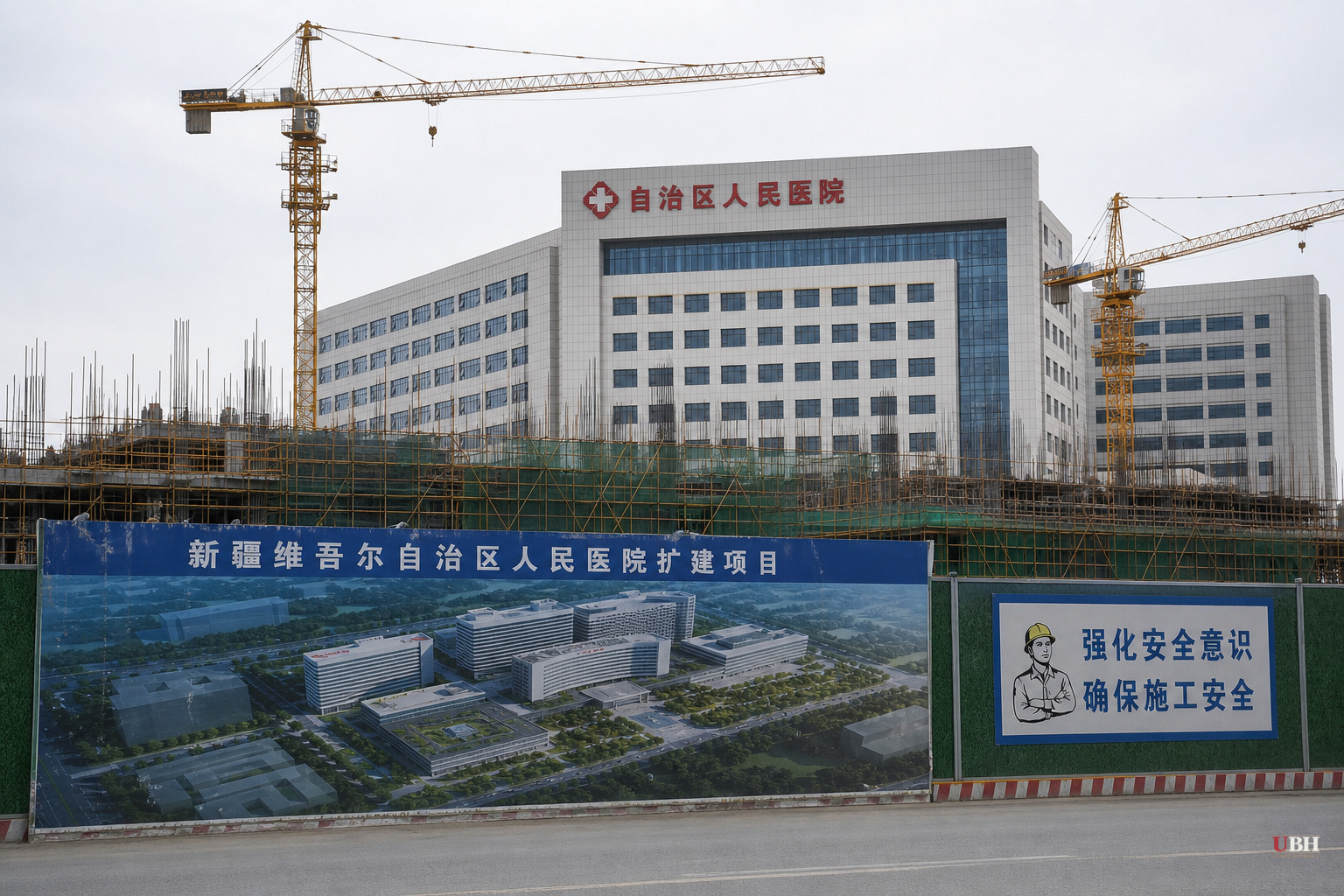
China's national health authority is planning to open six new medical centers that experts say will triple the number of facilities accused of forcibly harvesting organs from detained Uyghurs, according to The Telegraph.
China has faced years of accusations of genocide against the Uyghur people, a mostly Muslim ethnic minority concentrated in the Xinjiang region. Beyond mass detention, forced labor, and cultural suppression, Beijing has been accused of running a forced organ harvesting operation that sells organs from prisoners to wealthy transplant recipients.
An independent tribunal held in the United Kingdom found that China conducted as many as 100,000 organ transplants annually, roughly three times the number Beijing reported to the international transplant registry, according to The Jerusalem Post's account of the Telegraph reporting. That gap between reported and actual transplant volume has been a central piece of evidence cited by critics for years.
Sayragul, a Kazakh doctor who was previously imprisoned in Xinjiang, has said Chinese authorities separate detainees based on blood test results. Prisoners marked with a pink check, she says, disappear. She believes those individuals become victims of the forced organ harvesting system.
Wendy Rogers, chairman of the advisory board for the International Coalition to End Transplant Abuse in China (ETAC), told The Telegraph that prisoners are killed slowly as organs are removed from them against their will.
No Charges, No Investigation, No ICC Action
No criminal charges have been filed against Chinese officials over these allegations, and no formal International Criminal Court investigation into organ harvesting has been announced. The claims come from tribunal findings, advocacy groups, survivor testimony, and investigative reporting, not from a completed prosecution.
The allegations are serious and the evidence pattern includes mismatched transplant numbers, survivor accounts, and planned facility expansion. "Credible allegation backed by a tribunal finding" is not the same as "proven in a court with due process protections." China has never faced formal international legal proceedings on this specific issue, and part of the reason is structural: China is not a member of the ICC and has consistently blocked independent international inspectors from full, unmonitored access to Xinjiang facilities. That makes the allegations hard to verify beyond doubt, and just as hard to definitively disprove.
A Long Pattern of Documented Abuse
The organ harvesting allegations sit within a broader documented pattern. The United Nations reported in 2022 finding "serious human rights violations" against Uyghurs and other minorities in Xinjiang tied to China's national security and counter-terrorism policies, including forced labor accusations.
The U.S. Labor Department has separately accused Chinese authorities of detaining Uyghurs in work camps where detainees receive minimal pay, cannot leave, and have limited or monitored contact with family. Workers are also reportedly forced into Mandarin language instruction and ideological indoctrination, according to the department.
Earlier this month, the Uyghur Human Rights Project renewed its demand that Beijing account for Uyghurs who disappeared in 2009 after a violent crackdown on protests in Ürümchi. Those protests followed the killing of Uyghur factory workers in Guangdong, and Chinese authorities opened fire on demonstrators; the death toll from that crackdown has never been established.
"The killing and enforced disappearance of innocent Uyghur protesters sixteen years ago paved the way for the genocide in East Turkistan today," said UHRP Executive Director Omer Kanat. "The international community has a responsibility to pressure the Chinese government to end the arbitrary detention and enforced disappearance of Uyghurs and to free all who are currently detained."
In 2021, UHRP documented the disappearance of 312 Uyghur intellectual and cultural leaders in a separate report.
Beijing's Denial
China has repeatedly denied all of it. Chinese officials maintain that the rights of every ethnic group in Xinjiang are protected and reject the forced labor and organ harvesting accusations outright. Beijing has dismissed related findings as "groundless" and part of what it calls Western attempts to contain China. Beijing has not, however, allowed the kind of unrestricted, independent international monitoring that would let outside observers verify or refute the claims on the ground.
Why the ICC Hasn't Moved
China's non-membership in the ICC is the practical reason the court has taken no formal action, not evidence of a cover-up by the court itself. The ICC generally only has jurisdiction over crimes committed on the territory of member states or referred by the UN Security Council, and China, as a permanent Security Council member with veto power, can block any such referral. That is a structural limitation of international law, not proof of institutional corruption.
The unresolved question is whether the planned expansion to six additional medical centers, reported by The Telegraph, will draw fresh scrutiny from Western governments or trigger new sanctions. So far, no government has announced a specific response to this particular expansion plan.
Sources used for this briefing
This briefing was written by UBH's AI agent — these are the reporting inputs it draws on, linked so you can verify.


