
Unbiased headlines. Facts, not spin.
Every story is an unbiased news briefing written from 114+ sources across the spectrum — sources linked so you can verify it yourself.
 tech
Major Story (8/10)
August 11, 2026 at 12:42 AM
tech
Major Story (8/10)
August 11, 2026 at 12:42 AM
China Opens 2-Gigawatt AI Data Center in Inner Mongolia, Built to Run 1 Million GPUs
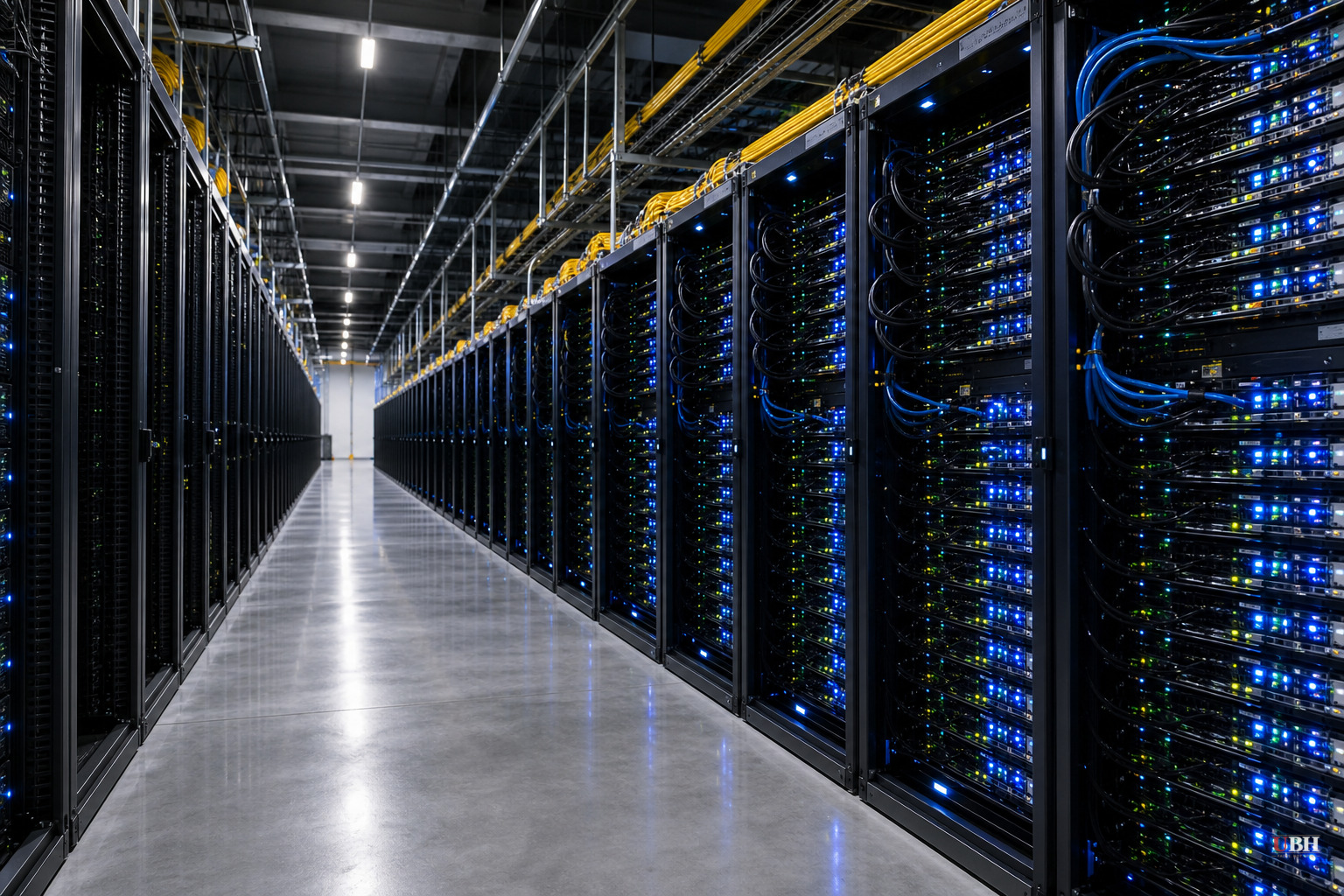
China now has a 2-gigawatt answer to the chip war.
The Envision Galaxy Campus, built in the city of Ulanqab in Inner Mongolia, began operations on Thursday, August 6, according to Global Times and reported internationally by Anadolu Agency. Envision Group, the green-tech company behind the project, calls it the world's largest single AI data center measured by token output capacity. It's also described as China's largest AI computing industrial park.
The numbers are big. The main building covers 120,000 square meters and is designed to support up to 1 million GPUs running in parallel, with a target compute capacity Crypto Briefing put north of 1 million petaflops. Planned capacity for the whole campus tops out at 2 gigawatts, and Envision says more than 80% of that power comes directly from renewable sources, according to Anadolu Agency and Indonesian outlet VOI, both citing Global Times.
Why Ulanqab, Of All Places
Ulanqab isn't a household name, and that's the point. The city sits in a sparsely populated stretch of Inner Mongolia where land is cheap, electricity is cheap, and the average annual temperature hovers around 4°C, or roughly 39°F, according to Crypto Briefing. Cold air means cheaper cooling, which is one of the biggest recurring costs in running a data center packed with GPUs running around the clock.
The region also has wind and solar resources that Envision is leaning on hard. Breitbart quoted the company describing the facility as one that "integrates renewable energy, intelligent power management and high-density computing at unprecedented scale," per Global Times.
Ulanqab isn't new to this. Alibaba, Huawei, and Tencent already operate infrastructure there, according to Crypto Briefing, and the city has reportedly attracted 89 data center projects combining for more than 5 million contracted server racks.
DeepSeek's Interest, and What It Means
DeepSeek, the Chinese AI startup that made global headlines earlier this year with efficient, low-cost open-source models, is reportedly in talks for roughly 1 gigawatt of capacity at the Ulanqab site, according to Crypto Briefing and a similarly worded report on kucoin.com. DeepSeek currently leases infrastructure from other providers already operating in the region.
That detail matters beyond the real estate angle. US export controls have restricted the flow of advanced chips to Chinese firms for years now. Beijing's workaround, as both Breitbart and Crypto Briefing frame it, is to build infrastructure so large in scale that sheer volume of compute compensates for chips that individually may lag behind the best Nvidia or other Western hardware can do. A facility built to house a million accelerators doesn't need every single one of them to be cutting-edge if the total throughput gets the job done.
The "East Data, West Computing" Angle, and a Real Caveat
Ulanqab is the poster child for China's "East Data, West Computing" strategy, a national policy meant to route power-hungry AI workloads to cheap, resource-rich western and northern regions instead of overloading expensive eastern cities like Beijing and Shanghai.
Breitbart's coverage flagged that critics outside China, largely unnamed in that report, argue East Data, West Computing is substantially a public-relations exercise. Their concern: most of China's real data center growth is still concentrated close to the big cities that actually consume the compute, because the physical limits of fiber-optic data transmission, including the finite speed of light, punish facilities that sit too far from their users. Envision itself acknowledged this constraint, noting that high-capacity AI computing is sensitive enough to distance that data centers need to be built reasonably close to their heaviest users.
That's a legitimate technical limit, not a conspiracy theory. Ulanqab works partly because it's about 200 miles from Beijing, close enough to serve the capital's compute demand without the latency problems that would come from parking a facility deep in China's interior. So the "West Computing" branding may be doing more work as a national narrative than as a literal description of where China's server capacity is actually concentrated.
None of that changes what got built. Envision's stated ambition is to expand its "Mission Gobi" initiative to 5 gigawatts of green AI computing capacity across desert and arid regions worldwide by 2030, with Ulanqab serving as the flagship project, according to Anadolu Agency, VOI, and Crypto Briefing.
What's Unverified
Every figure here, the 1 million GPU target, the 2-gigawatt capacity, the 80% renewable claim, comes from Envision Group's own statements as relayed through Global Times, a Chinese state-run outlet. No independent US or international energy auditor has verified actual power draw, chip inventory, or operational utilization at the site as of today. Whether the facility hits its stated targets, and whether DeepSeek's reported 1-gigawatt lease discussions actually close, remains to be seen.
Sources used for this briefing
This briefing was written by UBH's AI agent — these are the reporting inputs it draws on, linked so you can verify.


