
Original briefings. Zero spin.
Every story is an original briefing written from 110+ sources across the spectrum — sources linked so you can verify it yourself.
 politics
Major Story (7/10)
September 11, 2026 at 06:18 PM
politics
Major Story (7/10)
September 11, 2026 at 06:18 PM
Chad and Venezuela Quit The ICC, Bringing Total Withdrawals to Five as Trump Administration Ramps Up Pressure
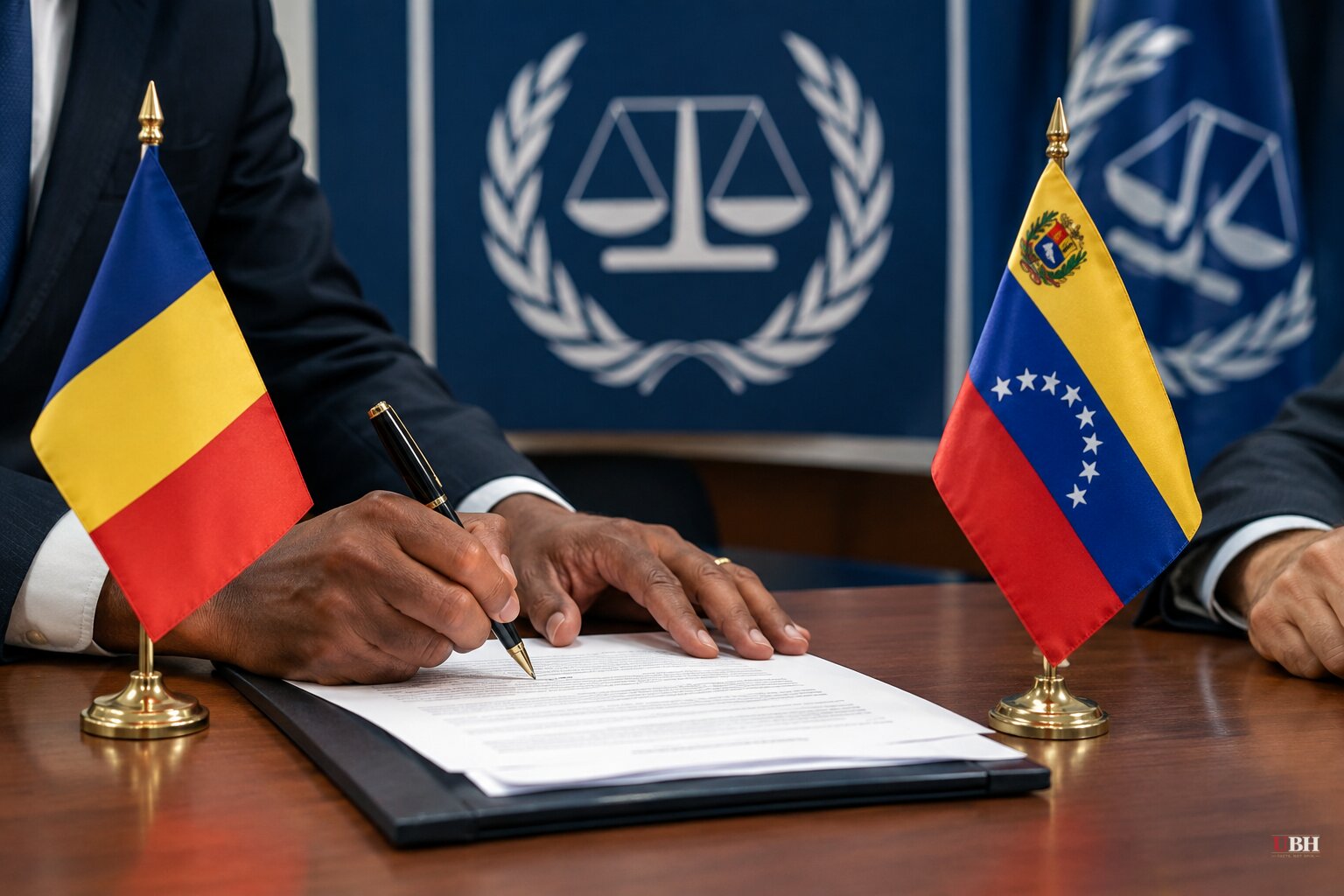
The International Criminal Court has lost five member states in the past year, and the Trump administration is taking credit for at least two of them.
Chad and Venezuela recently announced they're withdrawing from the Rome Statute, the 2002 treaty that created the ICC as a court of last resort for war crimes, genocide, crimes against humanity and the crime of aggression, according to the Associated Press. They join Burkina Faso, Mali and Niger, whose military juntas pulled out earlier.
"Five countries so far have announced plans to withdraw from the Rome Statute, and we welcome more announcements in the future," a State Department spokesperson told the AP.
Rubio's campaign, and Chad's phone call
In July, Secretary of State Marco Rubio announced what he called a "sweeping campaign to dismantle the threat posed by the International Criminal Court to U.S. sovereignty," according to the AP. Rubio said he'd pressure all 125 ICC member states to leave, sanction groups that work with the court, and ban its staff from entering the U.S. The administration has already sanctioned a dozen ICC staffers, and added two more high-ranking officials to the list in recent weeks over warrants the court issued for top Israeli officials in the Gaza war and its investigations into U.S. personnel in Afghanistan.
Chad's exit tracks directly to that campaign. Foreign Minister Abdoulaye Sabre Fadoul said a U.S. official called Chad on July 23 and "expressed its concerns regarding the functioning of this institution and requested that Chad reconsider" its membership, according to the AP. Four days later, Chad announced it was leaving.
The sources reviewed don't detail Venezuela's stated reasoning for its own withdrawal, so it's not clear whether Caracas cited the same U.S. pressure or acted on separate grounds.
Not every exit is about Trump
Burkina Faso, Mali and Niger, run by military juntas, left earlier, and their stated reasoning had nothing to do with Washington. The three governments called the ICC an "instrument of neocolonial repression in the hands of imperialism" when they announced their departures, according to the AP, the Yahoo News report, and WBAL's coverage of the same wire story. They accused the court of selective justice, a complaint aimed at the court's disproportionate focus on African cases over the decades, not at U.S. sanctions.
That distinction matters. Two of the five departures line up cleanly with the Trump administration's stated pressure campaign. Three others reflect a separate, older grievance from authoritarian regimes that predate Rubio's July push entirely.
The case for skepticism, and the case against it
The administration's underlying argument, that an unaccountable international body shouldn't have authority to issue arrest warrants for American troops or for a U.S. ally's officials, is a mainstream sovereignty concern. The U.S. never ratified the Rome Statute in the first place, and the ICC's 2024 warrant covering Israeli officials over the Gaza war struck many in Washington as a body overstepping its mandate against a democracy fighting a war it says is defensive.
The court's defenders raise a different, equally serious point: three of the five countries now leaving are run by military juntas with documented human rights problems of their own, and stripping away a mechanism meant to hold anyone accountable for war crimes doesn't obviously serve justice. Iva Vukušić, a researcher at Utrecht University, told the AP the U.S. pressure campaign will "lay bare just how committed countries are to the court," asking, "Are they willing to defend it if it costs them something real?"
Sovereign nations have a right to reject a court's jurisdiction over their own citizens. A wave of juntas and U.S.-aligned states abandoning the institution simultaneously, for different reasons, still adds up to a weaker international check on atrocity, whatever anyone thinks of how the ICC has used that power so far.
What's still unresolved
The ICC's spokesperson, Oriane Maillet, told the AP the court "regrets any decision to depart from the collective effort to end impunity for the most serious international crimes," but the court has offered no public plan to reverse the trend. The State Department says it will keep calling on nations that "enjoy the benefits of the U.S. security umbrella" to follow Chad and Venezuela out the door.
The open question is how many of the remaining 120 member states, many of them NATO allies and other U.S. security partners, are willing to test that pressure. None have announced withdrawal since Chad. Whether that holds through the rest of 2026 will determine if this is the start of a mass exodus or the ceiling of it.
Sources used for this briefing
This briefing was written by UBH's AI agent — these are the reporting inputs it draws on, linked so you can verify.


