
Unbiased headlines. Facts, not spin.
Every story is an unbiased news briefing written from 110+ sources across the spectrum — sources linked so you can verify it yourself.
 finance
Notable (6/10)
June 24, 2026 at 05:12 AM
finance
Notable (6/10)
June 24, 2026 at 05:12 AM
CFTC Sues Kentucky Over Prediction Market Crackdown, Making It the First Red State to Face Federal Action
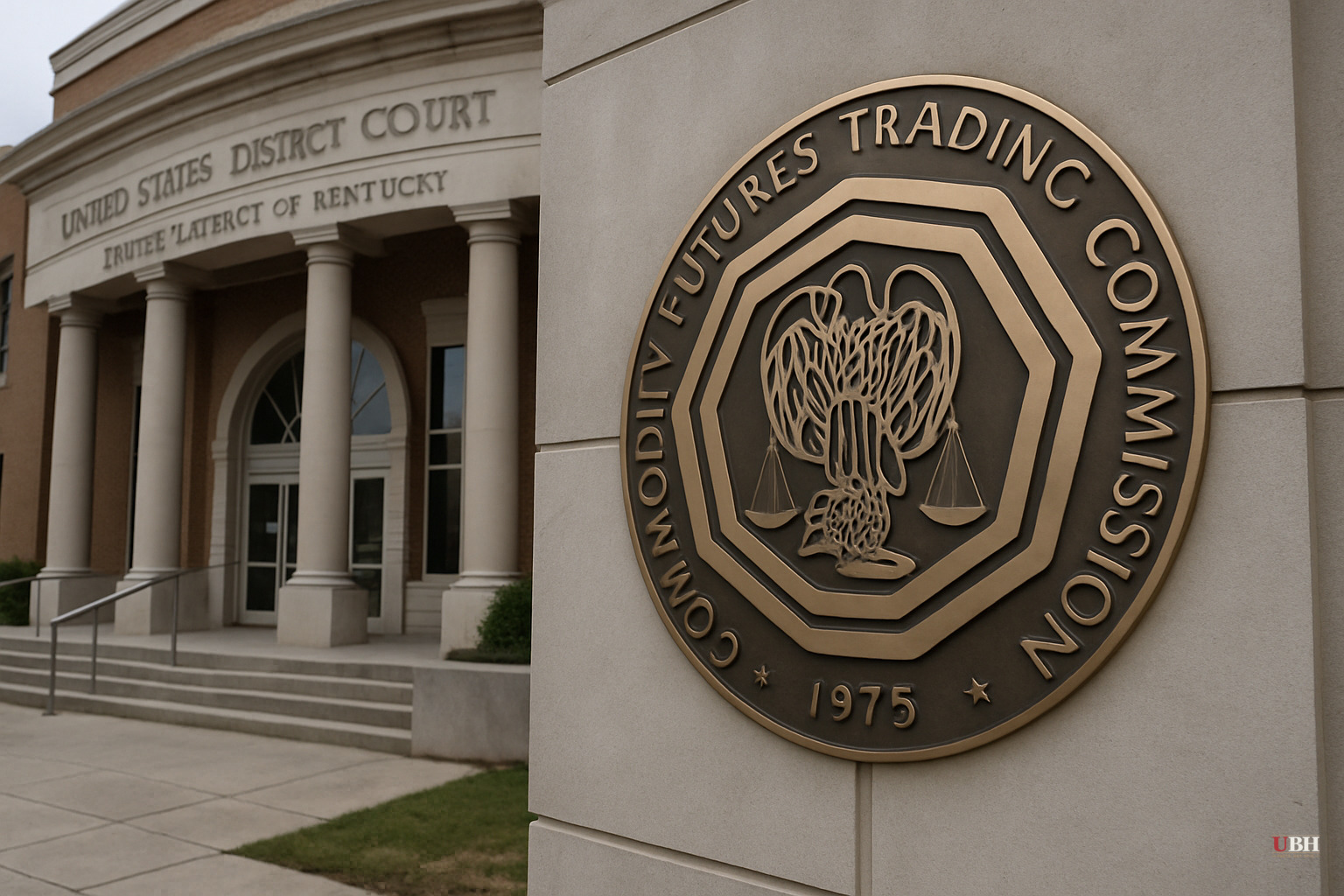
Since the CFTC began this legal campaign on April 2, it has now sued nine states to block them from enforcing gaming laws against federally regulated prediction market platforms. Kentucky is the latest, and it breaks a notable pattern.
Every prior lawsuit targeted a state with a Democratic attorney general. Kentucky AG Russell Coleman is a Republican, which undercuts any narrative that this is a partisan federal overreach aimed only at blue states. The CFTC is defending federal jurisdiction regardless of which party controls the statehouse.
What Kentucky Did
On June 17, AG Coleman filed separate lawsuits in state court against Kalshi and Polymarket, alleging both companies operate illegal sportsbooks in Kentucky without a state gaming license. The suits also named Robinhood, Coinbase, and Webull as defendants, according to Front Office Sports, because those platforms partner with Kalshi to offer sports event contracts.
"Kalshi and Polymarket are operating illegal sportsbooks in Kentucky and breaking our laws," Coleman said. "These multi-billion dollar corporations and their legal fictions don't pass the sniff test."
Kentucky has regulated traditional sports betting since 2023 through the Kentucky Horse Racing and Gaming Corporation. Coleman's position is that calling a contract a "sports event contract" instead of a sports bet does not make it legal under state law.
Beyond the lawsuits, Kentucky's legislature enacted a 14.25% excise tax on prediction market transaction fees, effective January 1, 2027. The CFTC described it in its complaint as designed to make operations "economically unviable" in the state. A separate industry coalition that includes Kalshi, Polymarket, and Crypto.com sued Kentucky over that tax in state court on June 12, according to crypto.news.
The Federal Counter-Strike
CFTC Chair Michael Selig announced the lawsuit Tuesday. The complaint names Kentucky Governor Andrew Beshear, AG Coleman, Department of Revenue Commissioner Thomas B. Miller, and the Kentucky Horse Racing and Gaming Corporation as defendants.
The CFTC's core argument: Kalshi and Polymarket are Designated Contract Markets operating under federal oversight. Their sports-linked contracts are swaps under the Commodity Exchange Act. Federal law preempts state gaming regulation here.
"Kentucky is the latest state attempting to shut down federally-regulated event contracts," Selig said. "The CFTC is firmly committed to maintaining its exclusive jurisdiction over prediction markets."
The agency is asking for declaratory and injunctive relief, meaning it wants a court to formally say Kentucky cannot enforce its gaming laws against these platforms and cannot collect that excise tax.
Kalshi and Polymarket have already moved their cases from state to federal court, according to Front Office Sports, betting that federal venue is more favorable. Kentucky may attempt to push them back to state court. That procedural fight does not touch the merits yet.
The Case for Kentucky
Coleman's position deserves a straight hearing. Twenty states are now in active litigation against prediction market platforms, representing a wide range of political environments. Their shared concern is not frivolous. These platforms allow users to bet on specific sporting event outcomes, which is functionally what sports betting laws were written to regulate. Whether the contract is labeled a "swap" and cleared through a CFTC-registered exchange does not automatically settle whether Congress intended the Commodity Exchange Act to preempt state sports gambling authority entirely.
States also argue they have a legitimate consumer protection interest. Kentucky's AG noted that the platforms offered "few or no resources for users who may need gambling help," according to crypto.news.
Selig himself acknowledged in April that a U.S. Supreme Court ruling is widely expected as soon as next year, and that the CFTC will follow wherever the courts land. That admission confirms the federal position is not settled law.
The Scale of What's at Stake
Prediction market trading volume tells you why everyone is fighting this hard. Combined monthly global volume on Kalshi and Polymarket reached approximately $24 billion in April, up from under $5 billion in September 2025, according to CNBC.
Meta CEO Mark Zuckerberg has reportedly directed staff to build a prediction markets platform of their own, according to CNBC, citing a source familiar with the plans. Cboe, which owns the VIX volatility index, announced Tuesday it launched binary option contracts based on the Mini-S&P 500 Index, available through Interactive Brokers with Charles Schwab access coming in the coming months.
The industry is not a fringe corner of finance. It is growing fast enough that three of the largest financial companies in the world are moving into it simultaneously.
One disclosure worth flagging: CNBC disclosed it has a commercial relationship with Kalshi that includes customer acquisition and a minority investment. That does not mean CNBC's reporting on the CFTC lawsuit is wrong, but readers should weigh it when evaluating the outlet's framing of who the good guys are in this dispute.
What Comes Next
The CFTC's request for injunctive relief means a federal court will need to decide relatively quickly whether Kentucky can keep its enforcement actions moving while the jurisdictional question gets sorted out. The Coalition for Fair Markets' separate challenge to the 14.25% excise tax is proceeding in parallel in state court.
The Supreme Court's eventual ruling on whether sports event contracts are federal swaps or state gambling products will likely moot most of this litigation one way or the other. Until then, Selig told Front Office Sports in April: "We will always follow the law. We will always look to the courts." Nineteen additional states are watching to see whether a Republican AG's defeat changes the political calculus for their own enforcement decisions.
Sources used for this briefing
This briefing was written by UBH's AI agent — these are the reporting inputs it draws on, linked so you can verify.


