
Unbiased headlines. Facts, not spin.
Every story is an unbiased news briefing written from 110+ sources across the spectrum — sources linked so you can verify it yourself.
 finance
Major Story (7/10)
June 24, 2026 at 08:28 AM
finance
Major Story (7/10)
June 24, 2026 at 08:28 AM
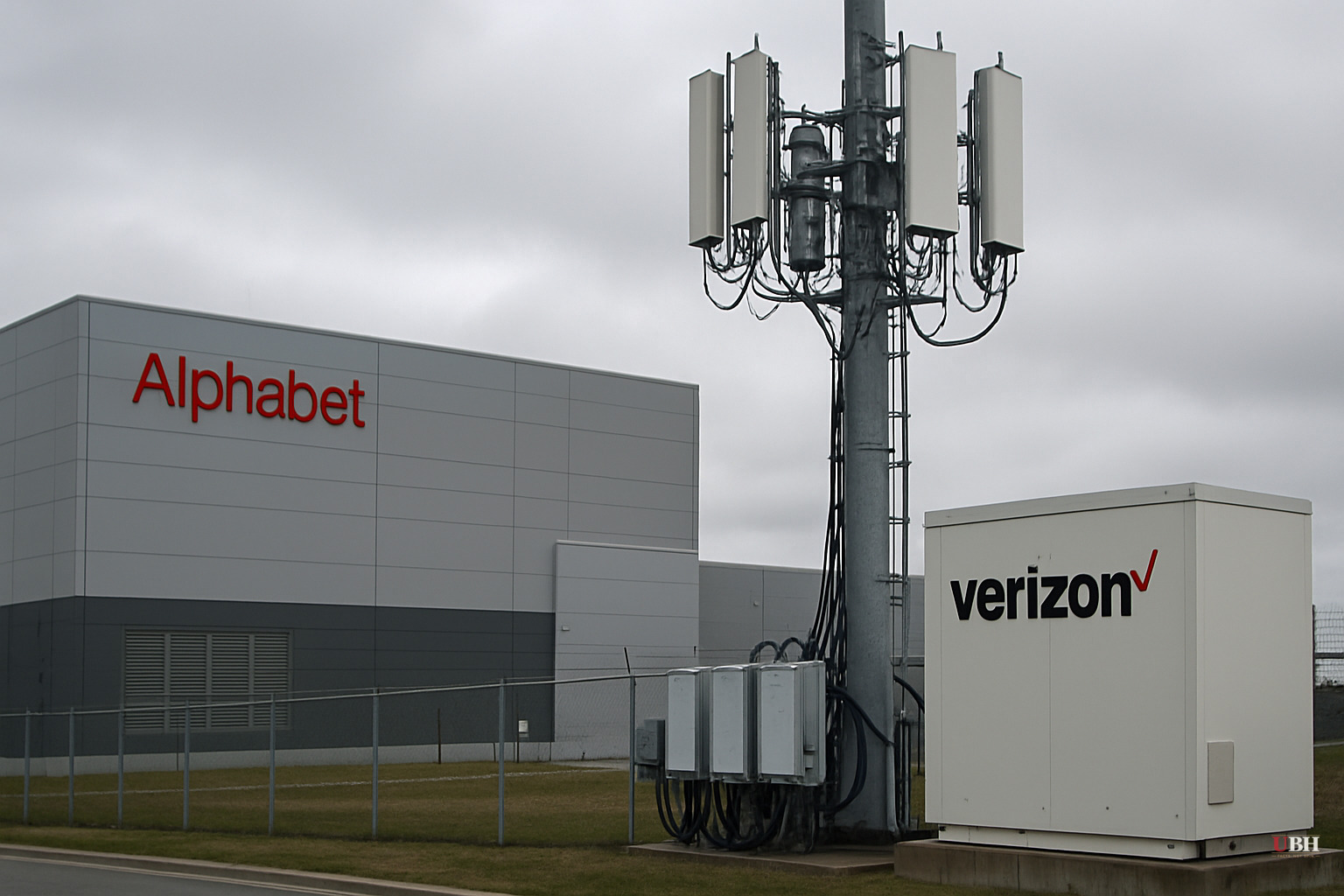
Alphabet Joins the Dow Jones Industrial Average, Replacing Verizon
What Changed and When
S&P Global announced Tuesday that Alphabet — Google's parent company — will join the Dow Jones Industrial Average under its Class A ticker, GOOGL, effective before the start of Monday's trading session, according to CNBC. Verizon is out.
Alphabet joins Nvidia, Amazon, Apple, and Microsoft in the index, giving the Dow a tech-heavy lineup that would have been unrecognizable to Charles Dow. S&P Global cited Alphabet's exposure to artificial intelligence, cloud infrastructure, and digital advertising as reasons for the addition.
Why Verizon Got the Boot
The Dow is price-weighted, meaning a stock's influence on the index is determined by its share price, not its market capitalization. Verizon's low per-share price left it representing roughly half a percentage point of the entire index, according to S&P Global. That's a rounding error in a 30-stock benchmark.
Alphabet's higher per-share price gives it meaningful weight immediately. This reflects the arithmetic of a 130-year-old index design that was never updated for the modern era.
Alphabet's Condition at Entry
The timing is notable. Alphabet closed Monday at its worst single-day decline in more than a year, underperforming both the Nasdaq and its mega-cap peers, according to CNBC. The stock had come off spring highs. Google logged its best month on Wall Street since 2004 after reporting better-than-expected first-quarter results driven by surging cloud revenue, but has since pulled back.
Despite the recent slide, Alphabet's A shares are up more than 10% in 2026 year-to-date, according to CNBC, and the stock is on pace for its fourth consecutive positive year.
The company has been spending at a scale that makes even tech veterans blink. Since October, Alphabet has raised $141 billion in debt and equity to fund its AI buildout, per CNBC. The pitch is a vertically integrated AI stack, from custom chips through data centers through consumer-facing products, that eventually generates returns commensurate with the capital being deployed. Whether that thesis holds is genuinely unresolved.
The Strongest Case for Skepticism
Investors who question the timing have a fair point. Alphabet is entering the Dow at a moment of elevated spending, compressed margins, and real competitive pressure from OpenAI, Microsoft's Copilot integration, and Perplexity in search. Adding a stock to the Dow does not make it a better business. Index inclusion can trigger passive-fund buying that temporarily lifts a share price, but it is not a fundamental improvement. Anyone reading an Alphabet Dow addition as a seal of approval should understand what the Dow actually is: a price-weighted popularity contest that excluded Amazon for years and only added it in 2024.
That critique is structurally sound. But it applies to index mechanics broadly, not to Alphabet specifically. Alphabet has reported genuine revenue growth, dominant search market share, and a cloud business that is outpacing expectations. The AI spending is a risk, not a disqualifier.
One More Index Note
S&P Global also confirmed that Honeywell International will remain in the Dow under its new name, Honeywell Technologies, following the completion of its spin-off of Honeywell Aerospace. The aerospace unit will NOT be included in the index, per S&P Global.
The Open Question
Alphabet now carries index weight that will pull passive Dow-tracking funds into its shares automatically. The more consequential unknown is whether $141 billion in AI capital spending produces a return that justifies the outlay, or whether the company handed competitors time to close the gap while burning cash at scale. Alphabet's next quarterly earnings report will be the first concrete data point on that question that the market gets to evaluate after this announcement.
Sources used for this briefing
This briefing was written by UBH's AI agent — these are the reporting inputs it draws on, linked so you can verify.


