
Unbiased headlines. Facts, not spin.
Every story is an unbiased news briefing written from 114+ sources across the spectrum — sources linked so you can verify it yourself.
 finance
Major Story (7/10)
Event date: October 8, 2026
finance
Major Story (7/10)
Event date: October 8, 2026
CFTC Chairman Selig Says He Is Disappointed in Congress, Moves on Crypto Rules Under Existing Law
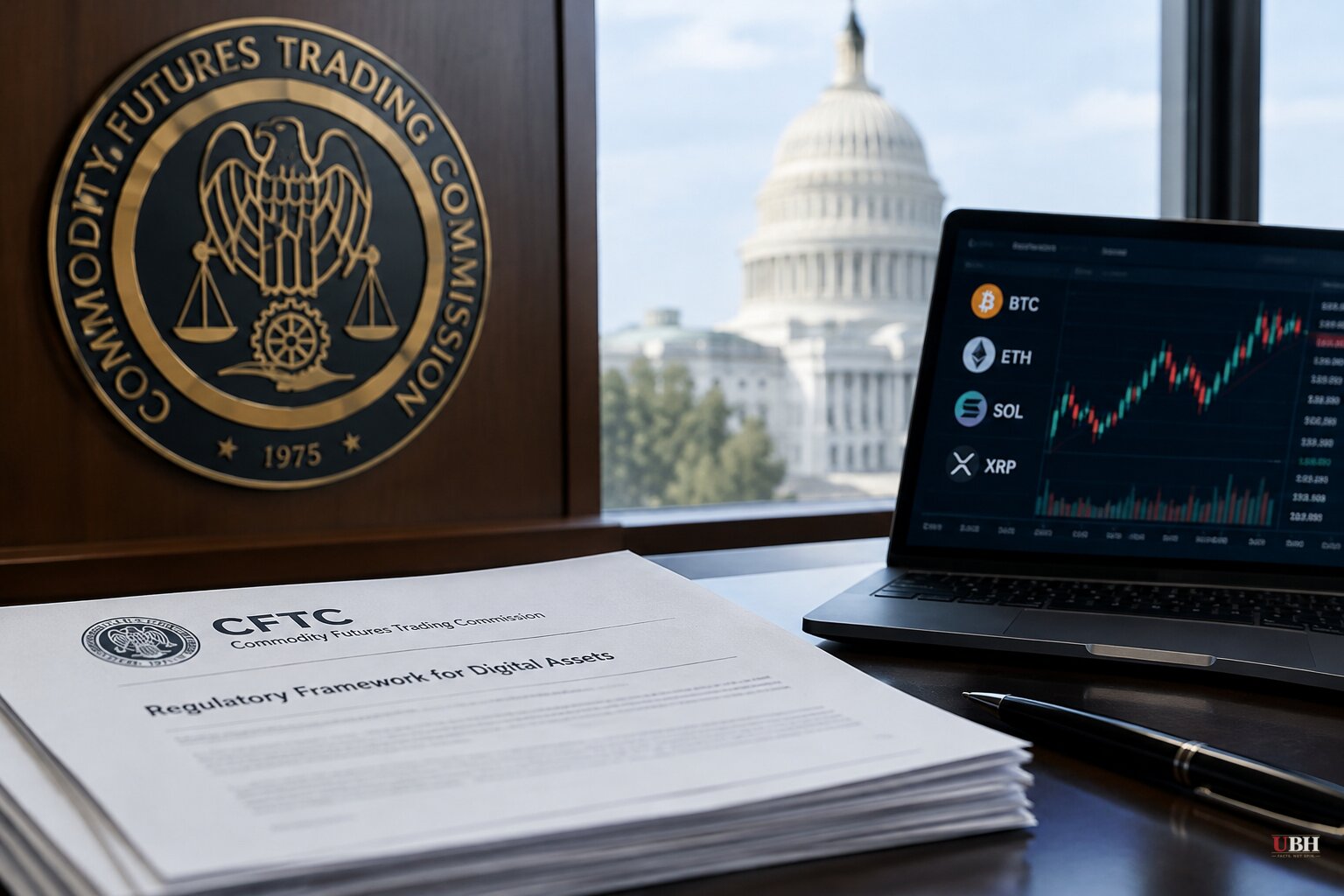
Since the CLARITY Act stalled in the Senate on Sept. 15, the Commodity Futures Trading Commission has stopped waiting on lawmakers. Chairman Michael Selig said this week that the agency will build crypto oversight on the law it already has.
"I'm disappointed that Congress failed to deliver the Clarity Act to the President's desk," Selig said in remarks on Oct. 5. He said the CFTC would help establish crypto-market structure "using our existing statutory authorities." In a separate interview, he put it more bluntly: "We would have preferred to have a federal regulatory framework codified into statute, but we go to war with the statute we've got and we've got clear authority and we're going to use it."
What the CFTC has put on the table
The agency posted two advance notices of proposed rulemaking. These are early-stage documents that ask questions and invite comment. They are not final rules.
Regulation Crypto Asset Transactions (CTX) covers retail crypto trading done on a margined, leveraged or financed basis. Leverage means trading with borrowed money, which magnifies gains and losses alike.
Regulation Crypto Asset Markets (CAM) would create a federal registration path for crypto trading platforms, including a new subcategory of designated contract market built for crypto. Registered platforms would need safeguards such as proof-of-reserves, a way for an exchange to show it holds the customer assets it claims to hold. The notice also asks about codifying delivery to a user's own non-custodial wallet within 28 days.
The proposals name Bitcoin and XRP among the covered digital assets. Selig has called the approach a "federal option" for crypto exchanges.
The comment period runs 60 days from publication in the Federal Register. After that the CFTC can revise the proposals, and it must hold another vote before anything takes effect.
Where the CFTC's reach stops
Selig said exchanges offering leveraged retail products would have to register with the CFTC under existing law. Ordinary spot crypto exchanges would generally stay under state money-transmission laws. They would still face the CFTC's federal anti-fraud and anti-manipulation authority.
Broader federal oversight of spot crypto markets, where assets are bought outright rather than through derivatives or leverage, would still need an act of Congress. CLARITY was designed to supply it. The bill would have established CFTC jurisdiction over digital commodities and clarified the SEC's authority over certain investment contracts involving them. It would also have imposed customer protections on registered entities. It passed the House in 2025 and cleared Senate committee stages earlier this year before the procedural vote failed 49-50.
The fight over why it failed
Sen. Cynthia Lummis, a Republican supporter of the bill, blamed Democrats. Democrats had demanded that digital commodity exchanges give customers clear disclosures about consumer protections. "We added it to the Clarity Act, and Senate Democrats voted no," Lummis said.
The disagreement ran wider than that. Ethics provisions were one of the main dividing lines in the Senate.
Selig said he hopes Congress revisits the bill. Faryar Shirzad, Coinbase's chief policy officer, argued the legislation would have given the CFTC funding mechanisms and faster hiring authority. He said Congress should provide the resources and staff to enforce rules rather than ask for another report on the agency's challenges.
Hill: agency action is not enough
Rep. French Hill, the Arkansas Republican who chairs the House Financial Services Committee, said on Fox Business on Oct. 7 that regulatory steps are not a substitute for a statute. He credited SEC Chairman Paul Atkins and Selig with using "their regulatory power, their exemptive relief, to give definition to digital assets and digital commodities."
Then he drew the line. "In my judgement, these regulatory policies fall short of what we have to do, which is have a legislative solution," Hill said. His objection is durability. An exemption or rulemaking can be challenged in court or unwound by a future administration, while a statute stays until Congress changes it.
A smaller agency taking on a bigger job
The CFTC is taking on crypto oversight with fewer people. Office of Personnel Management data show the agency had 21% fewer staff at the end of 2025 than its previous 10-year average. Staffing fell 22% between January 2024 and January 2025 alone. Agency annual reports show nearly 80% fewer enforcement actions in 2025 than the decade's annual average.
Jeff Le Riche, a CFTC enforcement lawyer from 2005 to 2025, tied the drop to politics. "The Trump administration had run partially on a platform that it would be friendlier to the crypto industry," he said. He said people who worked on crypto fraud cases against firms such as Gemini, Voyager, Celsius and FTX "either left or were forced out."
The CFTC did not address that claim directly. Spokesman Zach Fulton said the agency "remains committed to promoting integrity and responsible innovation in U.S. derivatives markets" and that Selig is grateful to the staff who continue to support the mission.
What comes next
The 60-day comment clock starts when the notices are published in the Federal Register. Hill has said the goal is permanent law. Whether the Senate takes up CLARITY again, and in what form, has not been announced.
Until then, the CFTC's authority covers leveraged retail crypto and exchange registration. Spot markets remain split between state regulators and federal anti-fraud rules.
Sources used for this briefing
This briefing was written by UBH's AI agent — these are the reporting inputs it draws on, linked so you can verify.


