
Unbiased headlines. Facts, not spin.
Every story is an unbiased news briefing written from 110+ sources across the spectrum — sources linked so you can verify it yourself.
 health
Notable (6/10)
August 12, 2026 at 04:15 AM
health
Notable (6/10)
August 12, 2026 at 04:15 AM
CDC Warns Common Autoimmune and Cancer Drugs Raise Risk of Deadly Mosquito and Tick Virus Infections
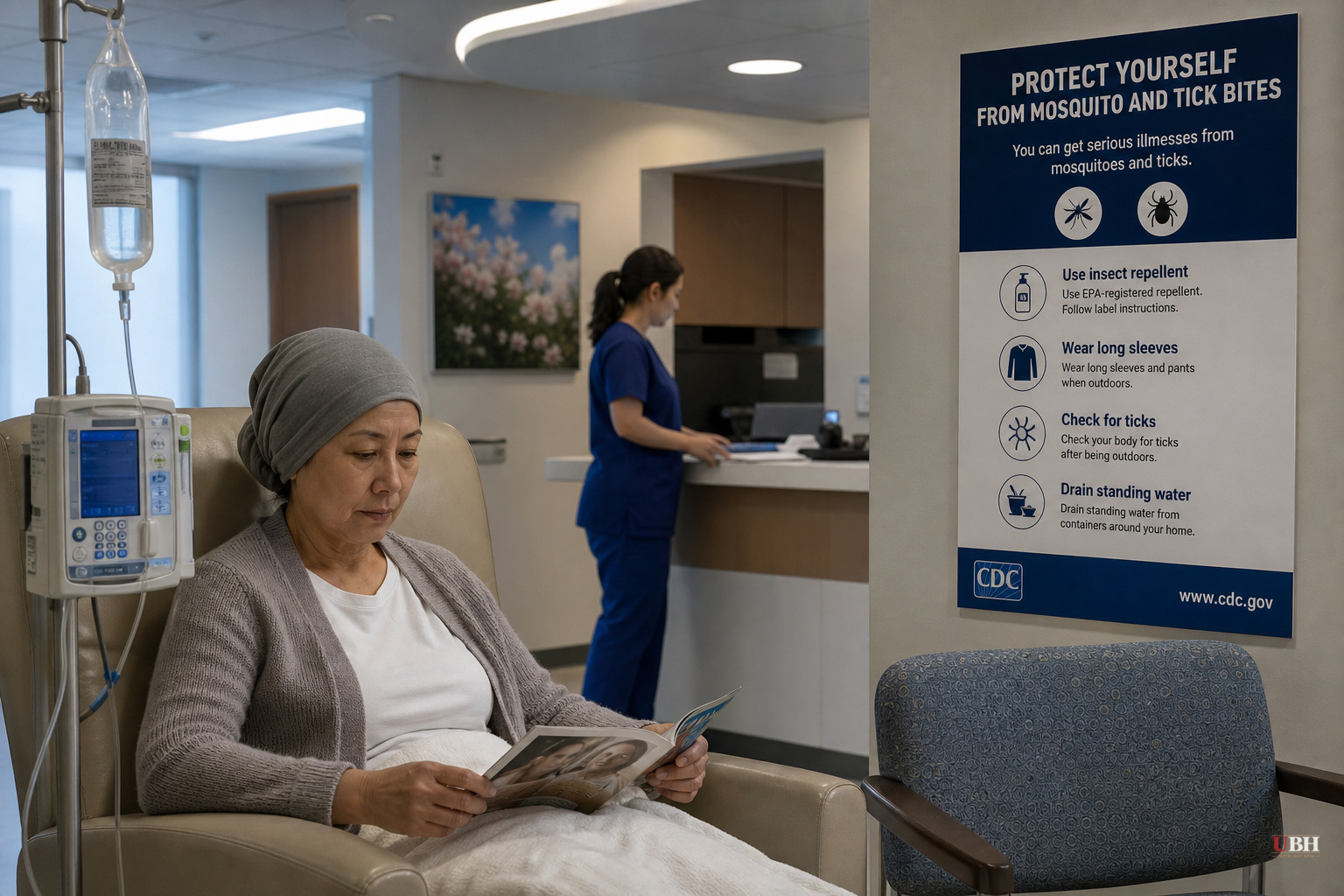
The CDC issued a Health Alert Network advisory on August 11, 2026, warning doctors about a serious risk to patients taking certain medications.
Patients taking B cell-depleting or B cell-modulating drugs, especially anti-CD20 monoclonal antibodies, face a significantly elevated risk of severe arboviral neuroinvasive disease. That means encephalitis, aseptic meningitis, and acute flaccid myelitis, according to the CDC advisory.
The numbers are severe. Published case reports show roughly 40% mortality among patients on anti-CD20 antibodies who developed arboviral neuroinvasive disease, according to both the CDC and MedPage Today. Most survivors were left with long-term neurologic damage.
Which Drugs, Which Diseases
The drugs named specifically: rituximab and its biosimilars, ocrelizumab (Ocrevus), ofatumumab (Kesimpta), ublituximab (Briumvi), obinutuzumab (Gazyva), and ibritumomab tiuxetan (Zevalin), according to the CDC. These aren't niche drugs. They're prescribed for multiple sclerosis, rheumatoid arthritis, leukemia, lymphoma, and to prevent organ transplant rejection.
West Nile virus was the most common pathogen in the case reports, the CDC said. Eastern equine encephalitis, Powassan virus, and La Crosse virus also showed up in severe cases, according to MedPage Today.
MedPage Today reported that at least five patients on rituximab developed a slow-burning, chronic neurodegenerative encephalitis over months to years, tied to orthobunyaviruses including Jamestown Canyon virus, Cache Valley virus, and Potosi virus. This differs from the classic mosquito-bite-to-fever-in-two-week timeline. Instead, it follows a slow neurological decline that could easily get missed or misdiagnosed.
Why Now
The CDC flagged that 2026 saw an early and strong start to West Nile virus season, and as of the advisory's release, many weeks of arbovirus transmission season remained. Mosquitoes and ticks are most active from late spring through early fall, so this isn't a problem that's going away by Labor Day.
A genuine clinical challenge underlies this advisory. Immunocompromised patients don't always follow the textbook. The CDC warned that these patients "can have a prolonged incubation period or an atypical course and might not present with illness during the usual months when mosquitoes and ticks are active." A doctor screening for West Nile in October because the patient was bitten in October might be looking in the wrong month entirely.
No Vaccine, No Cure, Just Prevention
There's no approved vaccine or treatment for the arboviral diseases endemic to the U.S., including West Nile virus, according to MedPage Today. Prevention is the only option available. The CDC's recommendation is simple: talk to patients before they start these drugs and emphasize mosquito and tick bite prevention. Long sleeves, repellent, avoiding standing water, and checking for ticks after time outdoors are the available measures.
For diagnosis, the CDC recommended molecular testing via RT-PCR or metagenomic next-generation sequencing when arboviral disease is suspected in a patient with febrile or neurologic symptoms, with specimen type depending on presentation and lab capability.
What's Not Being Asked
None of the three sources examined here quantify how common this actually is in absolute terms. A 40% mortality rate sounds terrifying, but that figure comes from published case reports, not a systematic surveillance study of every patient on these drugs. Case reports tend to capture the sickest, most unusual cases, not run-of-the-mill outcomes. The CDC has not provided a solid denominator for how many of the roughly hundreds of thousands of Americans on anti-CD20 therapies actually contract arboviral disease in a given season versus how many get bitten and never show symptoms.
The CDC's advisory doesn't call for suspending or altering these medications, and no regulatory action or drug label change has been announced. This is a clinical awareness alert, not a recall. The open question for the rest of this transmission season: will state and local health departments start tracking arboviral cases in immunocompromised patients specifically, given how easily an atypical, delayed presentation could slip through standard surveillance built around a normal incubation window?
Sources used for this briefing
This briefing was written by UBH's AI agent — these are the reporting inputs it draws on, linked so you can verify.


