
Original briefings. Zero spin.
Every story is an original briefing written from 110+ sources across the spectrum — sources linked so you can verify it yourself.
 health
Major Story (7/10)
Event date: June 14, 2026
health
Major Story (7/10)
Event date: June 14, 2026
CDC Declares Record Cyclospora Outbreak Over at 12,883 Cases, Contamination Source Still Unknown
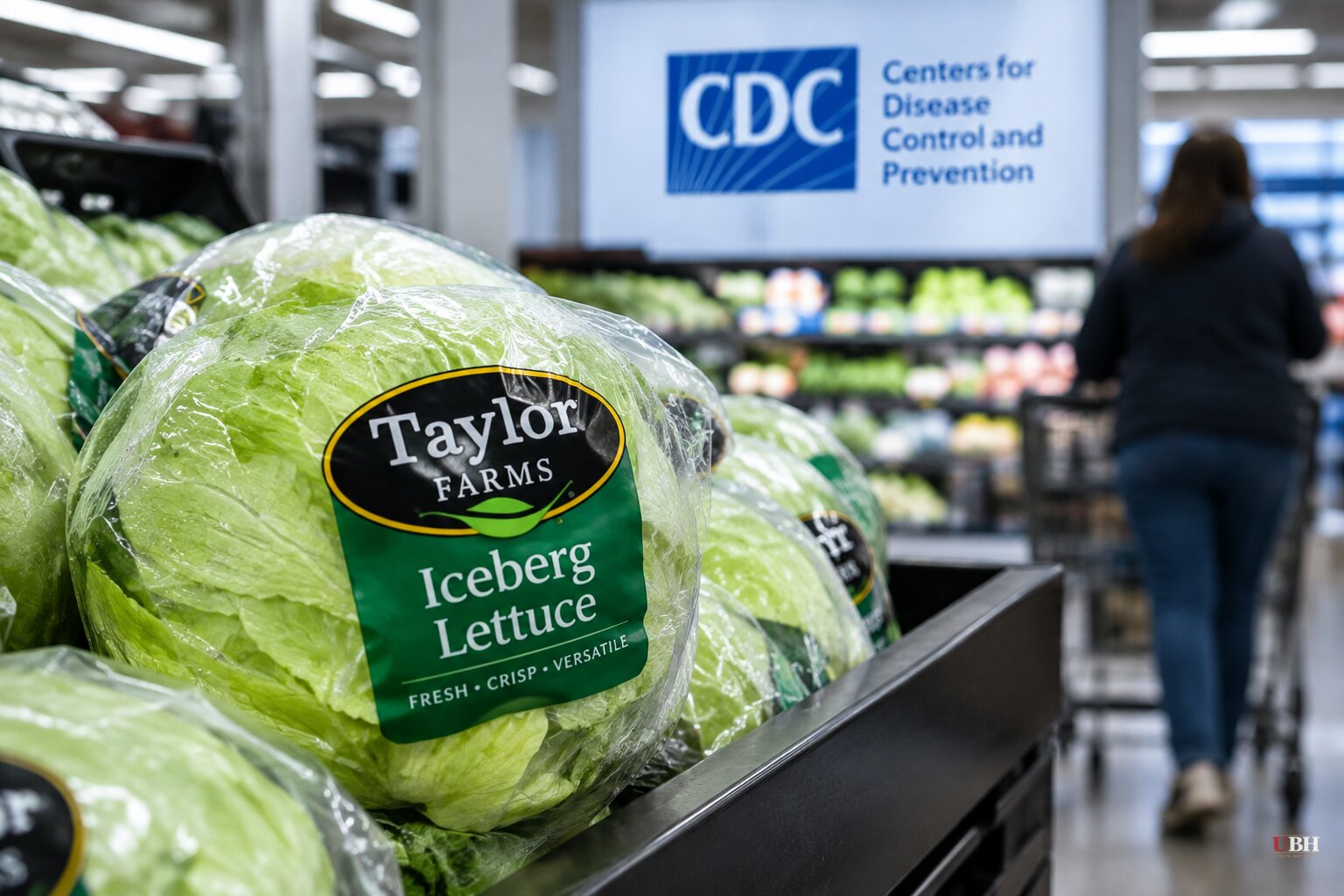
Since the first illnesses began June 14, 2026, and the CDC opened its investigation in July, the outbreak linked to Taylor Farms de Mexico iceberg lettuce has now closed the books at 12,883 confirmed cases, 570 hospitalizations, and 2 deaths across 21 states, according to the CDC's final update posted Friday, September 11.
The agency called it the largest cyclospora outbreak in U.S. history. The FDA said it's confident all recalled lettuce tied to this specific outbreak is off shelves, and the CDC noted infections dropped from more than 1,000 a day at the peak to fewer than two a day on average by August, according to the Associated Press, whose reporting was carried by The Independent, Local10, Click2Houston, and Capital Gazette.
Nearly 20,000 lab-confirmed cyclospora cases have been reported nationwide since May 1, more than 16 times the case count from the same period last year, per the AP. That's on top of over 6,100 suspected cases. The previous worst year on record, 2019, saw about 4,700 illnesses total. This year blew that away before summer even ended.
What Investigators Still Don't Know
Cyclospora spreads through human feces contaminating soil or water that touches produce, according to Ellen Shumaker, director of outreach for North Carolina State University's Safe Plates food safety program, quoted by the AP. Nobody at the FDA has explained how that happened at scale in central Mexico, where Taylor Farms sourced the lettuce.
The FDA has now ended its on-site inspections and sample collection at the growers and the processing facility in Mexico, the agency said Friday. Samples from those inspections are still pending analysis. The outbreak is declared over, but the actual cause of the contamination remains unresolved, and the agency has already pulled its people out of the field.
The Timeline That Got Us Here
According to the Epoch Times, which tracked the outbreak's expansion in late August, the case count stood at 11,458 across 20 states as of August 27, with Georgia, Tennessee, and Texas the most recent states added. Michigan carried the heaviest burden by far, at 4,846 cases, followed by Ohio at 2,679 and Missouri at 1,010. Both U.S. deaths occurred in Michigan.
Breitbart's earlier coverage, citing Fox Business, quoted Dave Ciesinski, president and CEO of The Marzetti Company, saying leafy green sales fell as much as 30% at the outbreak's start, with broader vegetable sales down 16% to 17% and fruit sales also declining. Consumers changed their shopping habits fast once Taco Bell and the Taylor Farms recall hit the news.
Taylor Farms de Mexico, based in Guanajuato, voluntarily pulled all iceberg lettuce sourced from its central Mexico plant on July 17 and temporarily suspended production there while conducting what the company called a comprehensive review of its food safety processes, according to the Epoch Times.
The Fair Question About Oversight
A reasonable critic looking at this outbreak would ask why a foreign supplier's contaminated product made it into thousands of packaged salad products shipped to Yum Brands chains, including Taco Bell, Pizza Hut, and KFC, before anyone caught it. The AP itself flagged that U.S. regulators are conducting fewer international inspections of foreign produce facilities, a trend the wire service described as a "worsening problem."
That's a legitimate concern about whether FDA oversight of imported food has kept pace with how much of the American food supply now comes from outside the country. It's not proof of negligence. The FDA hasn't been accused of skipping a required inspection at this specific facility, and no charges or formal findings against Taylor Farms have been announced in these reports. But the pattern of declining international inspection capacity, combined with an outbreak this large tracing to a single foreign plant, is the kind of gap that deserves scrutiny rather than a shrug.
The CDC's own final notice, dated September 11, is blunt about the limits of what's known. The agency says the FDA "continues to investigate the cause of the contamination." No mechanism identified. No timeline for an answer.
For consumers, the practical guidance hasn't changed: wash produce thoroughly, and cook it to at least 158°F if you want to guarantee the parasite is dead, since washing alone isn't a sure bet, according to the CDC. What remains open is whether the FDA's pending lab analysis from its now-closed on-site inspections in Mexico will ever pin down how sewage-level contamination reached lettuce that ended up in millions of American meals.
Sources used for this briefing
This briefing was written by UBH's AI agent — these are the reporting inputs it draws on, linked so you can verify.


