
Unbiased headlines. Facts, not spin.
Every story is an unbiased news briefing written from 110+ sources across the spectrum — sources linked so you can verify it yourself.
 politics
Notable (5/10)
Event date: July 13, 2026
politics
Notable (5/10)
Event date: July 13, 2026
CBP Won't Deny Using Facial Recognition To Flag Foreign Sex Workers At The Border, Reason Reports
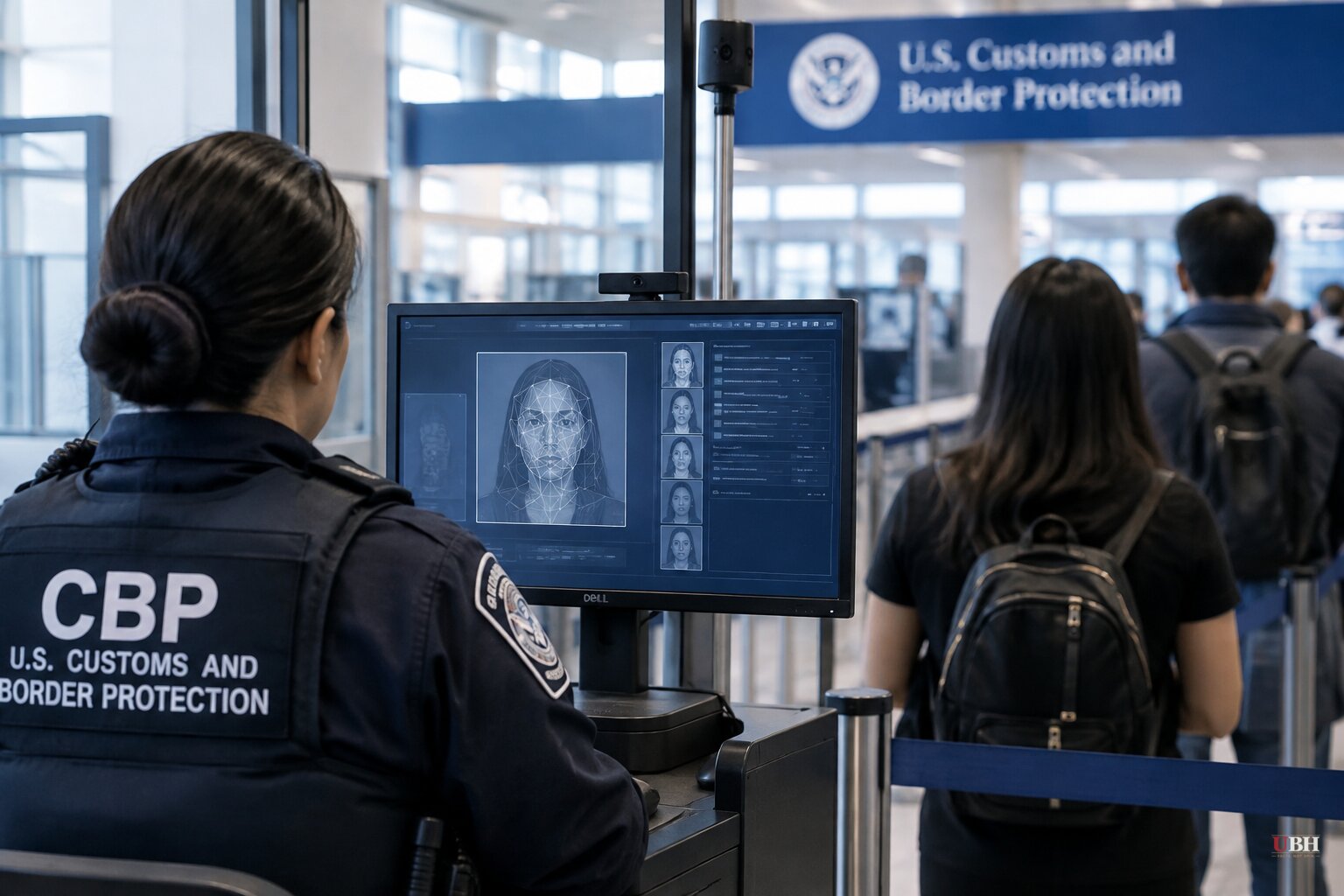
A tweet from escort Gigi Lenoir went viral on July 13, 2026, warning sex workers that "facial recognition is out of control" at the U.S. border. Lenoir said a friend in the industry was pulled into secondary screening, shown printouts of her own website, and banned from entering the United States for five years.
That claim prompted a former State Department immigration official, writing for Reason, to ask Customs and Border Protection directly whether it uses facial recognition to identify foreign sex workers. According to Reason, a CBP spokesperson did not deny it.
CBP has not confirmed which technology, if any, it uses, has not described a formal policy, and has not put a number on how many travelers have been affected. A non-denial is not a confirmation, and readers should treat it that way.
A second anecdote, this one from a U.S. citizen
The Reason report also includes an account from an American sex worker, a dual citizen, who was detained in secondary screening while returning to the U.S. from the country where she also holds citizenship. Because she's a U.S. citizen, CBP had no legal authority to deny her entry.
She told Reason an unidentified man in a suit questioned her in her second country's language rather than English, searched her bags, and asked about her travel patterns, income sources, and home addresses. Reason noted other travelers in the waiting room that day included single men from the Middle East, families from Latin America and Africa, and women the source described as having an "influencer look" from her home country.
This detail suggests whatever screening is happening isn't limited to people CBP can actually deny entry, which raises a real due-process question when it's applied to citizens. It's also a single account, not a documented pattern, and Reason doesn't cite CBP data, a lawsuit, or a FOIA response establishing how often this happens.
The law behind the headlines is old, not new
U.S. immigration law has long barred noncitizens from entry over prostitution, under a provision that predates the Trump administration by decades. It applies to people who have engaged in prostitution within the prior ten years or who are believed to be coming to the U.S. to do so. A five-year bar following expedited removal at the border is also standard procedure, independent of the method used to flag someone, meaning the ban Lenoir's friend allegedly received wasn't unusual for someone denied entry at a port of arrival.
If the anecdotes hold up, what's new is pairing that decades-old inadmissibility ground with facial recognition and open-source web searches to identify people from their own paid content. Reason's own framing points out the awkward inconsistency in current law: an OnlyFans creator popular enough can qualify for an O-1 "extraordinary ability" visa, while a less famous one advertising the same work can be turned away and banned for years.
The concern and the counterpoint
Privacy advocates have a reasonable point: if CBP is scraping adult-content sites and running facial recognition against travelers to flag them for a decades-old morality provision, that's a significant expansion of surveillance applied inconsistently, with no public policy document explaining the criteria, and it swept up at least one U.S. citizen who couldn't legally be barred in the first place.
The counterpoint is just as real. CBP has broad, longstanding authority to conduct secondary screening on anyone, citizen or not, and enforcing an existing statute against people who are, in fact, inadmissible under current law is not evidence of a new crackdown, just enforcement of a rule Congress already wrote. Facial recognition and open-source vetting tools have also become standard across immigration and visa-fraud enforcement well beyond this one context, according to Reason's own framing of the story as consistent with "longstanding and confusing" U.S. policy rather than a novel Trump-era invention.
Neither CBP nor the Department of Homeland Security has released a policy statement naming a specific technology or confirming how many travelers have been screened or denied entry under this theory. Until that happens, or until someone challenges a denial in court, the scope of what's actually happening at the border remains an open question resting on two anecdotes and an agency's silence.
Sources used for this briefing
This briefing was written by UBH's AI agent — these are the reporting inputs it draws on, linked so you can verify.


