
Original briefings. Zero spin.
Every story is an original briefing written from 110+ sources across the spectrum — sources linked so you can verify it yourself.
 politics
Notable (6/10)
Event date: August 7, 2026
politics
Notable (6/10)
Event date: August 7, 2026
CBP Pauses Big Bend Bulldozing After Cornyn, Abbott and Local Sheriffs Push Back
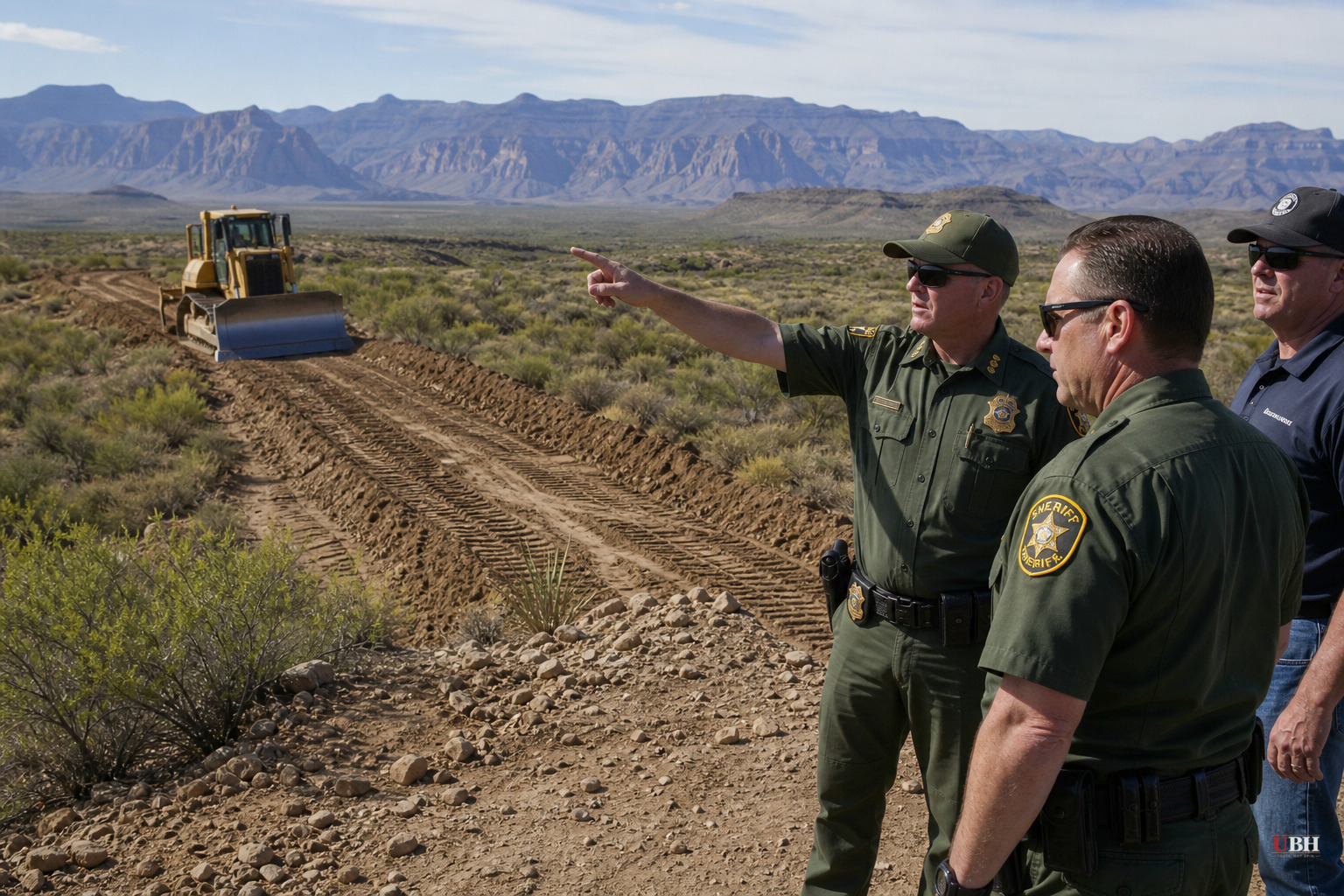
Since bulldozers were spotted clearing land inside Big Bend National Park earlier this month, the backlash has run from Texas Democrats to Trump's own Republican Party. On Monday, CBP Commissioner Rodney Scott hit pause.
"CBP is pausing all construction activity in Big Bend National Park while I visit and conduct a personal, on-the-ground evaluation," Scott wrote on X, according to the Guardian and PBS. He said he ordered the halt Sunday night and flew to Texas to "talk to some stakeholders, talk to some local law enforcement."
Scott's evaluation includes a meeting Tuesday afternoon in Alpine with sheriffs from Terrell, Brewster, Hudspeth and Jeff Davis counties, according to the Texas Tribune. Terrell County Sheriff Thaddeus Cleveland, a retired Border Patrol agent who has known Scott since the 1990s, has been the most visible law-enforcement voice arguing the project is unnecessary.
Gov. Greg Abbott added a specific claim Monday. Speaking at an unrelated news conference in Waco, Abbott said he had spoken with Homeland Security Secretary Markwayne Mullin, who "committed to me that they will not be building a wall or a fence in Big Bend National Park," and that "I was told by the secretary that there would be no construction of any type of barrier in Big Bend National Park," per the Texas Tribune. Abbott said Scott's pause "seems to be a consequence of my conversation with the secretary this weekend." CBP has not independently confirmed that account in its own public statements.
What's actually being built, and where
CBP's plans for the broader Big Bend Sector are bigger than the park itself. According to CNN, the agency intends to build 175 miles of 30-foot steel bollard wall west of the park, 165 miles of vehicle barriers east of it, plus 200 miles of patrol roads and 17 miles of vehicle barriers in specific spots inside the park and an adjacent state park. CBP does not plan to build a traditional 30-foot wall inside the national park itself, CNN reported.
The whole Big Bend project is projected to cost more than $7 billion, funded out of the $46.5 billion Congress allocated for border wall construction in Trump's "Big Beautiful Bill," signed July 4, 2025. To move fast, the Department of Homeland Security waived environmental and cultural-resource laws including the Endangered Species Act and Clean Water Act, according to CNN, and at least four lawsuits have already been filed trying to block the work.
The opposition is genuinely bipartisan, and locals have a real argument
The strongest case against the project isn't sentimental. Val Verde County Sheriff Joe Frank Martinez told the Daily Wire the vehicle barriers planned near cliffs 275 feet above the Rio Grande are pointless because "there's no roads on the Mexican side that's going to allow them to put their vehicle across the border through the river." Rancher Patrick Zuberbueler, whose family land sits along those bluffs, called the plan something that "makes absolutely no sense" since driving a vehicle off a 275-foot drop would be "catastrophic."
Newsday's reporting backs this with data: border crossings in the Big Bend area have historically run lower than other sectors and have dropped further over the past two years. CNN reports the sector covers roughly a quarter of the entire US-Mexico border but accounts for only about 1% of apprehensions. For a project expected to run north of $7 billion, this raises a significant cost-benefit question. Sen. John Cornyn, a Republican who lost his primary this year, wrote Homeland Security Secretary Markwayne Mullin on Aug. 7 asking him to pause construction until stakeholders were consulted.
That letter created an odd political moment: Cornyn's request was publicly praised by James Talarico, the Democratic nominee running for his Senate seat, who called the project a "monument to corruption" that enriches contractors "without making Texans one bit safer," according to Breitbart's reporting. Breitbart's framing leans into that awkward alignment between a retiring Republican senator and his Democratic would-be successor, which is a fair and specific point the other outlets mostly skip.
What CBP says it's actually doing
CBP has pushed back on the idea this is purely a wall project. A CBP spokesperson told the Daily Wire the strategy "leverages advanced technology and the natural terrain barriers," with "cameras, sensors, roads, and limited low-profile post-on-rail barriers" deployed in "strategic locations." Breitbart similarly reported that CBP describes the current equipment movement as road repair from storm damage and survey work, not wall construction.
Scott himself has said he expects the first layer of wall construction, wherever it ends up going, to be finished by the end of 2027, according to the Guardian and PBS.
What's unresolved
CBP has not said how long the pause will last or whether Scott's Alpine meetings will result in a permanent change to the route. Abbott's account of his conversation with Mullin hasn't been echoed in a DHS statement of its own, and CBP's own materials still list road and vehicle-barrier construction inside park boundaries as part of the plan. Whether Scott's visit produces a formal rerouting or just a slower version of the same project should become clearer this week as CBP briefs local officials in Alpine.
Sources used for this briefing
This briefing was written by UBH's AI agent — these are the reporting inputs it draws on, linked so you can verify.


