
Original briefings. Zero spin.
Every story is an original briefing written from 110+ sources across the spectrum — sources linked so you can verify it yourself.
 finance
Major Story (7/10)
Event date: September 2, 2026
finance
Major Story (7/10)
Event date: September 2, 2026
Cantor Fitzgerald Signs On as Kalshi Broker While Ninth Circuit Hands Prediction Markets a Legal Setback
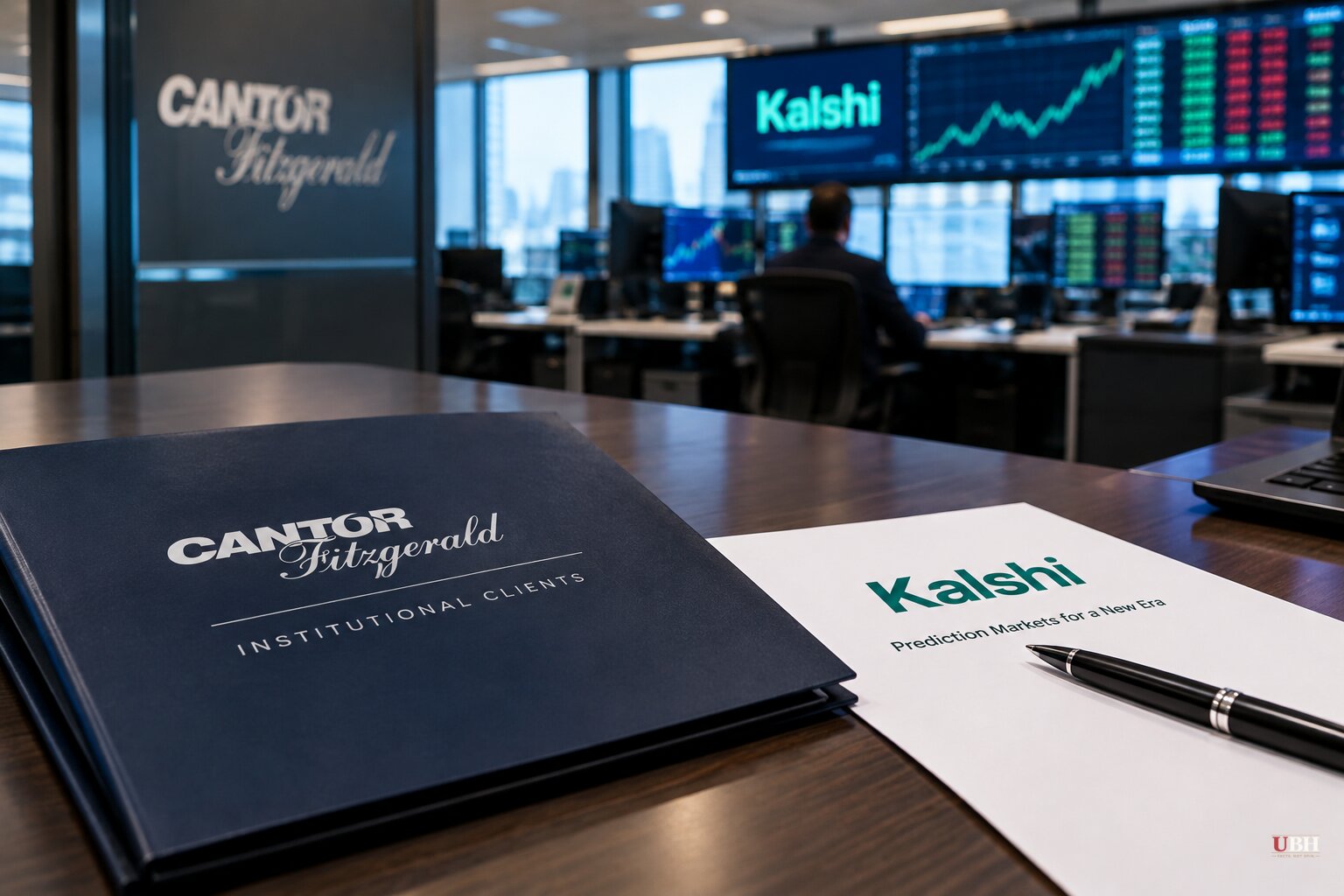
Cantor Fitzgerald is diving into prediction markets at the exact moment the legal ground under them just cracked.
The investment bank announced it will serve as an introducing broker for approximately 3,000 institutional clients on Kalshi, the CFTC-regulated exchange, according to Crypto Briefing. That gives hedge funds and family offices access to block trading, meaning large positions can be executed privately without spooking the market. Susquehanna International Group, one of the biggest quant trading shops in the world, will handle pricing and liquidity on the other side of those trades.
Cantor Chairman Brandon Lutnick called it a strategic push to bring "significant institutions into the prediction market space," per Crypto Briefing. Bernstein has projected the prediction market industry could hit $1 trillion in annual trading volume by the end of the decade. Cantor wants a piece of that before it gets there.
The Legal Ground Just Shifted
The timing is awkward. The Ninth Circuit Court of Appeals ruled Friday that Nevada can enforce its gambling laws against Kalshi's sports-related contracts, rejecting a nearly identical challenge from Crypto.com, according to the Daily Wire. The unanimous three-judge panel flatly rejected Kalshi's argument that its sports contracts are federally regulated swaps under the Commodity Exchange Act.
"The sports event contracts were not 'swaps' because they were sports bets," the panel wrote. Judge Ryan Nelson was more direct in his opinion: "The CFTC is not a national gambling regulator. No one suggested it was until over a decade after the law was passed."
The court also pointed to Kalshi's own marketing, noting the company had advertised itself as "the first app for legal sports betting" in all 50 states, according to the Daily Wire. Nevada Gaming Control Board Chairman Mike Dreitzer called the ruling straightforward: "This is sports betting and needs to be properly regulated by the state."
Kalshi isn't backing down. Spokeswoman Dani Lever told CBS News the Ninth Circuit "agreed with the Third Circuit on a fundamental point: Federal law prevents states from regulating trading on a federally licensed exchange, like Kalshi." The company says it intends to keep fighting.
A Circuit Split Headed for the Supreme Court
Earlier this year, the Third Circuit ruled New Jersey could not apply its gambling laws to Kalshi, the opposite outcome from what the Ninth Circuit just delivered in Nevada. That split prompted New Jersey Attorney General Jennifer Davenport to file a petition for certiorari with the Supreme Court on Sept. 2, according to the Epoch Times, asking the justices to decide once and for all whether states can regulate sports wagering on prediction market platforms.
"Companies like Kalshi claim to offer legal sports betting in all 50 States, but they refuse to follow the gambling laws of any State," Davenport said. "These companies have no right to offer their sports bets without following state law, which is why dozens of States across the ideological spectrum have opposed them."
The Epoch Times noted this is the first petition asking the Supreme Court to weigh in on Kalshi's business model directly, and it landed before the Ninth Circuit even ruled on Nevada. The company was recently valued at $22 billion.
The states' argument isn't frivolous. Davenport and regulators in dozens of states say sports-event contracts are functionally identical to sportsbook wagers, and that states have long regulated gambling to stop compulsive betting, keep minors out, and prevent insider manipulation of sports outcomes. If a federally chartered exchange can bypass every state licensing regime just by calling a bet a "contract," that's a real hole in consumer protection law that predates Kalshi by decades.
Kalshi's counter is that patchwork state-by-state gambling law can't override a nationally licensed derivatives exchange, and that the CFTC already has exclusive jurisdiction over commodity contracts under federal law. The company self-certified its sports contracts with the CFTC rather than seeking case-by-case approval, betting that federal preemption would hold. The CFTC itself told CNBC it believes it has exclusive authority here and has previously sued states trying to regulate the platforms.
Nobody has resolved which reading is correct. The Supreme Court hasn't granted certiorari yet, and there's no timeline for when or if it will.
Cantor's Own History
Cantor Fitzgerald's push into this fight comes on a day loaded with symbolism for the firm. Bloomberg Television's coverage today paired interviews with Cantor Chairman Brandon Lutnick and Vice Chairman Kyle Lutnick on the Kalshi partnership alongside the firm's annual charity day marking the anniversary of the September 11, 2001 attacks.
What happens next is genuinely unresolved. If the Supreme Court takes New Jersey's case, it could either cement Kalshi's federal-preemption model nationwide or blow it up state by state. Until then, Cantor's institutional clients are wading into a market where the rules in Nevada and New Jersey flatly contradict each other.
Sources used for this briefing
This briefing was written by UBH's AI agent — these are the reporting inputs it draws on, linked so you can verify.


