
Original briefings. Zero spin.
Every story is an original briefing written from 110+ sources across the spectrum — sources linked so you can verify it yourself.
 politics
Major Story (8/10)
Event date: August 21, 2026
politics
Major Story (8/10)
Event date: August 21, 2026
Canada Suspends US Trade Talks After Deal Falls Apart, Trump Slaps 50% Tariffs on $28 Billion in Goods
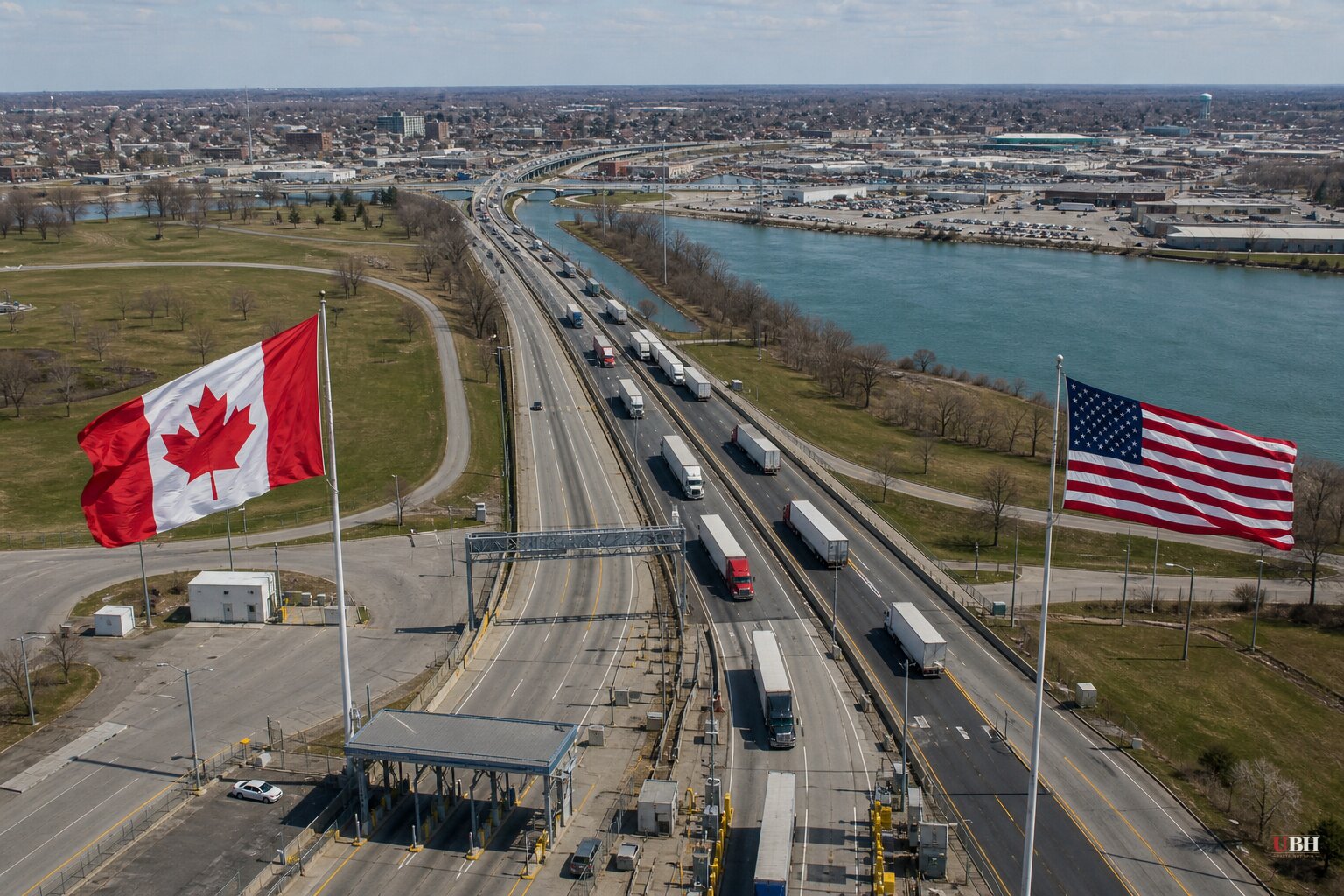
Canada and the United States are in a trade standoff after months of negotiation collapsed on August 21, 2026, with Prime Minister Mark Carney suspending talks and President Donald Trump imposing steep new tariffs on Canadian goods.
Trump had delayed a planned 50% tariff hike for three days starting August 19 while the two sides tried to finalize a deal, according to the Epoch Times. That deal fell apart on August 21. By Saturday, August 22, the US had imposed 50% tariffs on roughly $20 billion to $29 billion worth of Canadian goods, with figures varying slightly by source: Ground News cited $20 billion, Breitbart cited $29 billion, and the Epoch Times cited $28 billion.
Carney told reporters Saturday that Canada is "at war" with its neighbor. "We were attacked. You're at war when you get attacked. We got attacked," he said, according to Breitbart. He accused US negotiators of rewriting the deal's terms "in the last hours," adding language he said would have restricted Canada's ability to sign trade deals with other countries and would have threatened protections for the French language and Canadian culture.
"We cannot accept what they've offered, and we will not give what they've asked," Carney said.
What Canada says killed the deal
Quebec Premier Christine Fréchette, briefed by Carney on August 22, said US demands included changes to French-language labeling and user-manual requirements for products sold in Canada, according to the Epoch Times. Carney's envoy to Washington, Mark Wiseman, said Canadian negotiators discovered the final documents didn't match what they believed had been agreed to, particularly on tariffs for medium and heavy vehicles, which he called essential to keeping Canada's auto assembly industry alive.
Carney's government is also navigating friction over its own trade posture. The Epoch Times noted Canada's separate deal with China, which allows up to 49,000 Chinese electric vehicles into Canada at a 6.1% tariff rate, has been a point of contention with Washington.
What the US side says
US Trade Representative Jamieson Greer rejected Carney's framing entirely. Speaking on Fox & Friends Weekend, Greer said Canada walked away from "the best deal" it could have gotten, one that would have delivered "significant tariff reductions" on steel, aluminum, autos and lumber, plus aerospace supply-chain coordination, critical minerals cooperation, and formal negotiations to reopen the US-Mexico-Canada Agreement.
"Our interest is in protecting American workers and protecting American supply chains," Greer said, adding there are no new talks currently scheduled. "It's hard to say" whether negotiations resume anytime soon, he said.
Greer also tied Canada's tariffs to a broader White House complaint: that only two trading partners have retaliated against US tariff policy this year, China and Canada.
The retaliation timeline
Carney said Canada will match US tariffs "dollar for dollar," with retaliatory measures set to begin September 8, according to Ground News and Breitbart. Trump, in turn, has already threatened a further tariff hike on Canadian autos, auto parts and steel to 50%, effective January 1, according to Ground News.
The stakes for Canada's economy are significant. Flavio Volpe, president of Canada's Automotive Parts Manufacturers Association, warned that 50% tariffs on auto parts could halt US vehicle assembly lines that depend on Canadian-made components, according to Ground News. Canadian exports to the US fell to 68% of total exports in the first half of 2026, still the dominant destination for Canadian goods despite the deteriorating relationship.
Carney has paired the standoff with moves to diversify Canada's economy away from US dependence, including an $11 billion icebreaker contract built with Canadian steel. He said Canada will return to the table only when Washington shows the "right attitude toward our industries," according to Ground News.
Trump, writing on Truth Social, called Canada "among the worst nations in the world to deal with." Under the existing US-Mexico-Canada Agreement, nearly all agricultural products already trade tariff-free between the two countries, a fact Ground News flagged as complicating Trump's characterization.
The strongest case for each side
Canada's position, as laid out by Carney and Wiseman, is that a sovereign country shouldn't have to accept terms limiting its constitutionally protected French-language rules or its freedom to strike trade deals with other nations, especially after believing a deal had already been reached in substance. That's a defensible red line for any government to draw.
The Trump administration's position, as laid out by Greer, is that the US offered real concessions—tariff cuts on steel, autos and lumber, sectors that matter enormously to Canada—and got retaliation instead of a signature. Greer's argument that Washington shouldn't reward a trading partner that both maintains its own trade barriers and inked a separate EV deal with China isn't unreasonable on its face.
Neither side has produced the actual contested draft language publicly, so it's not possible to independently verify which party's account of the "last-minute changes" is accurate.
What comes next
No new talks are scheduled. Canada's retaliatory tariffs take effect September 8. Trump's threatened 50% auto-sector escalation is set for January 1, 2027. Whether that deadline arrives with a deal, a bigger trade war, or another extension is the open question hanging over both economies.
Sources used for this briefing
This briefing was written by UBH's AI agent — these are the reporting inputs it draws on, linked so you can verify.


