
Unbiased headlines. Facts, not spin.
Unbiased Headlines is an independently owned news organization. We bring you the facts, not opinions, written fresh from 110+ named sources. Sources linked so you can verify it yourself.
 sports
Notable (6/10)
Cambridge Biologist Marta Shahbazi, 41, Confirmed Among at Least 69 Dead in Urda Train Crash
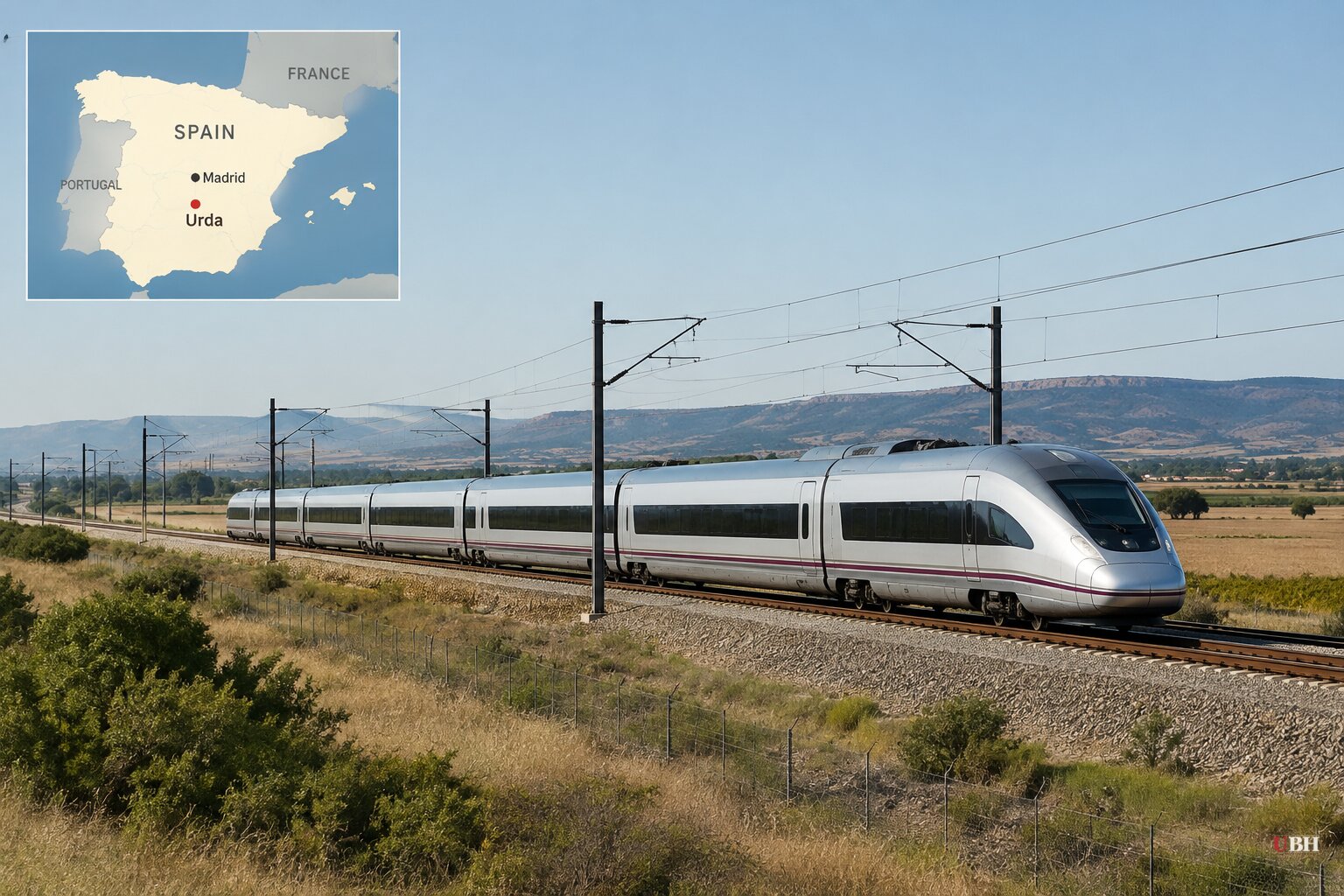
Since the Oct. 28 collision near Urda, in Toledo province, the death toll has stood at at least 69. Over the weekend the names behind that number began to surface, including a Cambridge scientist whose research focused on the earliest days of human life.
Who Marta Shahbazi was
Dr Marta Shahbazi, 41, was confirmed dead by the Spanish research institute CiMUS, which said she was the niece of its principal investigator María José Alonso. Her employer, the MRC Laboratory of Molecular Biology (LMB) in Cambridge, had earlier said her whereabouts were unknown.
The LMB later announced "the tragic death of our colleague Marta Shahbazi, Group Leader in the Cell Biology Division." It called her "an inspiring, talented and passionate scientist."
Shahbazi did her PhD at the Spanish National Cancer Research Centre. She joined Cambridge as a postdoctoral fellow in 2014 and became an LMB group leader in 2020. She also held an affiliate associate professorship at the Cambridge Stem Cell Institute.
Her lab used unused embryos from fertility treatment to study why 30 percent of pregnancies fail in the first weeks. Earlier this month she was named winner of the 2026 Emerging Talent Award from the Society of Spanish Researchers in the United Kingdom.
She was traveling from Madrid toward Huelva in Andalusia to collect an award from the Spanish Society for Developmental Biology at its conference in El Rompido. She leaves two children, aged seven and three, and her husband, Mirco Petruzzelli.
Her family's account
Her brother, Carlos Shahbazi, told El País the family had been told she was in the front carriage of the AVE train that struck the other. His parents had given DNA samples to help identify her. "The odds are very slim, but we are clinging to a final shred of hope," he said before the confirmation.
He also told the paper: "Her life has been brutally impacted by incompetent and corrupt government and public institutions." He told The Times that "she lived for science and her kids. That was her whole life."
That is one grieving family member's accusation. It is not a finding by investigators.
What investigators and officials have said
A state-operated Renfe high-speed train ran into the back of a stationary train operated by Iryo. A regional government spokesperson, Esther Padilla, said the Iryo train carried 146 passengers plus one baby and the Renfe train carried 397.
Preliminary information from the independent accident authority AITAT said the LZB train-protection system stopped functioning at 8:31 a.m. on Wednesday, before the collision. Early findings point to as many as four system failures.
According to the Daily Mail, all trains on a 63km stretch had been halted by the computer malfunction, but central command told a Renfe train to restart without any speed restrictions. A little more than 20 minutes later, at 8:53 a.m., it hit the back of the stationary Iryo train. Puente said a controller told the stalled train to restart and continue at up to 160km/h despite the stationary train ahead. He said the control centre "had more than enough time to verify the error, and they did not fix it," and that the decision to resume traffic while the system had not been restored "belongs to the control centre."
Spain's rail union Semaf has asked the State Railway Safety Agency (AESF) to act "urgently" to "clarify and amend the regulations governing the rail protection system, LZB," and related procedures under the European Rail Traffic Management System.
Puente has described the crash as an "inexplicable" case of poor decision-making by railway operators. He has rejected demands from all the major opposition parties that he resign. He has instead announced measures meant to reduce technical risks and "restore public confidence" in the railway.
Prime Minister Pedro Sánchez said Spain was working "tirelessly" to complete the identification process.
Identification still unfinished
Spain observed a third day of national mourning on Saturday, Oct. 31. Castilla-La Mancha president Emiliano García-Page said emergency crews had collected "31 bags of partial remains," which complicates identification. He said officials "do not rule out more dead."
Judicial authorities overseeing the process said 67 missing-person reports remained active, 14 of them for foreign nationals. More than 100 people were injured.
Spain's worst rail disaster since 2013 involved more than 540 people on board both trains. Whether the final toll rises above 69 depends on that identification work, and the technical investigation into the failures continues.
Sources used for this briefing
7 links from 5 independent newsrooms (syndicated copies of the same report count once)
These are the sources it draws on, linked so you can verify.


