
Unbiased headlines. Facts, not spin.
Every story is an unbiased news briefing written from 110+ sources across the spectrum — sources linked so you can verify it yourself.
 politics
Notable (6/10)
July 17, 2026 at 04:00 PM
politics
Notable (6/10)
July 17, 2026 at 04:00 PM
California Voters Will Decide in November on a 5% One-Time Wealth Tax on Billionaires
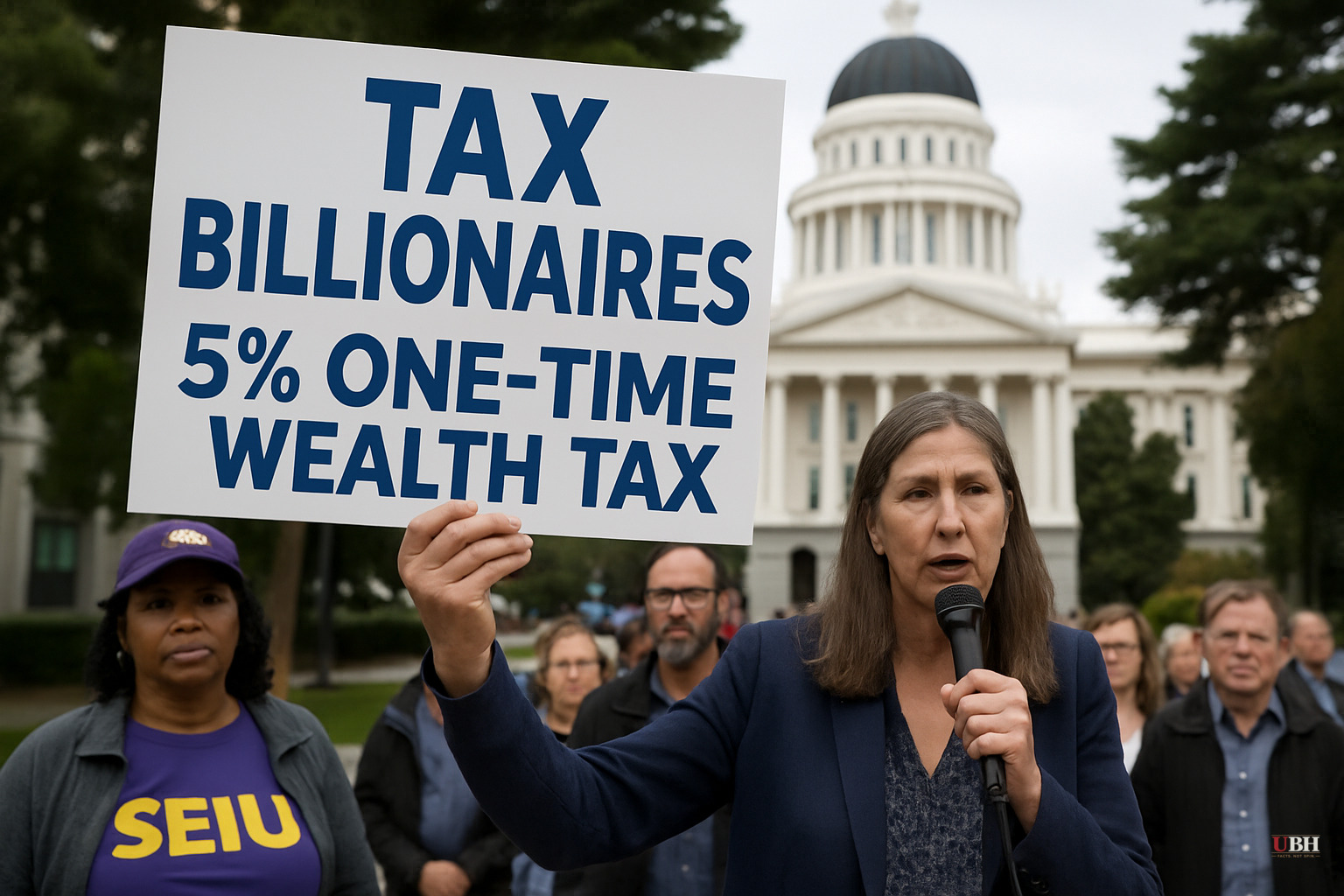
California voters will decide in November whether to slap a one-time, 5% wealth tax on residents and trusts worth more than $1 billion. If it passes, it'll be the first tax of its kind in the country.
The measure was crafted by University of Missouri law professor David Gamage for the Service Employees International Union, which led the campaign to get it on the ballot. Gamage told CNBC the tax is designed to offset health care cuts contained in President Trump's tax and spending legislation, which supporters have nicknamed the "Big Beautiful Bill."
"California will, I think, more likely be better off if this is passed than not," Gamage said. His argument: businesses locate where people want to live, and people want to live where health systems function. He says a one-time hit on billionaire net worth props up that system without scaring off the broader economy.
Gamage's logic centers on a core tradeoff. A state with worse hospitals and fewer doctors struggles to attract talent. If California's health care infrastructure crumbles under federal cuts, that's a genuine competitiveness problem.
But the numbers on the other side are hard to ignore.
What the State's Own Analyst Says
California's nonpartisan Legislative Analyst's Office studied the proposal last year and found a split outcome. Short term, the state cashes in. "The state probably would collect tens of billions of dollars from the wealth tax," the LAO concluded, according to CNBC.
Long term, the office warned some billionaires will simply leave. When they go, so does the income tax they were already paying. The LAO estimated that ongoing revenue loss at "hundreds of millions of dollars or more per year."
California's own budget analysts, not some outside think tank with an axe to grind, are saying the exodus risk is real and will cost money every year going forward, not just once.
Newsom's Break With His Own Party's Base
Democratic Gov. Gavin Newsom, term-limited and reportedly eyeing a 2028 presidential run, has come out hard against the measure. He wrote in a Substack post that a state-level wealth tax invites capital flight because, in his words, "wealth is movable, and it shops for the state with the lowest taxes." Newsom has instead floated a national wealth tax as the only version that could actually work without punishing California alone.
That's a notable break from the labor coalition that usually has Newsom's back. The argument about wealth mobility also aligns with what conservatives have said about wealth taxes for years: rich people and their money aren't nailed to one zip code.
Xavier Becerra, the Democratic nominee running to replace Newsom and a former U.S. Health and Human Services Secretary under President Biden, also opposes the measure, according to CNBC. Becerra's objection is more technical, centered on how the measure is structured rather than the underlying idea of taxing wealth.
Republican nominee Steve Hilton, a former Fox News commentator, has gone further, saying the tax would gut the state's economy. He sees it as a self-inflicted wound on top of California's existing competitiveness problems.
California Was Already Struggling Before This
Even without a new billionaire tax, California isn't winning any efficiency awards. The state ranked No. 17 overall in CNBC's 2026 America's Top States for Business rankings, weighed down by the nation's highest cost of living, the fifth-highest cost of doing business, and the fourth-worst score for business friendliness.
Health care access is part of that drag too. California ranks No. 29 for quality of life overall and No. 48 in primary care providers per capita, according to the United Health Foundation. That's the exact vulnerability Gamage says his tax is meant to patch.
California's own fiscal watchdog has put a number on the risk: potentially hundreds of millions in lost annual revenue if enough billionaires pack up. What remains uncertain is how many billionaires actually would leave, and how fast.
Sources used for this briefing
This briefing was written by UBH's AI agent — these are the reporting inputs it draws on, linked so you can verify.


