
Unbiased headlines. Facts, not spin.
Every story is an unbiased news briefing written from 110+ sources across the spectrum — sources linked so you can verify it yourself.
 health
Major Story (7/10)
August 14, 2026 at 05:21 PM
health
Major Story (7/10)
August 14, 2026 at 05:21 PM
California Confirms 618 Silicosis Cases and 32 Deaths Among Quartz Countertop Workers
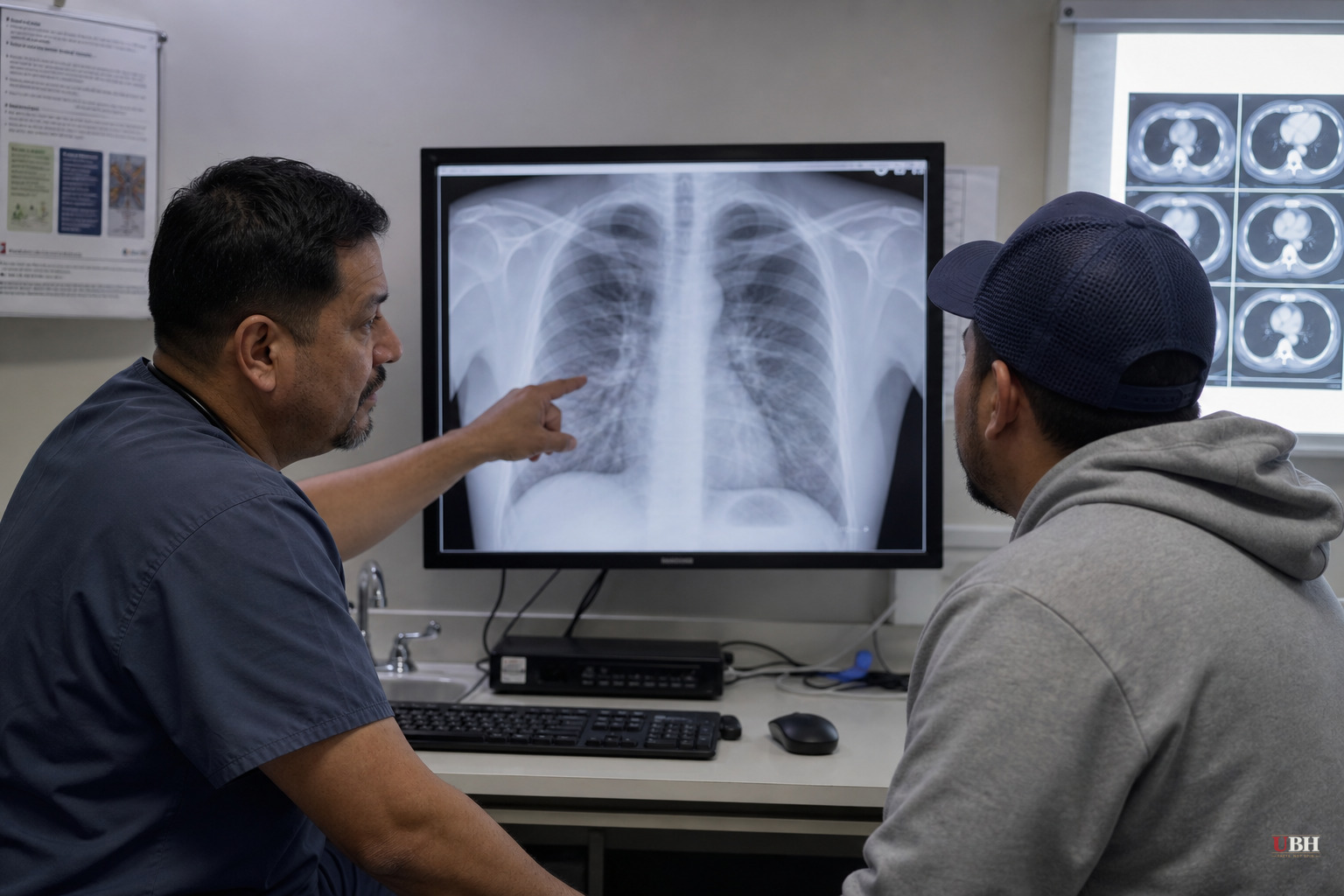
California has confirmed 618 cases of silicosis and 32 deaths among workers who cut and polish engineered-stone countertops, according to the state Department of Public Health. A companion analysis published in NEJM Evidence, covering cases through June 2026, documented 592 of those cases and 31 deaths in finer detail, according to CIDRAP and Medical Xpress.
Silicosis used to take decades to show up in sandblasters and hard-rock miners. These workers are getting diagnosed after a median of 22 years of exposure, but at a median age of just 46, and they're dying at a median age of 52, according to the NEJM Evidence analysis. Some had far shorter exposure windows before the disease turned severe.
The material is the difference. Engineered stone, sold under brand names and marketed generically as "quartz," is made by crushing natural quartz and binding it with resin. It routinely contains more than 90 percent crystalline silica, according to CIDRAP, far higher than most natural stone. Cutting, grinding and polishing it throws off fine silica dust that lodges deep in the lungs and never comes out.
A single sick worker exposed a hidden epidemic
The tracking effort started small. In January 2019, the California Department of Public Health identified a countertop worker who began the job at 32 and died of respiratory failure at 38, according to CIDRAP and Medical Daily. Investigators traced two more cases to the same company, one also fatal, then screened all 43 employees at that shop and found five additional cases.
Eight sick workers at a single business turned a personal tragedy into a public health investigation. The state's case count has climbed steadily since: 259 confirmed cases by March 2025, then 592 by June 2026, according to Medical Daily.
The Los Angeles Times reported the growth in blunter terms: 47 cases total from 2019 through 2022, then 571 more from 2023 through last August. That is more than a tenfold jump in under four years.
Who's getting sick, and why it isn't random
Of the 592 detailed cases, 591 were men, and 580, or 98 percent, were Latino, according to the NEJM Evidence analysis. The Los Angeles Times reported that roughly half of all cases have surfaced in Los Angeles County, with the San Fernando Valley, home to dozens of small fabrication shops, serving as the epicenter.
That concentration reflects who does this work: young Latino immigrant men in small, often under-resourced shops, according to Medical Daily, where earlier California case series found dust-suppression measures like water systems were frequently missing or inadequate. This is a labor-safety story as much as a medical one. Workers cutting a countertop material for other people's kitchens are the ones paying for it with their lungs.
Eleven of the 592 detailed cases involved workers of another race or ethnicity, and information was unavailable for one person, according to Newsweek's review of the data. The disease shows no comparable pattern of severity or speed in other historically silica-exposed trades like mining or construction, according to David Michaels, a George Washington University professor and former assistant secretary of labor for OSHA, who co-authored the study.
The medical toll is severe, not just numerous
Sixty-five of the 592 workers, or 11 percent, had already undergone lung transplants by June 2026, and another 138, or 23 percent, had been referred for evaluation, according to the NEJM Evidence analysis. A lung transplant does not cure silicosis. It extends life while the underlying disease keeps progressing, according to the Los Angeles Times.
Misdiagnosis is compounding the problem. Patients have often been initially told they have bacterial pneumonia or tuberculosis, according to Medical Daily, delaying the correct diagnosis while the disease advances. The NEJM Evidence authors also flagged frequent co-occurrence of autoimmune disease and tuberculosis alongside the silicosis itself.
Regulators moved, but the authors say it isn't enough
California strengthened its silica workplace regulations in 2023 and designated silicosis a reportable condition in 2025, according to CIDRAP, a step that mechanically increases detected case counts simply by requiring doctors to report them. Michaels and his co-authors argue the true national burden is almost certainly far larger than California's numbers, since many workers remain undiagnosed or diagnosed late, and no equivalent nationwide surveillance system exists.
Michaels was blunt about the underlying product itself. "Hundreds of workers have been sickened making quartz countertops, a product we do not need, especially when a safer alternative is available," he said, according to Medical Xpress. He pointed to Australia's nationwide ban on crystalline-silica engineered stone as a model other countries, including the U.S., could consider.
A full ban would eliminate a widely popular, relatively affordable countertop material for millions of American homeowners and remodelers, and it would hit small fabrication businesses and their employees' paychecks directly. The counter-argument, one OSHA and industry groups have made in the past, is that engineered stone can be fabricated more safely with mandatory wet-cutting methods, ventilation, and respirators, without banning the product outright, if those rules are actually enforced at the small-shop level where most of these cases are occurring.
No federal ban or OSHA rulemaking on engineered stone has been announced as of this writing. The open question is whether California's tighter 2023 standards and 2025 reporting mandate are actually being enforced in the small, often informal shops where these cases keep originating, or whether enforcement gaps are why the case count kept climbing even after the rules changed.
Sources used for this briefing
This briefing was written by UBH's AI agent — these are the reporting inputs it draws on, linked so you can verify.


